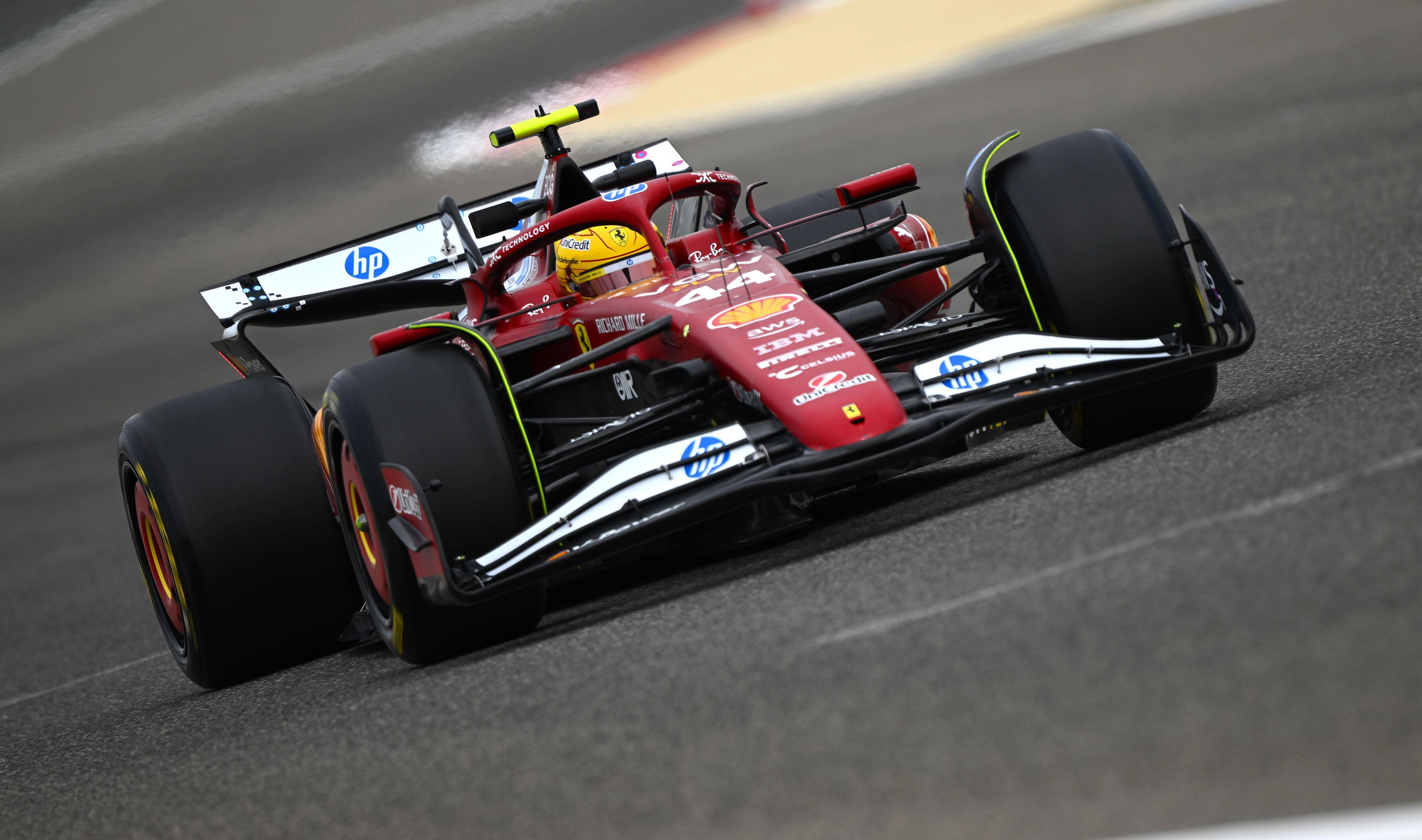
Lewis Hamilton’s Ferrari relationship is back under scrutiny after his frustration with Charles Leclerc and the team’s handling of orders at the 2026 Dutch Grand Prix. The incident was not evidence of a feud between Ferrari’s drivers, but it exposed a strategic problem that could become more important as Formula 1 heads to Monza.
Hamilton was running behind Leclerc on fresher tyres and an alternative strategy at Zandvoort, but Ferrari did not immediately move the cars around. Hamilton believed the delay cost valuable time in his pursuit of the podium and reacted sarcastically over team radio. Ferrari ultimately finished fourth with Hamilton and fifth with Leclerc, narrowly missing the podium.
What happened between Lewis Hamilton and Charles Leclerc at Ferrari?
Hamilton’s frustration was not primarily about racing Leclerc wheel-to-wheel. It was about time. With fresher tyres, Hamilton had the stronger immediate opportunity to attack the cars ahead, while every lap spent behind his teammate reduced the value of that tyre advantage.
Formula 1’s official account of Ferrari team principal Fred Vasseur’s post-race comments said the team had been trying to manage two different strategies. Hamilton felt Ferrari waited too long before releasing him, leading to his sarcastic radio message about the lost time.
The frustration was amplified by what was happening elsewhere. Mercedes was prepared to use team orders when it believed one driver had a better opportunity, providing an obvious comparison with Ferrari’s more cautious approach.
Why Hamilton was frustrated with Ferrari’s team orders
The story did not end with the chequered flag. Hamilton later acknowledged that the sarcastic radio messages did not show him in his best light. That matters because it separates two questions that can easily be mixed together: whether Hamilton handled his frustration perfectly, and whether Ferrari’s strategic process was quick enough.
Hamilton accepting responsibility for the tone of his messages does not erase the strategic issue. A modern Formula 1 team has seconds to decide whether preserving driver equality is worth more than immediately maximising the faster car’s opportunity. Ferrari’s decision at Zandvoort is now being examined precisely because the margins were so small.
Why the Hamilton-Leclerc issue matters for Ferrari F1
Hamilton and Leclerc are unusually close. Formula 1’s mid-season assessment showed only a narrow gap between them in both qualifying and race head-to-heads, while both had already won a Grand Prix in 2026. More recent head-to-head figures have continued to show a competitive pairing rather than a clear number one and number two.
That is good news for Ferrari’s outright performance but makes strategy more complicated. Team orders are straightforward when one driver is clearly faster over a season or no longer has a meaningful championship objective. They are much more sensitive when both drivers are winning races and both expect the team to maximise their opportunities.
Former Haas team principal Guenther Steiner has since argued that Ferrari needs clearer rules of engagement and suggested the championship situation should influence who receives priority. Whether Ferrari agrees with that conclusion is less important than the underlying point: ambiguity becomes expensive when decisions have to be made during a race.
Does Ferrari need a number one driver?
Not necessarily. Ferrari does not need to permanently label Hamilton or Leclerc its number one driver to solve the problem. It needs predictable rules.
A practical system could prioritise the car with a clear tyre or pace advantage, require the faster driver to build a gap or attack within a defined number of laps, and restore positions when the tactical reason for a swap disappears. Teams have used variations of this approach for years because it protects both competitive fairness and the constructors’ result.
The harder question comes later in the championship. If one Ferrari driver remains significantly closer to the title than the other, the cost of refusing to prioritise that driver rises sharply. Ferrari can delay that decision while both remain competitive, but it cannot assume the situation will remain equal indefinitely.
Why Monza makes Ferrari’s decision more important
The controversy has arrived immediately before Ferrari’s biggest weekend of the year. Monza is not just another race for the team. Ferrari will compete at home in a special livery inspired by Michael Schumacher’s first Ferrari season, marking 30 years since the beginning of the partnership that eventually produced one of Formula 1’s most dominant eras.
There is also genuine competitive reason for optimism. Hamilton and Leclerc have each won once in 2026, Ferrari sits second in the constructors’ standings, and Leclerc has already won at Monza twice, in 2019 and 2024. Hamilton is a five-time Monza winner from his McLaren and Mercedes years.
Ferrari may also have a technical decision to make around updated power units prepared under Formula 1’s 2026 upgrade framework. If the team arrives with a competitive package, the strategic pressure will increase rather than disappear. Two Ferraris fighting near the front is exactly the situation in which clear rules between Hamilton and Leclerc matter most.
Is there really a Lewis Hamilton vs Charles Leclerc feud?
It would be easy to frame Zandvoort as the beginning of a Hamilton-versus-Leclerc feud. The evidence does not justify that conclusion. Hamilton’s complaint was directed at the team’s timing, and he subsequently took responsibility for the way he communicated his frustration.
The more interesting story is Ferrari’s operational challenge. The team finally has two drivers capable of winning races in the same season. That creates a good problem, but it is still a problem that needs rules before a championship fight turns every delayed swap into a controversy.
Monza will therefore test more than Ferrari’s outright pace. If Hamilton and Leclerc find themselves together on track again, Ferrari’s response will show whether the lesson from Zandvoort was simply about radio etiquette or whether the team has sharpened the decision-making that could eventually decide far more than a single podium.