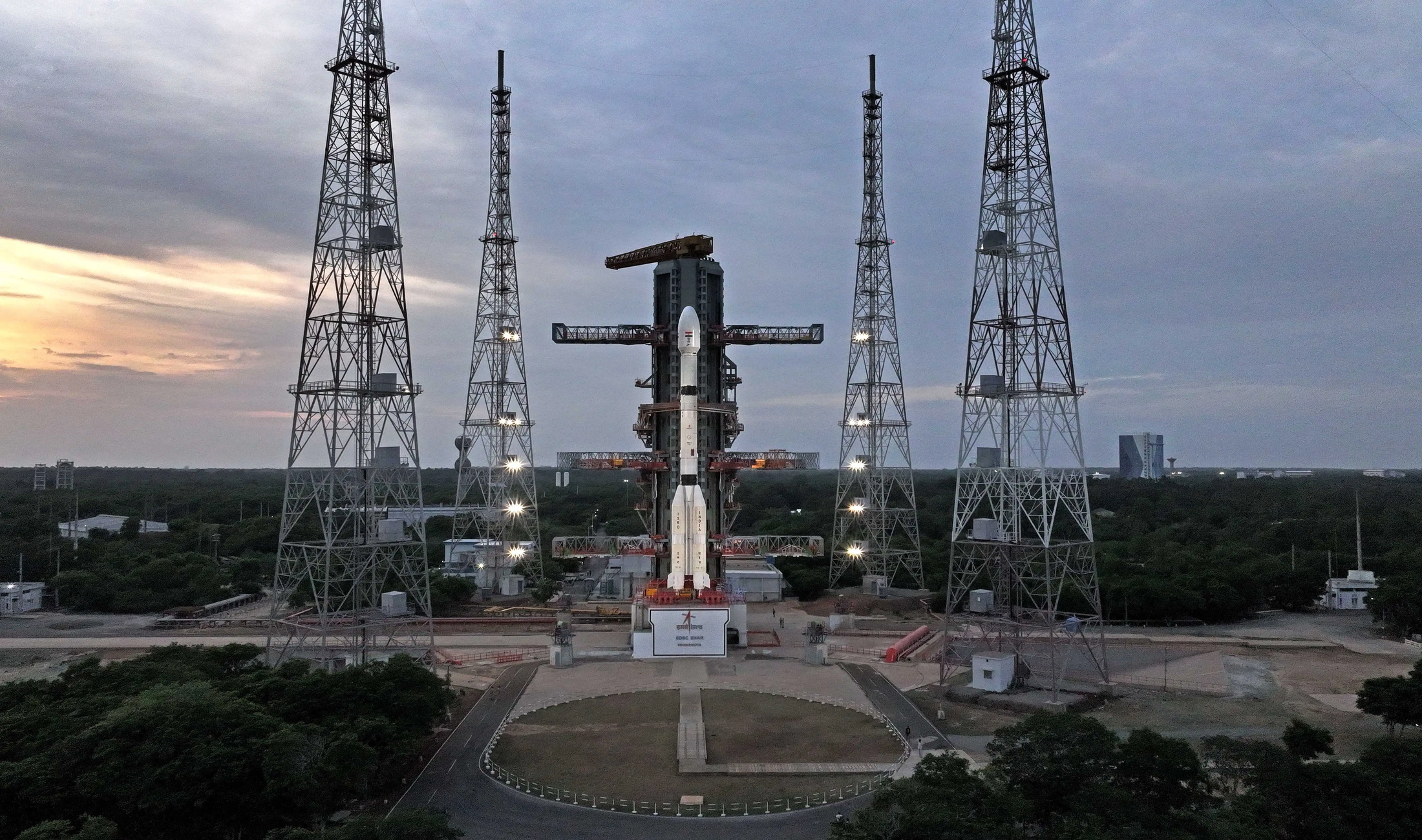
India's EOS-05 Earth-observation mission is now in orbit. ISRO successfully launched GSLV-F17 from Sriharikota at 2:55 AM IST on September 4, 2026, placing EOS-05 into its intended Sub-Geosynchronous Transfer Orbit before a series of orbit-raising manoeuvres.
The mission matters because EOS-05 is India's first imaging satellite designed for geosynchronous orbit. Unlike many lower-orbit imaging satellites that pass over a location periodically, EOS-05 is intended to repeatedly observe the same broad region, adding a different kind of capability for disaster monitoring, agriculture, environmental observation and wider situational awareness.
When did ISRO launch EOS-05?
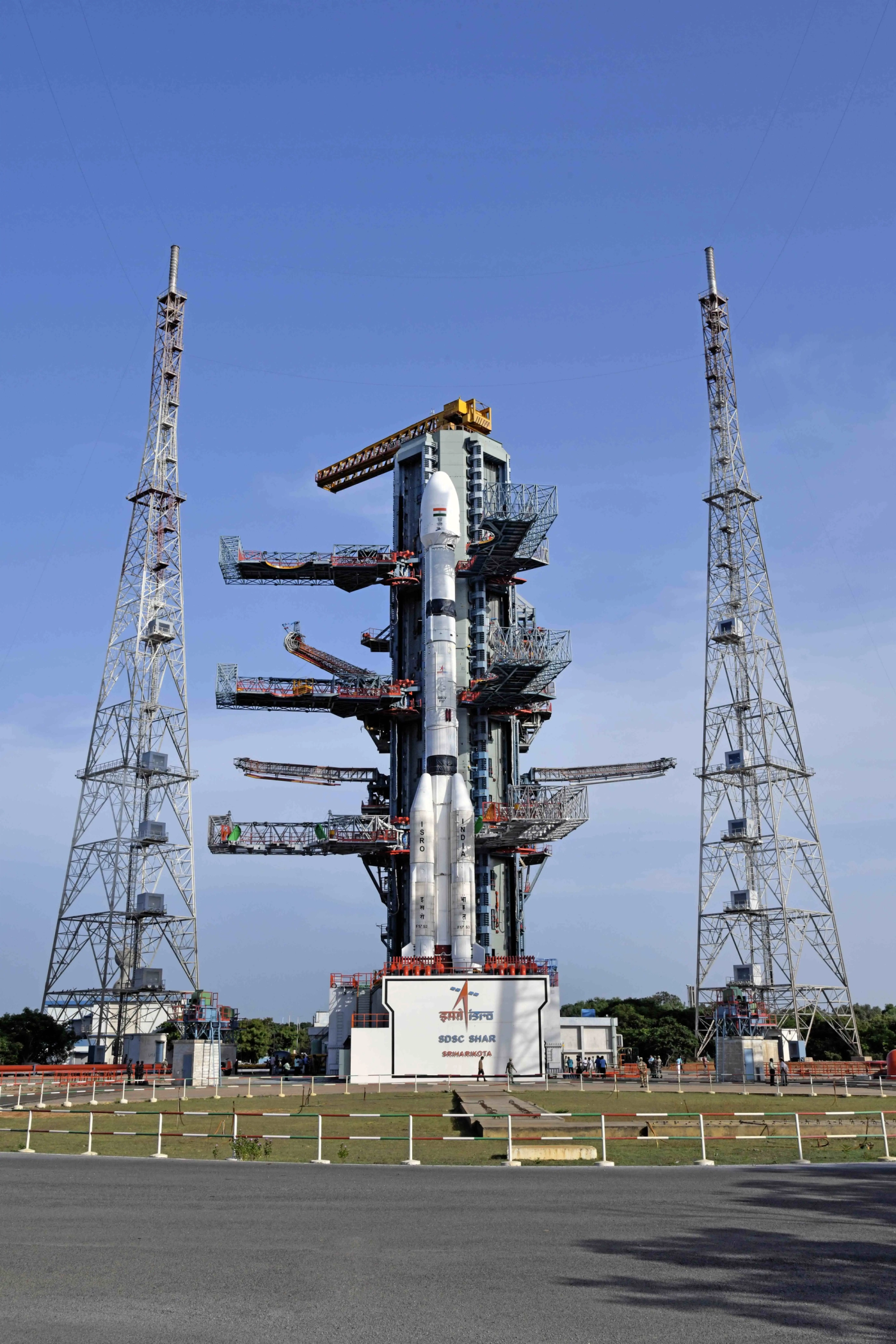
ISRO's official GSLV-F17/EOS-05 mission page confirms that the rocket launched from the Second Launch Pad at the Satish Dhawan Space Centre in Sriharikota on September 4 and successfully placed EOS-05 into the intended Sub-Geosynchronous Transfer Orbit.
GSLV-F17 will be the 19th flight of India’s Geosynchronous Satellite Launch Vehicle. ISRO says this mission will use a four-metre-diameter ogive composite payload fairing and will initially place EOS-05 into what it calls a Sub-Geosynchronous Transfer Orbit, or Sub-GTO.
What is EOS-05?
EOS-05 is a state-of-the-art Earth-observation spacecraft built for imaging from geosynchronous orbit. In practical terms, its intended operating position is dramatically higher than the low Earth orbits used by many remote-sensing satellites.
A satellite in low Earth orbit can capture highly detailed imagery, but it moves quickly relative to the ground. That means a particular place may only be observed when the spacecraft passes overhead. A geosynchronous spacecraft, by contrast, moves around Earth at the same basic rotational rate as the planet. From roughly 36,000 kilometres above Earth, it can repeatedly view a very large region instead of sweeping rapidly from one part of the globe to another.
That does not automatically mean every image is more detailed than imagery from a lower-orbit satellite. The key advantage is revisit frequency and continuity over a broad area. For many real-world monitoring tasks, seeing how conditions change over time can be as important as seeing a single location at the highest possible resolution.
Why the Sub-GTO insertion matters
GSLV-F17 will not place EOS-05 directly into its final operating position. Instead, the rocket is designed to release the spacecraft into a Sub-Geosynchronous Transfer Orbit. From there, EOS-05 is expected to use its own propulsion to raise and reshape its orbit until it reaches the required geosynchronous regime.
This makes launch success only the first stage of the mission. After separation, controllers must establish contact, confirm the spacecraft is healthy, execute orbital manoeuvres and eventually commission the imaging payload before EOS-05 can begin operational observations.
What could EOS-05 be used for?
The most important civilian advantage is the ability to watch large regions frequently. That can strengthen monitoring of rapidly changing events where a gap of several hours between satellite passes can matter.
Disaster monitoring
Cyclones, floods, forest fires and other disasters develop over time. Repeated imaging from the same vantage point can help authorities track the evolution of a large event, identify affected regions and combine satellite observations with weather and ground-based data during response operations.
Agriculture and environmental observation
Earth-observation data can also support crop monitoring, water-resource assessment, land-use analysis and environmental surveillance. The value of EOS-05 will depend on the final payload performance, data products and operational cadence, but frequent regional observation could complement India’s existing fleet of remote-sensing satellites.
Strategic monitoring
A spacecraft capable of repeatedly observing the same broad region also has obvious strategic value. Indian reporting has highlighted the potential for persistent monitoring of borders and other sensitive areas. ISRO’s public mission description, however, identifies EOS-05 primarily as an Earth-observation spacecraft, so claims about specific defence tasks should be treated separately from the agency’s confirmed mission profile.
Why this mission is important for ISRO
EOS-05 also has programme-level significance. ISRO’s official launch list identifies GSLV-F17 as the next scheduled GSLV flight, following missions including NISAR in 2025. The agency previously attempted to launch EOS-03, also known as GISAT-1, in August 2021, but that mission was unsuccessful.
EOS-05 therefore represents another attempt to establish a geosynchronous imaging capability that India has pursued for years. A successful deployment would not simply add one more satellite to the country’s Earth-observation fleet. It would add a different observation geometry that can work alongside lower-orbit spacecraft rather than replacing them.
What to watch after liftoff
For viewers following the mission, there are several milestones more important than liftoff alone. First is the performance of GSLV-F17 through its powered flight. Next comes separation of EOS-05 into the planned Sub-GTO and confirmation that the satellite is communicating with ground controllers.
After that, attention will shift to orbit-raising manoeuvres, spacecraft health checks, deployment and testing of onboard systems, and eventually payload commissioning. Only after those steps will the practical imaging capability of EOS-05 become clear.
ISRO may also release more detail about the satellite’s imaging instruments, observation cadence and data availability after launch. Those specifications will determine how EOS-05 fits alongside India’s existing remote-sensing, meteorological and disaster-management infrastructure.
The bottom line
The GSLV-F17/EOS-05 mission is notable because of what comes after the rocket leaves the pad. ISRO is attempting to place India’s first imaging satellite into geosynchronous orbit, creating the possibility of much more frequent observation of the same vast region than conventional low-orbit imaging satellites can provide.
If the launch and subsequent commissioning succeed, EOS-05 could become an important addition to India’s capabilities in disaster monitoring, agriculture, environmental observation and broader situational awareness. The first major test begins at 2:55 AM IST on September 4 from Sriharikota.
Update: EOS-05 completes its final orbit-raising manoeuvre
The mission has progressed beyond launch. On September 7, ISRO said the third and final orbit-raising manoeuvre was completed successfully, leaving EOS-05 in an estimated 34,903 km by 35,884 km orbit.
That changes the key question from whether GSLV-F17 can deliver the spacecraft to whether EOS-05 can complete commissioning and demonstrate the imaging cadence and data quality expected from the mission. Those operational results will determine how much practical value the new observation geometry adds to India's existing Earth-observation fleet.