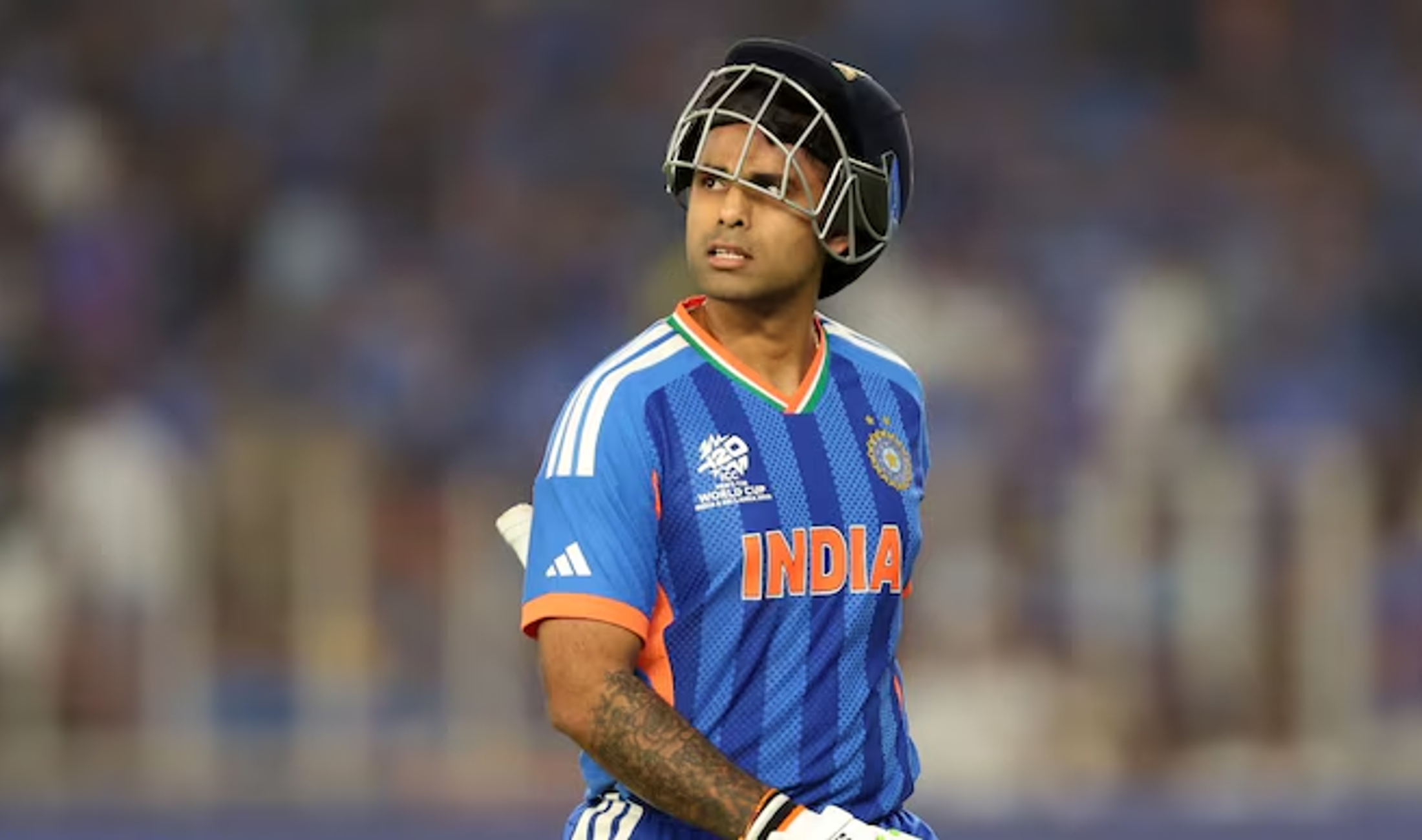
Suryakumar Yadav has publicly addressed one of Indian cricket’s most surprising selection calls of 2026: being dropped from the T20I side only months after captaining India to a successful defence of the men’s T20 World Cup.
The former captain said he was disappointed by the decision and puzzled by its timing, even while acknowledging that Shreyas Iyer, his successor, has the credentials to lead the side. The comments have revived debate over whether India made the transition too quickly, or whether selectors were justified in prioritising individual form and the next T20 cycle over recent team success.
The answer is not as simple as a captain being punished after winning a trophy. India’s decision appears to reflect a wider reset built around age, batting form, leadership succession and planning for future tournaments. For Suryakumar, the path back is still open, but it is now likely to depend more on runs than reputation.
What Suryakumar Yadav said about being dropped
In comments reported by Reuters on August 30, Suryakumar said the omission hurt because of the success India had enjoyed during his captaincy. He took charge of the T20I side in 2024 and India won 42 of 50 completed matches under him, culminating in another T20 World Cup title in 2026.
His final T20I appearance came in the World Cup final against New Zealand in March. Soon after, India moved the captaincy to Shreyas Iyer and Suryakumar was left out of subsequent T20 squads.
Suryakumar did not attack Iyer or the selectors. Instead, his concern was about the timing. From his perspective, a captain who had just overseen a historic title defence could reasonably have expected a longer runway. But selection decisions are rarely based on captaincy results alone, especially when a team is trying to refresh its batting order several years before the next major global target.
Why India moved on despite the World Cup win
The strongest argument for the selectors is Suryakumar’s individual form. Leadership results were excellent, but his batting returns declined at a time when India had younger middle-order options pushing for permanent roles.
During IPL 2026, Suryakumar scored 270 runs in 13 matches for Mumbai Indians at an average of about 20.8 and a strike rate of 147.5. Those numbers were not disastrous in isolation, but they represented a sharp fall from the standards he had established as one of the world’s most destructive T20 batters.
His World Cup campaign was also more solid than dominant. Reuters reported that he averaged 30.25 during the tournament. For many players that would be acceptable, but Suryakumar’s value to India has historically come from turning middle overs into high-scoring phases and changing games quickly. When that output softened, selectors had more reason to look at the next generation.
Age and the 2028 cycle matter too
Suryakumar turns 36 in September 2026. That does not make him too old for T20 cricket, but it changes the calculation when selectors are planning multiple seasons ahead. India can either keep a proven senior player until form makes the decision unavoidable, or make the transition early enough for a new captain and batting core to settle.
India chose the second option. It is a ruthless approach, but not an unfamiliar one in elite sport. Recent success can strengthen a player’s case, yet selectors also have to ask whether the same combination is the best one two years from now.
Why Shreyas Iyer became the preferred captain
Iyer offered India something selectors clearly valued: a younger long-term leadership option with extensive captaincy experience in franchise cricket and a strong recent white-ball record. His appointment also allowed the team management to separate the leadership question from Suryakumar’s batting form.
The transition has not immediately produced better results. India lost T20I series in Ireland and England under Iyer before responding with a 3-0 win over Zimbabwe. That mixed start is one reason Suryakumar’s omission is being discussed again. If the replacement side had immediately dominated, there would be less pressure to revisit the decision.
Still, early series results do not necessarily mean the leadership change failed. India appear to be evaluating a broader group of players and combinations rather than simply replacing one captain with another in an unchanged team.
Can Suryakumar Yadav return to India’s T20I side?
Yes. There is no indication that Suryakumar has formally retired from T20 internationals, and he has made it clear that he wants to return. The key question is what kind of performance would force the selectors to reconsider.
His career record gives him credibility. Since making his T20I debut in 2021, he has scored more than 3,200 runs and produced four international T20 hundreds. Few Indian batters have matched his ability to score around the wicket at high pace when he is in form.
But a comeback is unlikely to be based on career numbers alone. India now have a crowded pool of attacking batters, and Suryakumar would probably need a sustained run of strong domestic or franchise performances to show that his 2026 slump was temporary rather than the start of a longer decline.
The selectors also have to decide whether they would bring him back purely as a batter. Once a team has appointed a new captain, reversing the leadership decision can create instability. A more realistic route may be for Suryakumar to return as an experienced middle-order specialist if his form demands selection.
What upcoming matches could tell us
The Asian Games also form part of India’s crowded September schedule, but Suryakumar was not included in the longlist of probables. That makes an immediate return less likely and increases the importance of whatever competitive cricket he plays next.
For Iyer, the coming series are equally important. A stable run of wins and clear performances from India’s new middle order would strengthen the selectors’ decision. Continued inconsistency, particularly if the batting struggles, would keep questions about Suryakumar alive.
What this selection call says about modern India cricket
The larger story is how quickly India are willing to move on from successful senior players. Depth gives selectors options, but it also raises the standard for keeping a place. Team trophies, captaincy records and reputation can all matter without guaranteeing continuity.
That approach can look harsh when applied to a player who has just lifted a World Cup. It can also be strategically sensible if the goal is to avoid waiting until a decline becomes obvious. The risk is that India may discard proven match-winners too early. The reward is that younger players receive enough time to establish themselves before the next global tournament.
Suryakumar’s situation therefore should not be read as a closed chapter. It is better understood as a reset. India have moved forward with Iyer, while Suryakumar now has to make the case that his best T20 cricket is still ahead of him.
What happens next
The immediate focus will be on India’s next T20 squads and on Suryakumar’s form whenever he returns to competitive action. If India’s new batting group performs, the door may narrow. If the side struggles and Suryakumar starts scoring heavily again, the debate will become much harder for selectors to ignore.
For now, India have made their direction clear: recent success is not enough on its own to freeze a T20 team in place. Suryakumar Yadav remains one of the most accomplished short-format batters India has produced, but his route back now runs through performance rather than captaincy history.