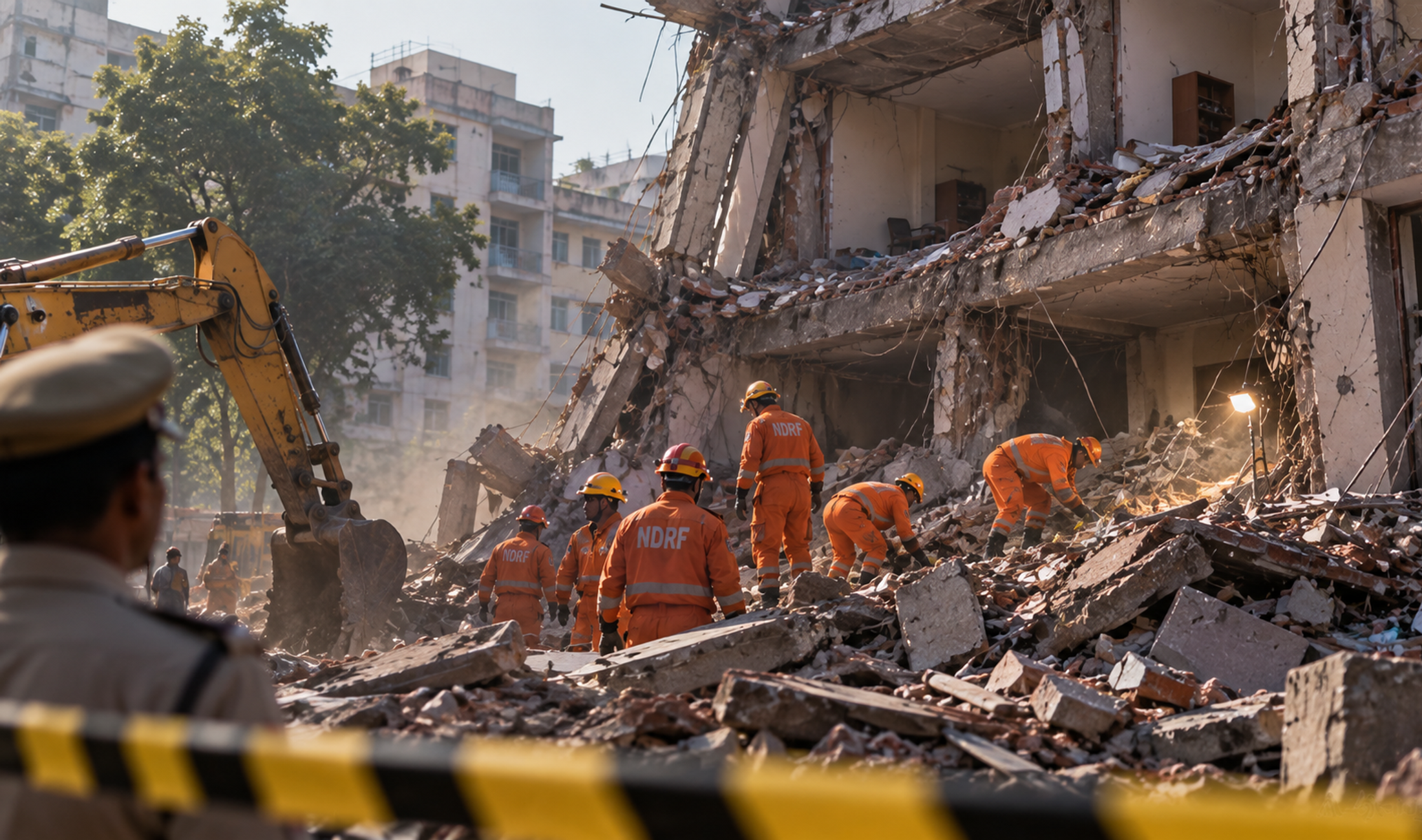
Seven people were killed and six injured after a five-storey paying-guest accommodation building collapsed in Satya Niketan, New Delhi, on Sunday, September 6, 2026, triggering a large rescue operation and renewed scrutiny of safety checks for student housing in the capital.
What happened in Satya Niketan?
The building, described by authorities as more than 55 years old, had recently reopened after months of renovation work that was not fully complete. The collapse brought floors down on top of one another, leaving people trapped under concrete and debris.
Police, firefighters and disaster-response teams deployed sniffer dogs and earthmoving equipment at the site. By Monday, rescuers had cleared most of the debris while continuing to search for survivors and anyone who might still be trapped.
What investigators are examining
The exact cause has not yet been established. Preliminary attention has focused on renovation activity, reported work in the basement and water accumulation around the ageing structure. Those factors remain part of the investigation rather than a final finding, and authorities have not yet issued a definitive engineering conclusion.
That distinction matters because early accounts after a structural failure can change as engineers inspect foundations, columns, construction alterations and maintenance records. A formal technical assessment will be more important than initial speculation in determining responsibility.
Owner arrested and municipal officials suspended
Authorities arrested the building owner as the investigation moved forward. Five municipal employees were also suspended over alleged negligence, according to reporting from the scene. Any criminal or administrative liability will depend on the findings of the investigation and subsequent legal process.
Delhi plans tougher structural-audit rules
Delhi Chief Minister Rekha Gupta said the government plans a policy requiring structural audits and safety certification for public-use buildings such as hostels and schools. If implemented effectively, the move could shift more responsibility toward preventive inspections rather than action only after visible damage or a complaint.
For students and families, the key question will be how the proposed system identifies older buildings, how often audits are required, who is qualified to certify them and whether unsafe properties can continue operating while repairs are pending.
Why older buildings become a bigger concern during the monsoon
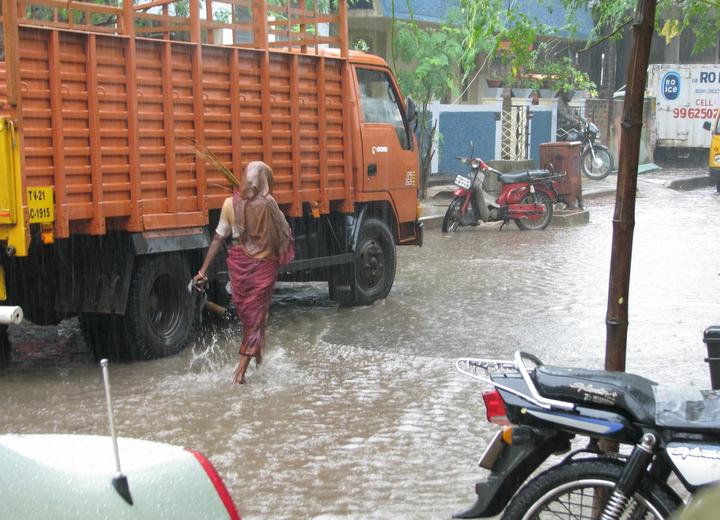
Building failures are a recurring safety risk during India's monsoon months. Persistent rain and waterlogging can expose existing weaknesses in ageing structures, particularly where drainage, waterproofing, foundations or maintenance are inadequate. Renovation work can add another layer of risk if structural elements are altered without proper assessment.
That does not mean rainfall alone caused the Satya Niketan collapse. Investigators still need to establish the sequence of events and determine whether construction work, water accumulation, structural deterioration, regulatory failures or a combination of factors played a role.
What happens next
The immediate priority remains completing rescue and recovery work. Investigators are expected to examine the building's renovation history, permissions, structural condition and the responsibilities of the owner, contractors and civic authorities.
The larger policy question is whether Delhi's proposed audit requirement becomes a systematic inspection programme with enforceable deadlines. The Satya Niketan tragedy is likely to intensify pressure for checks on older hostels, schools and other buildings used by large numbers of people.
Update: Delhi creates a committee after the Satya Niketan collapse
The policy response has now moved beyond the initial proposal for structural audits. The Indian Express reported that Delhi Lieutenant Governor Taranjit Singh Sandhu approved an 18-member high-powered committee headed by Education Minister Ashish Sood to examine the shortage and safety of student accommodation in the capital.
The panel is expected to assess demand and supply, explore use of vacant government properties, develop a centralised database of hostels and paying-guest accommodation, and recommend safety protocols. It has been asked to submit recommendations within 60 days. The important test will be whether those recommendations produce enforceable inspections and a transparent system students can use to verify accommodation safety.
CorrectionCorrected September 11, 2026: An earlier version said the Satya Niketan collapse occurred on September 7. The collapse occurred on September 6, 2026.