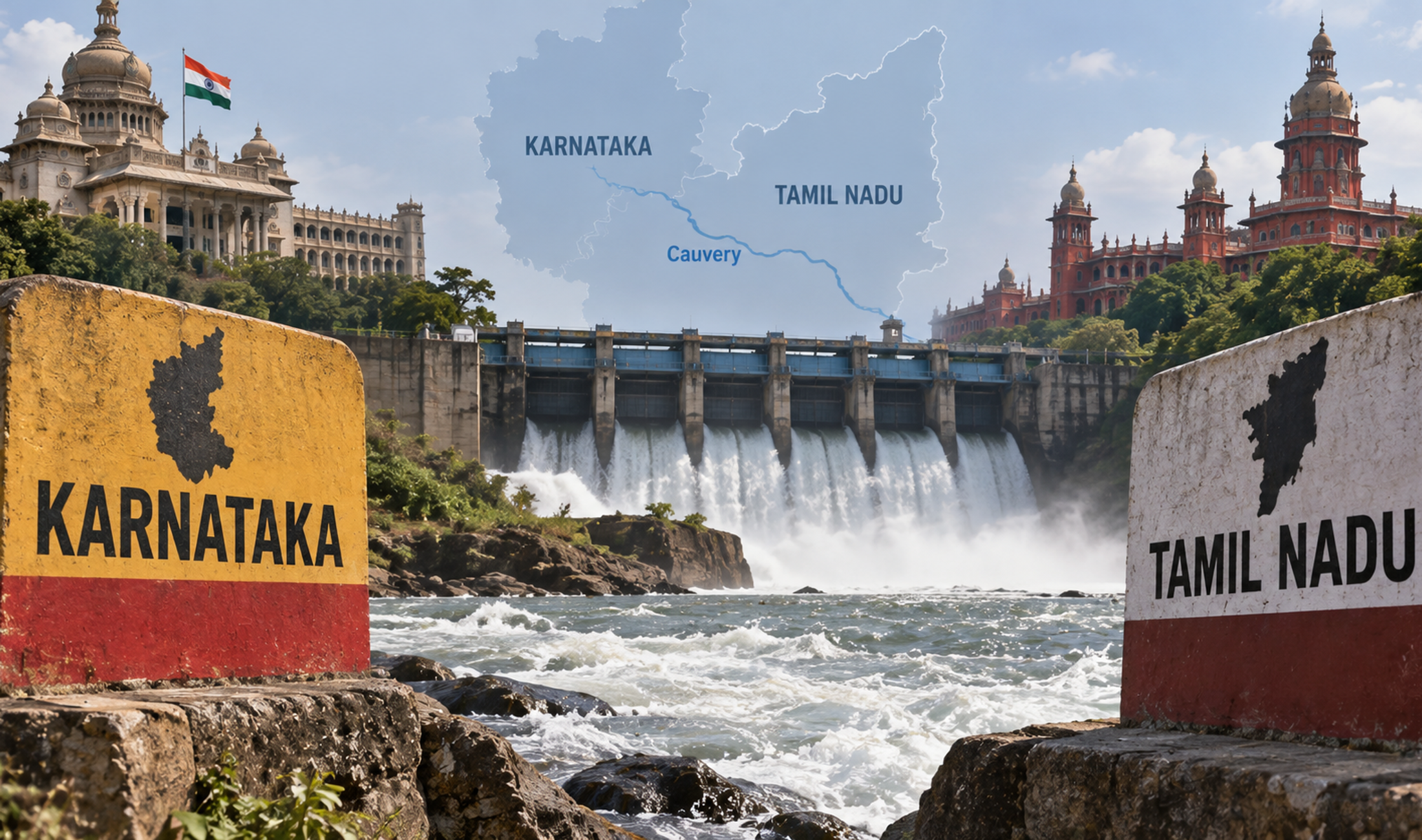
Karnataka has been directed to ensure a flow of 6,000 cusecs of Cauvery water to Tamil Nadu for 15 days starting September 9, after the Cauvery Water Management Authority upheld the recommendation of the Cauvery Water Regulation Committee. The order lands at a sensitive moment: Karnataka says more than 125 taluks are facing severe drought and is preparing to challenge the direction in the Supreme Court.
What the latest Cauvery order says
The CWRC on September 8 recommended that Karnataka release 6,000 cusecs to Tamil Nadu for the next 15 days, with the new flow requirement beginning at 8 am on September 9. The CWMA subsequently upheld that recommendation at its meeting in Delhi.
The latest direction is lower than the 9,000-cusec requirement that had been upheld in late August. Even with that reduction, Karnataka has objected to the new order, arguing that weakening rainfall and reservoir inflows have made further releases difficult.
Why Karnataka is opposing the release
Karnataka's case rests heavily on its current water situation. Fresh reporting says more than 125 taluks are dealing with severe drought. The state had appealed against the release recommendation at the CWMA meeting, but the authority rejected that appeal.

Reservoir releases had already been cut sharply as rainfall and inflows weakened. On September 8, reports put the combined discharge from the Krishnaraja Sagar and Kabini reservoirs at about 5,200 cusecs, down from 11,983 cusecs a day earlier. That gap helps explain why a mandatory 6,000-cusec flow has become politically and operationally contentious.
Why Tamil Nadu needs Cauvery water
For Tamil Nadu, upstream releases are closely tied to storage at the Mettur Dam and irrigation across the Cauvery delta. Farmers in the delta depend on timely water availability for standing crops and seasonal cultivation, which is why changes in Karnataka's reservoir discharge quickly become a major issue in the state.
The dispute also comes against a broader backdrop of weather stress. Headline Thread has previously examined India's 2026 monsoon deficit and its implications for crops and food prices, which makes reservoir levels and interstate water allocation especially consequential this year.
What happens next
Karnataka is expected to move the Supreme Court against the direction. Until a court intervenes or the water-management authorities revise their instructions, the operative requirement is for a 6,000-cusec flow to Tamil Nadu for 15 days from September 9.
The next points to watch are whether Karnataka seeks urgent judicial relief, whether the ordered flow is maintained at the interstate measuring point, and how rainfall and reservoir inflows change during the 15-day period. Any material change in those factors could alter the practical and political course of the dispute.
Why this Cauvery dispute matters beyond two states
The Cauvery dispute is not simply a question of how much water crosses a state border. It sits at the intersection of drought management, drinking-water security, agriculture, reservoir operations and a long-running legal framework for sharing a river that both Karnataka and Tamil Nadu depend on.
That makes September's order particularly important. A lower release requirement than the previous 9,000-cusec direction acknowledges changing conditions, but Karnataka's planned legal challenge shows that the underlying disagreement over available water remains unresolved.