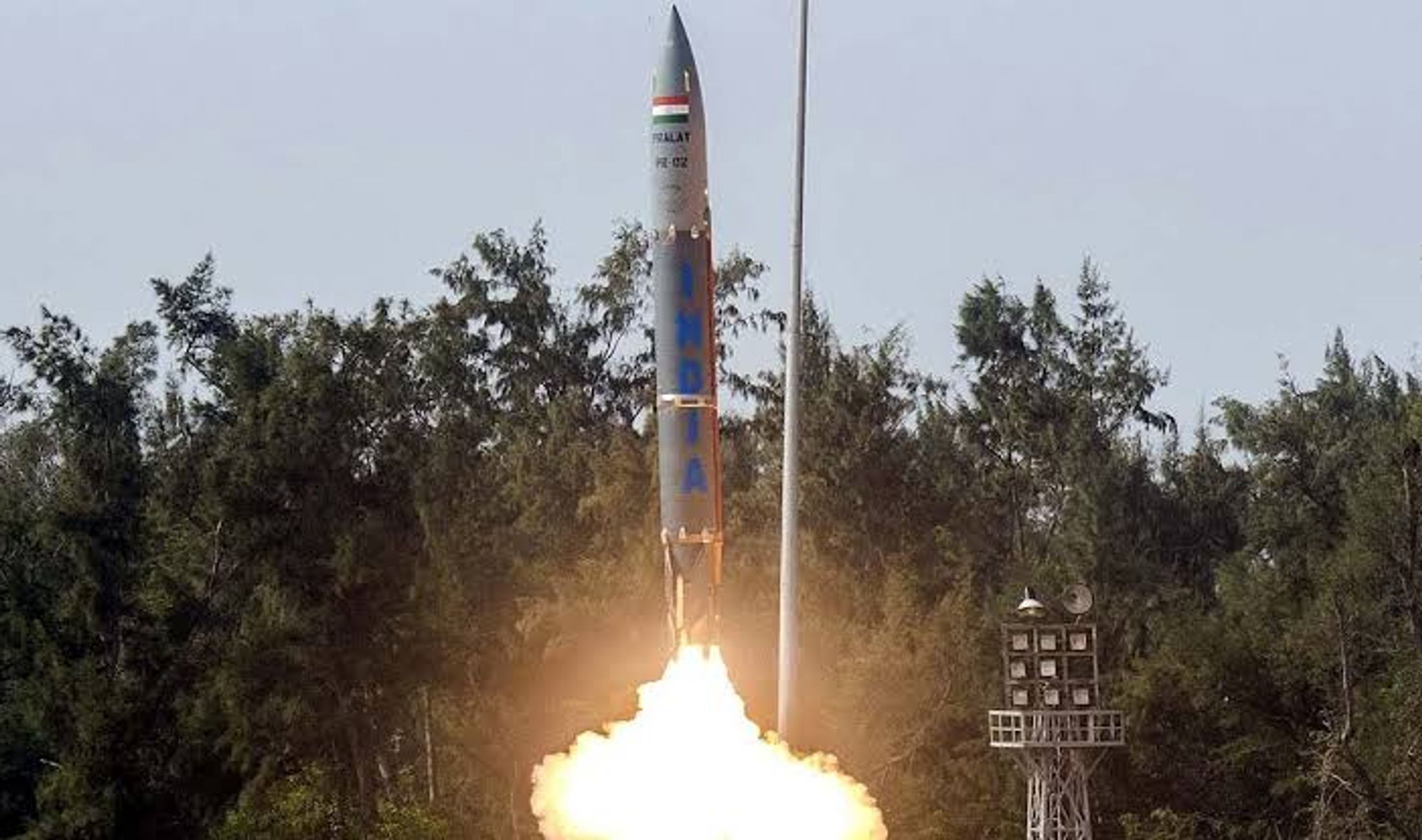
India has taken a major step toward widening the role of domestic industry in missile manufacturing. On August 25, 2026, Defence Minister Rajnath Singh approved the transfer of technologies developed by the Defence Research and Development Organisation for all conventional missile systems to Indian defence companies for production within the country.
The Ministry of Defence announcement says the move is intended to help successful DRDO missile programmes transition from research and development into industrial production. It also reflects a broader policy push to reduce import dependence, deepen domestic manufacturing and make Indian companies more central to the defence supply chain.
The decision is important, but it does not mean any private company can immediately start manufacturing every DRDO missile. Technology transfer in defence remains controlled, companies must meet technical and regulatory requirements, and the government retains authority over sensitive systems, production approvals and exports. The real change is that the pathway from DRDO laboratory to Indian factory is being opened much more deliberately.
What exactly has India approved?
The approval covers DRDO-developed technologies for all conventional missile systems. Conventional missiles are non-nuclear weapon systems used for roles such as air defence, air-to-air combat, anti-tank warfare, precision strike and other tactical or operational missions. The wording is important because the announcement is focused on conventional missile production rather than describing an unrestricted transfer of strategic or nuclear-weapons technology.
Under a transfer-of-technology arrangement, DRDO can provide qualified production partners with the technical knowledge, manufacturing documentation, processes and support needed to build an approved system or subsystem. The purpose is to move a mature design from development into repeatable industrial production without forcing each manufacturer to recreate the technology from scratch.
This is not a completely new model for DRDO. What is new is the breadth of the policy signal around conventional missile systems. It gives Indian industry a clearer expectation that successful DRDO missile technologies can be moved into domestic production at scale rather than remaining concentrated inside government laboratories and a small number of established producers.
Why the missile technology transfer matters now
For any missile programme, successful development is only the first stage. Armed forces need dependable production lines, quality control, component suppliers, maintenance capability, spares and the capacity to raise output when operational demand increases. A broader manufacturing base can therefore matter as much as the original design.
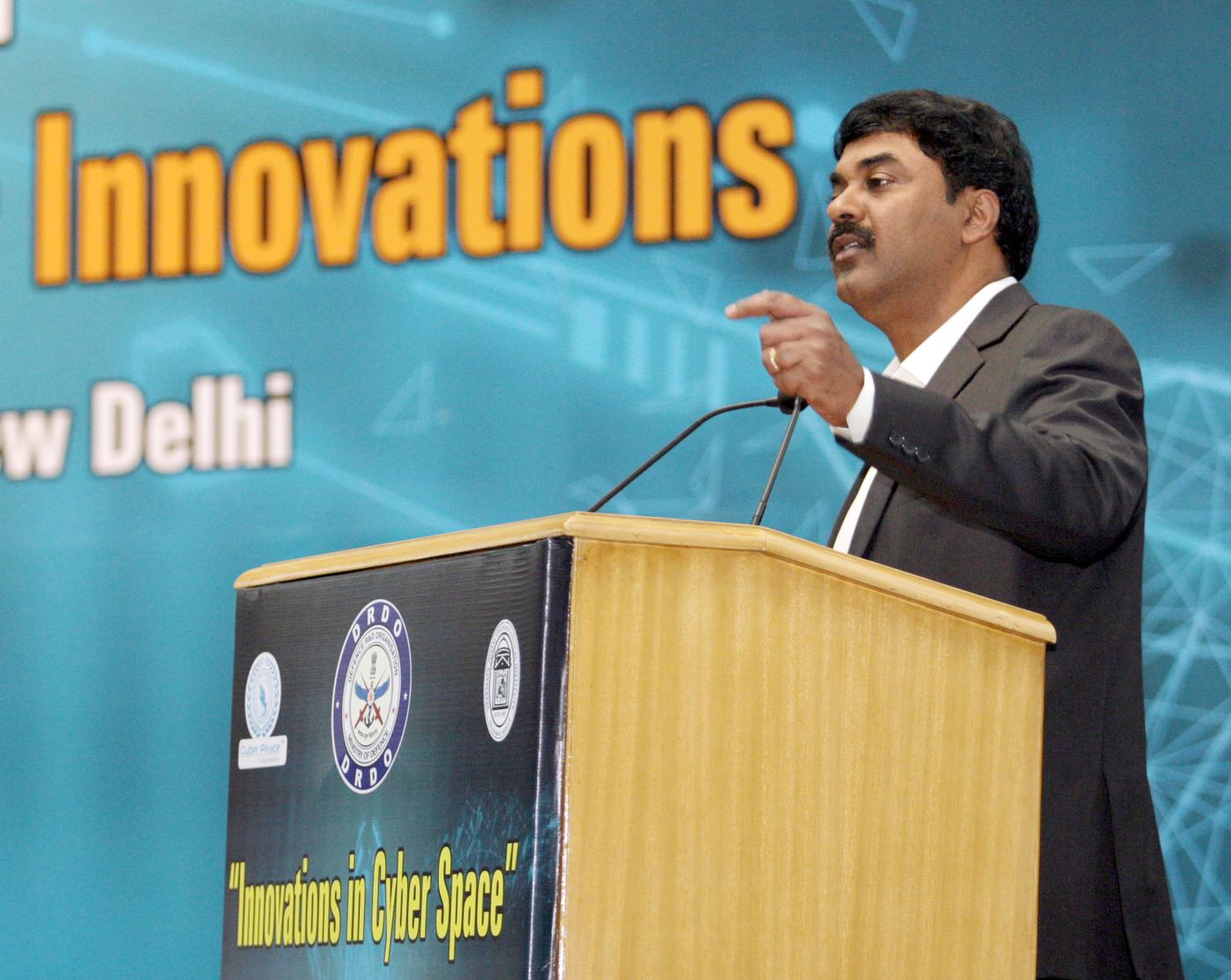
DRDO's strength is research, system development, testing and technological integration. Private and public-sector manufacturers can add investment, production engineering, supply-chain management and industrial scale. The policy is designed to connect those strengths more directly.
For the armed forces, the potential benefit is a larger pool of domestic suppliers capable of manufacturing proven systems. For DRDO, shifting mature programmes toward industry can free laboratories to focus more heavily on next-generation technologies rather than remaining deeply involved in every stage of serial production.
Indian companies already have a growing role in DRDO programmes
The latest decision builds on an industry network that is already much larger than it was a decade ago. According to a government update on DRDO-industry collaboration, more than 2,200 industries are capable of producing defence subsystems, systems and equipment. By March 2026, 134 companies had partnered with DRDO as Development-cum-Production Partners or Production Agencies, and 2,180 technology-transfer agreements had been signed.
That history matters because missile production rarely depends on a single company. A complete system can require propulsion hardware, electronics, seekers, guidance units, structures, launch equipment, software, communications, testing equipment and specialised materials. Large defence firms may act as prime manufacturers, while smaller suppliers and MSMEs provide critical components and manufacturing services.
The practical success of the new policy will therefore depend not only on which large companies receive missile technologies, but also on whether a reliable network of smaller Indian suppliers develops around them.
What does this mean for private defence companies?
The biggest opportunity is access to a larger pipeline of mature indigenous technology. Indian private defence firms have spent years building capabilities in precision engineering, electronics, aerospace manufacturing, vehicle systems, launchers and weapon integration. A broader DRDO technology-transfer policy can give qualified companies more opportunities to convert those capabilities into actual missile production.
However, technology access alone does not guarantee large orders. Defence manufacturing depends on procurement decisions by the armed forces, qualification tests, production rates and long-term support contracts. Companies may have to invest significantly in facilities and specialised equipment before a transferred technology becomes commercially meaningful.
That distinction is important for investors and the wider industry. A technology-transfer agreement can create an opportunity, but the real economic impact comes when it is followed by serial production, recurring orders and integration into a stable supply chain.
India's defence manufacturing base is already expanding
The missile decision comes during a period of record domestic defence production. The Ministry of Defence says India's defence production reached ₹1.78 lakh crore in FY 2025-26, up 15.6% from the previous financial year and more than double the FY 2020-21 level.
Public-sector entities still accounted for about 76% of production in FY 2025-26, but the private sector's share rose to roughly 24%, or around ₹42,000 crore. That mix shows why expanding technology access matters. India is trying to increase total output while also broadening the number of companies capable of building sophisticated indigenous systems.
The approach has similarities with India's wider manufacturing policy, where the government is trying to move from assembly toward deeper domestic capability and local value addition. Headline Thread recently explained the same shift in consumer electronics in our guide to the Mobile Phone Manufacturing Scheme.
Could the policy also help defence exports?
Potentially, but exports remain subject to government approval and strategic controls. India reported record defence exports of ₹38,424 crore in FY 2025-26, up 62.66% from the previous year. The private sector accounted for 45.16% of those exports.
If more Indian firms learn to manufacture mature missile systems reliably and at competitive cost, the industrial base supporting future exports becomes deeper. The immediate purpose of technology transfer is domestic production and self-reliance, but export potential can become an additional benefit once production quality, capacity and government policy align.
Missile exports are more sensitive than ordinary manufactured goods, so this should not be interpreted as an automatic opening of DRDO missile technology to foreign buyers. Export destinations, systems and configurations remain matters for the Indian government.
Will this reduce India's dependence on imported weapons?
That is one of the policy's objectives, but the effect will be gradual. India still imports important defence technologies and components, and some indigenous systems themselves depend on foreign-origin subsystems or materials. Technology transfer within India does not instantly remove those dependencies.
What it can do is strengthen the domestic side of the equation. When Indian industry can manufacture a larger share of proven weapons locally, the country gains more control over production schedules, maintenance, spares and future upgrades. That can become especially valuable when global supply chains are disrupted or when imported systems face long delivery timelines.
Why investment and supply chains will decide whether the policy works
A missile technology can be transferred on paper much faster than a production ecosystem can be built. Companies need qualified workers, secure facilities, specialised machinery, testing capacity, approved vendors and dependable access to high-quality components. Building that capacity requires capital and predictable demand.
That is why the missile decision also fits into a broader investment story. India has been changing rules and incentives to attract more manufacturing capital and technology while keeping tighter controls around sensitive sectors. Our explainer on India's revised FDI rules examines how the country is balancing investment access with strategic safeguards.
What the announcement does not mean
The policy does not mean DRDO is stepping away from missile research. Its role remains central in developing and testing advanced systems. Nor does the announcement mean classified technical information will be distributed without controls. Defence technology transfer remains governed by qualification, licensing, security and procurement requirements.
It also does not guarantee that every conventional missile programme will immediately have multiple private manufacturers. Different systems are at different stages of development, production and service use, and each technology-transfer arrangement can have its own production structure.
What happens next?
The next stage will be implementation. Defence companies will watch which missile technologies are offered, how production partners are selected, what investment requirements are attached and whether procurement orders provide enough scale to justify new manufacturing capacity.
The armed forces and the Ministry of Defence will also have to ensure that widening the supplier base does not dilute testing standards, cybersecurity or control over sensitive technology. Successful technology transfer in defence is not measured by the number of agreements signed. It is measured by whether factories can produce reliable systems repeatedly, on time and at the required quality.
The bottom line
India's decision to transfer DRDO technologies for all conventional missile systems to domestic industry is a significant industrial-policy change for the defence sector. It expands the route through which successful indigenous designs can move from laboratories into larger-scale production and gives qualified Indian companies a bigger potential role in one of the most technology-intensive parts of defence manufacturing.
The long-term impact will depend on execution. If technology transfers are followed by production orders, private investment, strong supplier networks and rigorous quality control, the policy could increase domestic missile capacity, support exports and reduce selected import dependencies. If not, it risks becoming another policy whose ambition is larger than its industrial output.