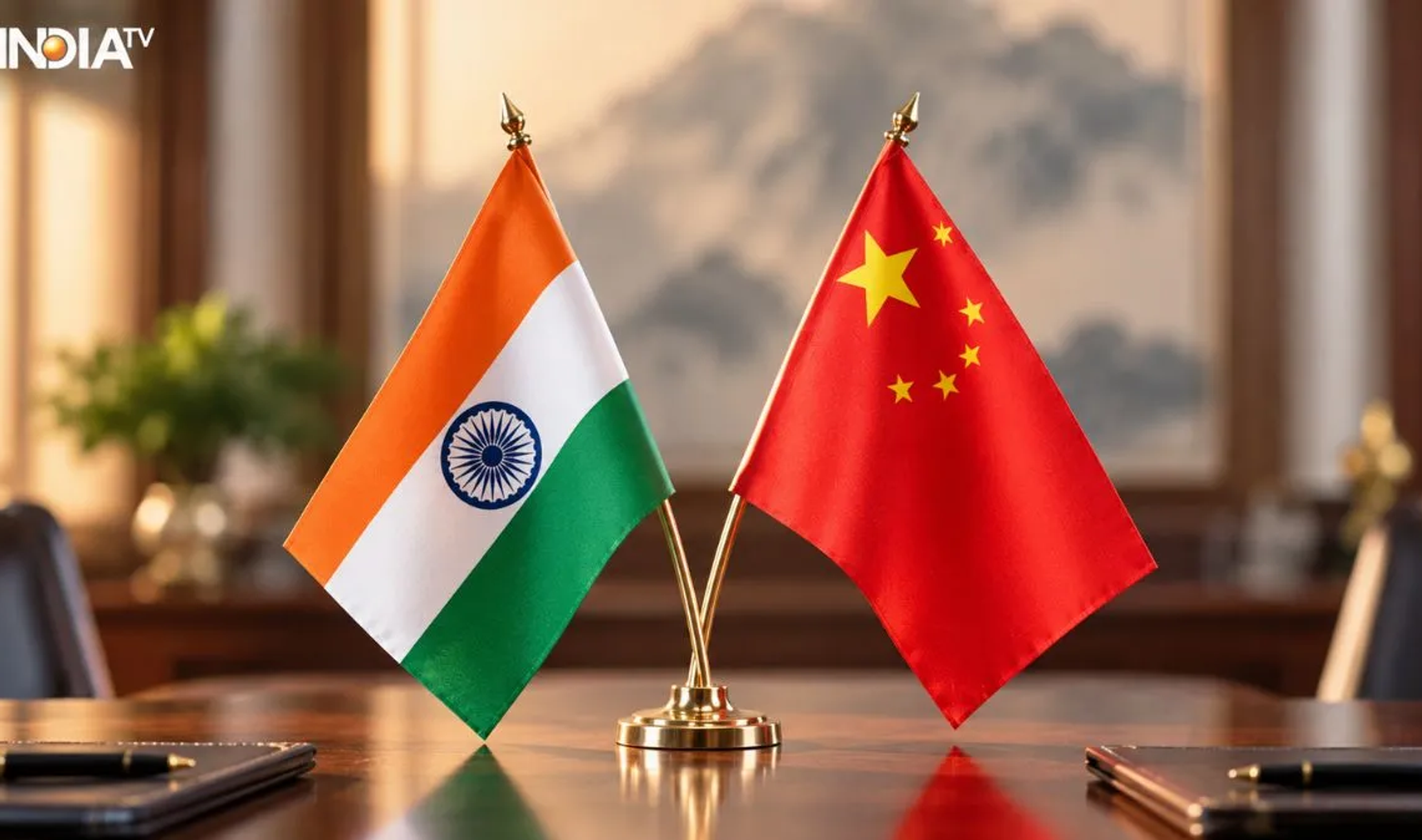
Prime Minister Narendra Modi and Chinese President Xi Jinping met in New Delhi on September 12 on the sidelines of the BRICS Summit, using their highest-profile bilateral meeting in India in seven years to push for stronger business links, easier movement between the two countries and continued stability along the disputed border.
The meeting is a significant new step in the cautious India-China thaw. Both sides signalled that the relationship should be managed from a strategic, long-term perspective, while Modi stressed that differences should not be allowed to become disputes. The border question remains unresolved, so the talks are better read as an effort to stabilise and rebuild the relationship rather than a final reset.
What Modi and Xi discussed in Delhi
The two leaders discussed the broader India-China relationship, including business connections, people-to-people mobility and the need to maintain peace and tranquillity along the border. Reuters reported that the leaders emphasised improving business links and mobility as the neighbours try to rebuild trust after the 2020 military clash badly damaged ties.
Modi said relations should be guided by mutual respect, mutual sensitivity and mutual interests. The two sides also reiterated the importance of maintaining border peace and pursuing a fair, reasonable and mutually acceptable settlement of the boundary question.
Why the border still matters to the wider relationship
The September 12 meeting comes only days after India and China held their first senior Corps Commander-level flag meetings in the eastern sector of the Line of Actual Control. Those military talks at Wacha and Damai in the Arunachal Pradesh sector expanded high-level border communication beyond the mechanisms that became familiar during the eastern Ladakh standoff.
That does not mean the border dispute is settled. Large military deployments and competing territorial claims remain, and both governments continue to treat peace on the frontier as a prerequisite for a more predictable political relationship. The importance of the Modi-Xi discussion is that border management is now being paired with attempts to restore economic and public links.
Direct flights are returning as mobility improves
A visible sign of the thaw arrived on the same day as Xi's visit. China Southern Airlines said it will restart regular passenger flights between Guangzhou and New Delhi from September 21, restoring the route after a six-year suspension. Direct connectivity between the two countries had been severely reduced after the pandemic and the deterioration in bilateral ties.
Flights, visas, pilgrimage access and business travel are practical measures that can make the political thaw tangible for companies and travellers. Their restoration also gives both governments relatively low-risk areas in which to demonstrate progress even while harder strategic disputes remain unresolved.
Trade is growing, but India's deficit remains a major problem
Economic ties are one of the biggest contradictions in the relationship. Bilateral goods trade reached about $151 billion in the 2025-26 financial year, according to India Today, but India imported roughly $131 billion from China while exporting about $19 billion. That left India with a trade deficit of around $112 billion.
New Delhi therefore wants more than higher trade volumes. It wants better market access and a more balanced relationship while continuing to scrutinise Chinese investment in sensitive sectors. That tension is visible in India's recent regulatory focus on Chinese-linked businesses, including the proposed SFIO probe involving Xiaomi India.
The BRICS Summit gives the meeting extra weight
The bilateral talks took place during the BRICS Summit in New Delhi, where leaders adopted the New Delhi Declaration and tried to demonstrate unity despite major disagreements over the Middle East and global trade. Xi's presence is particularly notable because this is his first visit to India since 2019.
For India, the meeting also shows an attempt to keep engagement with China moving without treating improved diplomacy as proof that the strategic rivalry has disappeared. For China, more predictable ties with India can reduce friction with another major Asian economy at a time of wider geopolitical and trade uncertainty.
Does the Modi-Xi meeting mean India-China ties are normal again?
Not yet. The clearest change is that both sides are rebuilding mechanisms that make the relationship easier to manage: leader-level meetings, military communication, direct flights, visas and business engagement. Those steps reduce friction, but they do not erase the boundary dispute, strategic mistrust or India's concerns about the trade imbalance and dependence on Chinese inputs.
What to watch next
The next test is whether the political language produces measurable changes. Watch for further direct-flight announcements, easier business visas, progress on market access, regular senior military meetings and any new confidence-building measures along the LAC.
A genuine reset would require sustained border stability and progress on the structural issues that divide the two countries. For now, the September 12 meeting is best understood as a meaningful acceleration of the thaw: India and China are trying to make the relationship more functional while acknowledging that its hardest problems remain unresolved.