India plans to buy the US-made Javelin anti-tank missile system, adding fresh momentum to defence cooperation between New Delhi and Washington and reviving a procurement that has been discussed for years.
Reuters reported on August 28 that US Ambassador to India Sergio Gor said India intends to purchase the battle-tested system. The announcement is important, but it should not be confused with a newly signed final contract. The United States had already cleared a potential sale covering Javelin systems and Excalibur precision-guided artillery projectiles in November 2025.
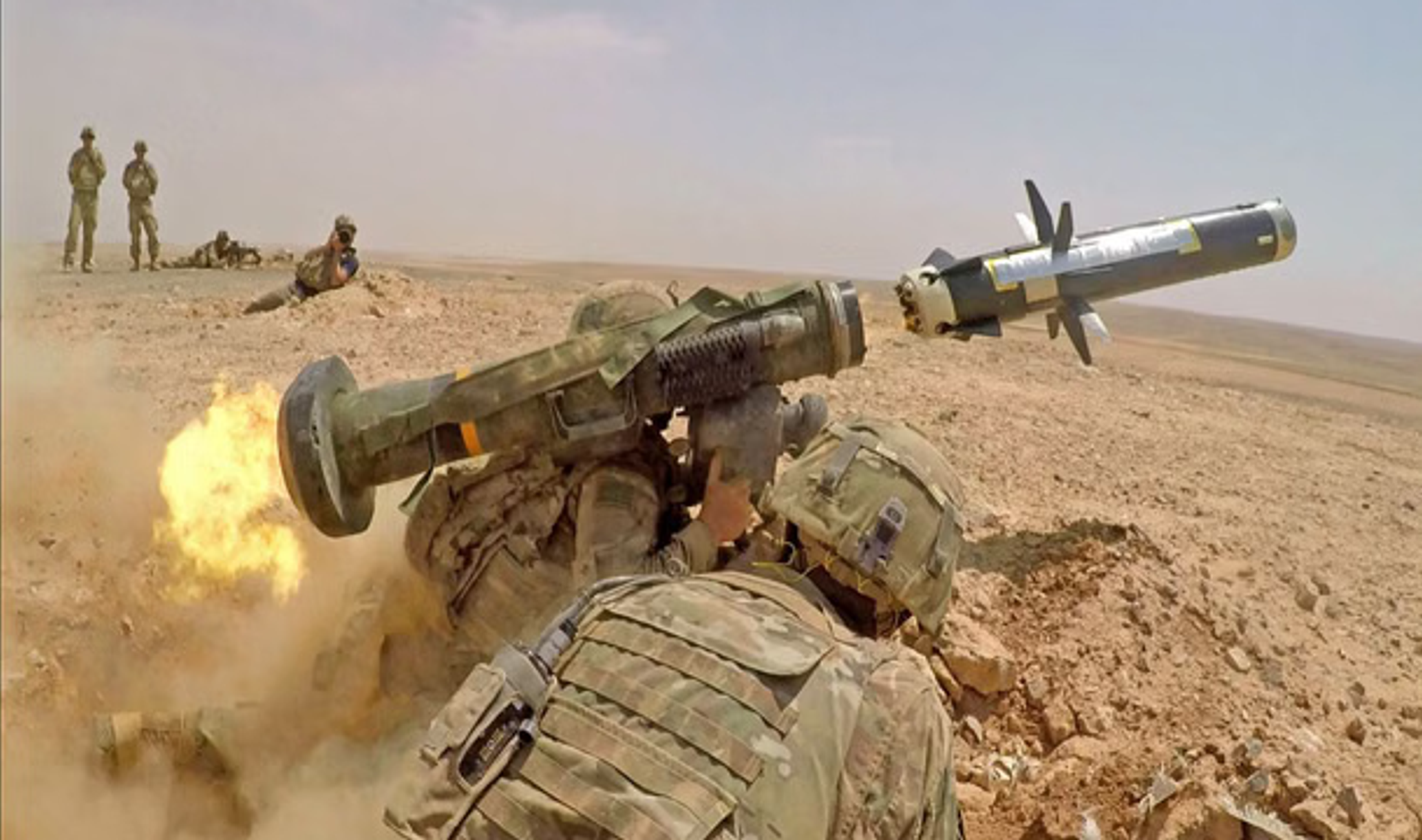
For India, the significance goes beyond buying another missile. Javelin is a portable fire-and-forget anti-armour weapon designed to let soldiers engage tanks and other hardened targets without continuously guiding the missile after launch. A successful procurement would strengthen infantry anti-tank options while also deepening a defence relationship that increasingly includes aircraft, drones, artillery ammunition and advanced technology.
What exactly has India announced?
The latest development is an announcement of intent rather than confirmation that deliveries are about to begin. Sergio Gor said India plans to purchase the Javelin system from the United States. At the time of writing, India’s Ministry of Defence had not publicly released a new contract value, delivery schedule or final configuration tied specifically to Friday’s statement.
The earlier US approval in November 2025 provides useful context. The US State Department cleared a package worth about $93 million that included up to 100 Javelin systems and 216 Excalibur projectiles, with RTX and the Javelin Joint Venture involving RTX and Lockheed Martin identified among the principal contractors.
That approval did not itself mean every item had been contracted or delivered. Foreign military sales can involve several stages, including government approvals, negotiations, final agreements, production and delivery. The key thing to watch now is whether India and the United States disclose a signed contract and whether the final quantity matches the previously cleared package.
What is the Javelin anti-tank missile system?
The US Army describes the FGM-148 Javelin as a man-portable, fire-and-forget anti-tank guided missile. It uses infrared guidance so that, after a target is acquired and the missile is launched, the operator does not have to manually steer it all the way to impact.
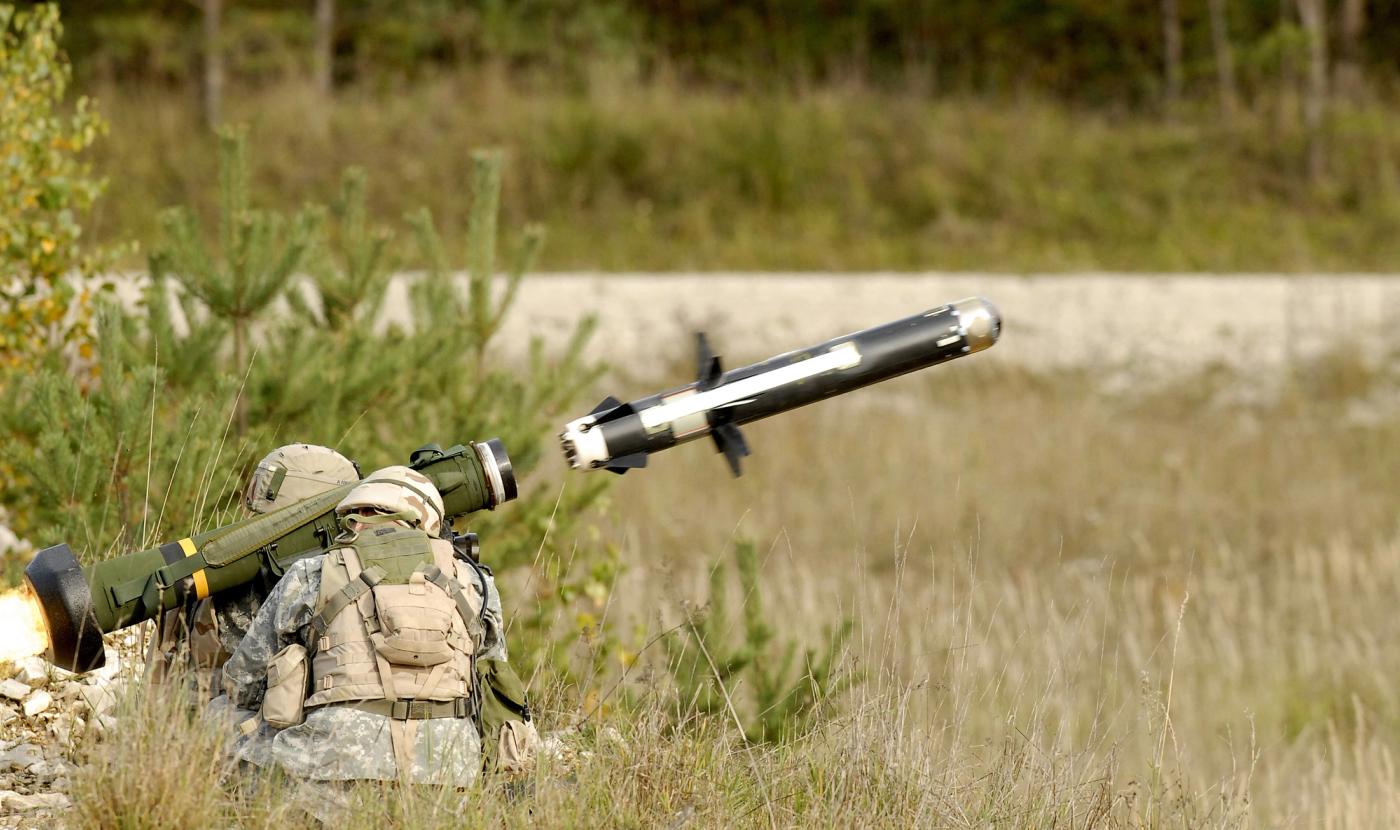
That matters tactically because a soldier can fire and then move to cover rather than remain exposed while guiding the weapon. The system can use a top-attack profile against armoured vehicles, aiming at the upper surface where tank armour is generally thinner, as well as a direct-attack mode for other targets and positions.
Javelin is also designed around a relatively compact launcher and missile tube compared with vehicle-mounted anti-tank systems. That gives infantry units flexibility in terrain where large armoured platforms may be difficult to deploy, including built-up areas, broken ground and some high-altitude environments.
Why Javelin matters for India
India already operates multiple anti-tank weapons, so Javelin should not be seen as replacing the country’s entire anti-armour inventory. The value of a new system is more likely to come from adding another modern option for selected formations and improving the ability of small units to engage modern armoured threats.
India’s geography also makes portable anti-tank systems strategically relevant. The Army has to plan for very different operating conditions along its borders, from plains suitable for armoured manoeuvre to mountainous terrain where mobility, weight and the ability to deploy weapons with infantry become especially important.
The system’s combat record has also increased its international profile. Javelin has been used in several conflicts and has become one of the best-known Western anti-armour weapons. Battle experience does not make any weapon invulnerable or automatically suitable for every Indian requirement, but it gives military planners more operational data than would exist for a completely new design.
The India-US defence relationship is getting broader
The Javelin announcement fits into a much wider expansion of India-US defence ties. India has bought American platforms such as P-8I maritime patrol aircraft, Apache attack helicopters and Chinook heavy-lift helicopters, while newer cooperation has included MQ-9B drones and discussions around additional systems and industrial partnerships.
For New Delhi, the objective is not simply to replace one foreign supplier with another. India has repeatedly pushed for more domestic manufacturing, technology transfer and diversified sourcing. That is why the industrial terms of a Javelin purchase could prove almost as important as the number of missiles in the initial order.
That domestic-production emphasis is already visible in India’s wider defence policy. Headline Thread recently covered how India opened additional DRDO missile technologies to domestic industry, reflecting the government’s effort to move more design, production and supply-chain capability into Indian companies.
Could Javelin be made in India?
Local production has long been part of the broader conversation around Javelin. Earlier discussions between India and the United States considered acquisition alongside co-production possibilities. However, the latest announcement does not by itself establish that the missiles in the proposed purchase will be manufactured in India.
Any meaningful local-manufacturing arrangement would require clarity on which components could be produced in India, how much technology would be transferred, who the Indian industrial partners would be and whether local production would extend beyond the initial requirement.
The policy environment for cross-border investment is also changing. India has recently revised parts of its approach to foreign investment from neighbouring countries, while simultaneously trying to attract strategic manufacturing and technology capital from a broader range of partners. Defence remains more tightly controlled than ordinary manufacturing, but the same larger goal of building domestic capability is relevant.
How Javelin compares with India’s existing anti-tank options
The Indian Army already uses a mix of anti-tank guided missiles and shoulder-fired weapons from different origins, while Indian programmes are also developing and producing indigenous systems. Javelin would therefore enter a layered inventory rather than create India’s anti-tank capability from scratch.
A diversified inventory can reduce dependence on a single supplier, but it also creates logistical complexity. Different missiles require their own training, maintenance, spares, launch equipment and supply chains. Whether a relatively small initial order makes operational sense will depend on how India integrates the system and whether a larger follow-on programme develops.
What the deal could mean for Indian soldiers
At the unit level, Javelin’s most important advantage is the ability to give dismounted troops a precision anti-armour capability without requiring a vehicle-mounted launcher. The fire-and-forget guidance reduces the operator’s need to remain exposed after launch, while the top-attack profile is designed specifically for heavily armoured vehicles.
Training would still be a major factor. The weapon relies on target identification, sensor use, correct engagement procedures and disciplined ammunition management. A sophisticated missile is only as useful as the unit’s ability to employ it under realistic field conditions.
What remains unknown
Several important details remain unresolved. The first is the final quantity. The 2025 US approval referred to up to 100 Javelin systems, but Friday’s statement did not specify whether that remains the exact planned order.
The second is cost. The earlier $93 million figure covered both Javelin and Excalibur-related items and associated support, so it should not be treated as the standalone price of the Javelin portion of a new Indian contract.
The third is industrial participation. If India secures local assembly, component manufacturing or deeper technology transfer, the strategic value could extend beyond the initial missiles. If the acquisition remains a small direct import, its impact would be more limited and primarily operational.
What happens next
The next concrete milestone will be an official contract announcement or procurement disclosure from the Indian or US side. That should clarify quantity, value, delivery timing, support arrangements and whether domestic manufacturing is part of the package.
Until then, the safest reading is that India has publicly signalled its intention to move ahead with Javelin, building on an already approved US sale framework. That makes the announcement strategically important, but the final scale of the programme will depend on the contract that follows.
If the purchase proceeds, Javelin would become another piece of India’s broader military modernisation effort: a proven imported capability added alongside domestic missile development, diversified defence partnerships and a growing emphasis on producing more critical systems inside India.
Sources
U.S. Army: FGM-148 Javelin system background and operating characteristics.