A food-safety investigation in Navi Mumbai has uncovered what authorities describe as a systematic operation that erased original manufacturing and expiry dates from branded packaged foods, printed replacement dates and altered nutrition labels before the products were prepared for export.
The Maharashtra Food and Drug Administration and Navi Mumbai Police examined a warehouse operated by Sadhana Enterprises in the Turbhe industrial area after receiving information about suspected tampering. Reuters, which was given access during the investigation, reported on September 1 that officers found chemicals used to remove printed dates, equipment for applying new information and large quantities of products carrying familiar brand names including Lay’s, Kurkure, Maggi, Knorr, Hellmann’s, Thums Up and Limca.
The case is important for consumers, exporters and food companies because the products themselves were genuine branded goods, according to the reporting, but their packaging information had allegedly been manipulated later in the supply chain. The police case cited by Reuters does not accuse PepsiCo, Nestlé, Coca-Cola or Unilever of participating in the alleged wrongdoing.
What authorities found inside the Navi Mumbai warehouse
Reuters reported that the warehouse contained nearly 5,000 cartons of consumer products, many of them expired or close to expiry. Maharashtra FDA officials said the stock was intended for export rather than sale in India, although the destination countries had not been publicly identified at the time of reporting.
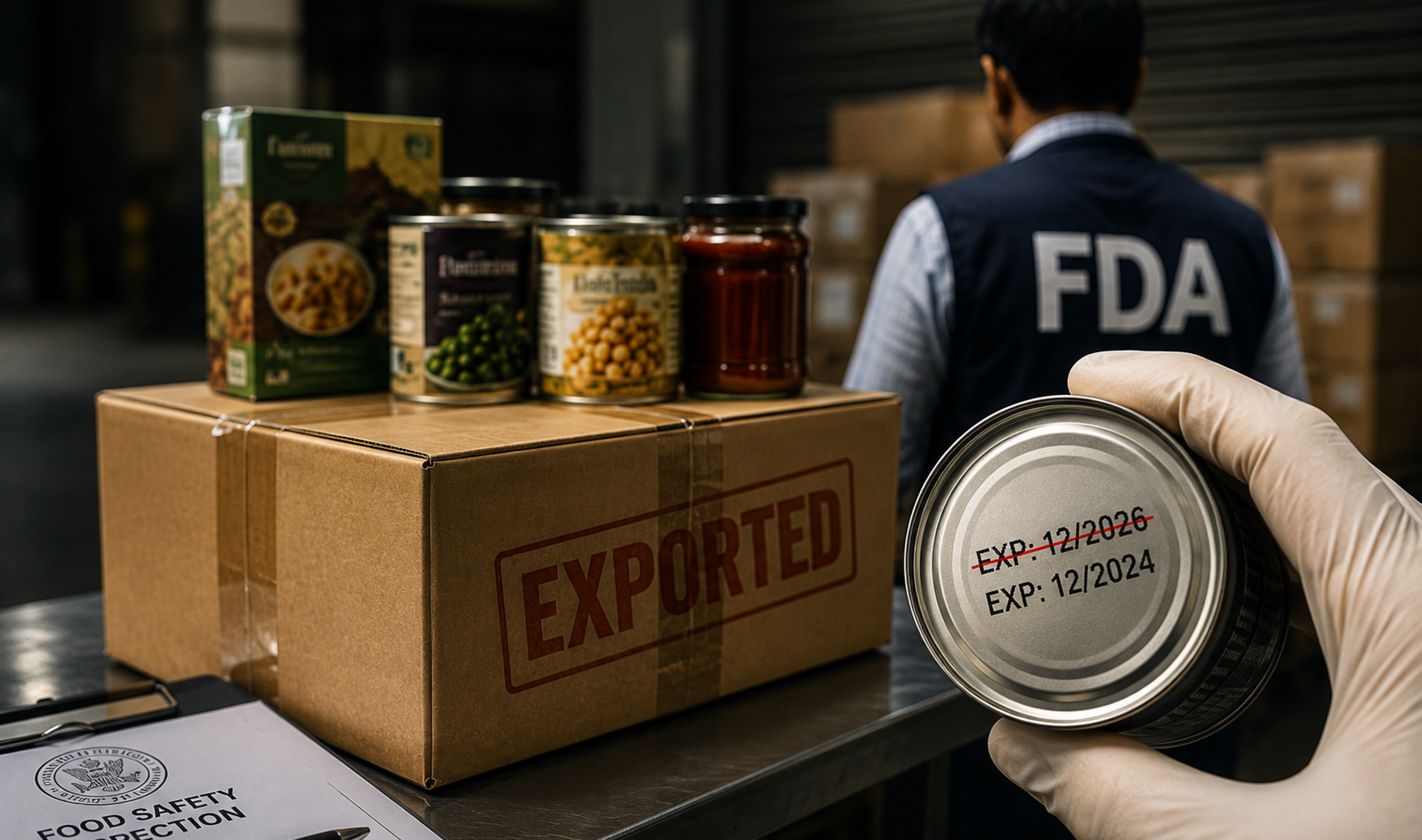
During the six-day investigation, officers found packets whose original dates had been scratched or chemically erased. A machine connected to a computer could then print replacement manufacturing and expiry information onto packages and cans. Reuters reported that some products were given dates that had not yet occurred, including a future manufacturing date in October 2026.
Investigators also found replacement nutrition labels. One Kurkure label inspected by Reuters was bilingual in English and French and changed details including the stated quantity of cereal ingredients, calories and serving size. A Maggi package carried a replacement label identifying it as a product of India and presenting nutrition information for export.
Separate Indian reports citing the FDA and police placed the seized stock at more than 8,000 cartons worth roughly ₹75 lakh. The difference appears to reflect different inventories or stages of the enforcement operation. The central fact is consistent across the reporting: authorities seized a substantial stock of packaged foods they allege had been relabelled or were being prepared for relabelling.
The brands named in the raid are not accused of running the operation
This distinction matters. The packages carried products made by major companies, but the police case did not accuse those manufacturers of altering the labels. Reuters said PepsiCo, Nestlé, Hindustan Unilever and Coca-Cola had not responded to requests for comment by the time its report was published.

According to Reuters, the warehouse owner said the work was being carried out for 19 exporters. Other local reporting said investigators were examining links to export-import businesses in Mumbai, Delhi and Noida. Those claims remain part of an ongoing investigation and should not be treated as proof of wrongdoing by every company or exporter mentioned during inquiries.
Maharashtra FDA Commissioner Tukaram Mundhe said the scale appeared organised and systematic and called for stronger accountability across the supply chain. That question could become one of the most consequential parts of the case: how authentic products moved from their original manufacturers into a channel where critical safety and nutrition information could allegedly be changed before export.
Why changing an expiry date is more serious than a packaging violation
Date marking is not decorative information. Under India’s Food Safety and Standards (Labelling and Display) Regulations, pre-packaged foods must carry required information such as ingredients, nutrition declarations, batch or lot details and applicable date markings. The regulations also state that food labels must not be false, misleading or deceptive.
FSSAI distinguishes between a “best before” date and an “expiry” or “use by” date. Best before primarily marks the period during which a food retains its expected quality under stated storage conditions. An expiry or use-by declaration indicates the end of the period after which the product should not be sold for human consumption under the stated conditions.
Erasing those dates can therefore prevent a buyer, retailer or regulator from knowing the actual age of a product. Altering the ingredient or nutrition panel creates an additional problem because import authorities and consumers may rely on that information for allergen, nutritional and regulatory decisions.
Why the export angle raises the stakes
India is trying to expand its role in global goods trade, and recent export growth has become an important part of the country’s economic story. That makes compliance failures in an export supply chain more than a local food-safety issue.
Importing countries can have their own standards for ingredients, language, nutrition declarations, shelf life and traceability. A package altered after it leaves the manufacturer can create regulatory exposure for exporters and reputational damage for Indian products even when the original manufacturer had no role in the tampering.
The presence of bilingual replacement labels is particularly significant because it suggests the alleged operation was not merely extending shelf life for an informal domestic resale channel. Authorities say the stock was being prepared specifically for overseas markets.
Food labels are already under greater scrutiny in India
The raid comes while India is already debating tougher information requirements on packaged food. FSSAI has proposed clearer front-of-pack warnings for foods high in sugar, salt and fat, while the Supreme Court has pressed authorities to move faster on consumer-facing labelling.
Those policy debates focus on whether the information printed by manufacturers gives people an adequate picture of a product. The Navi Mumbai case exposes a different vulnerability: even a compliant original label can become unreliable if intermediaries are able to remove or overwrite it later.
What consumers should look for on packaged food
The seized products were reportedly meant for export, so the investigation does not establish that relabelled stock from this warehouse reached Indian retail shelves. Consumers should therefore avoid assuming that ordinary packets from the named brands are unsafe simply because those brands appeared in the seized inventory.
More generally, however, visibly overwritten dates, stickers placed over mandatory declarations, inconsistent fonts, damaged packaging, broken seals or suspiciously altered batch information are reasons to avoid a product and report it to the seller or food-safety authorities. Consumers can also compare the date and batch information across the outer carton and individual retail package when both are available.
For online purchases, keeping the invoice and photographing damaged or suspicious packaging can make a complaint easier to document. The goal is not to treat every sticker as evidence of fraud, since legitimate import and export labels are common, but to look for alterations that obscure or contradict original mandatory information.
What happens next
The immediate questions are who supplied the stock to the warehouse, which exporters were involved, where the consignments were intended to go and whether any altered products had already left India. Authorities will also need to determine the responsibility of the warehouse operators and other businesses in the chain.
As of September 1, Reuters said it was unclear whether arrests had been made. Other Indian reports said officials had begun action against multiple people. Because the investigation is active, those numbers may change as police and the FDA identify additional parties and reconcile the seized inventory.
The broader consequence may be tighter traceability expectations for manufacturers, distributors and exporters. If regulators conclude that genuine products can be diverted and relabelled without detection, companies may face pressure to strengthen batch tracking, authorised-export controls and verification of downstream distributors.
For now, the most important conclusion is narrower: Maharashtra authorities say they found a significant alleged relabelling operation involving authentic branded foods, but the investigation does not accuse the major manufacturers whose products were found in the warehouse. The next phase will determine how far the network extended and whether any tampered consignments reached overseas consumers.