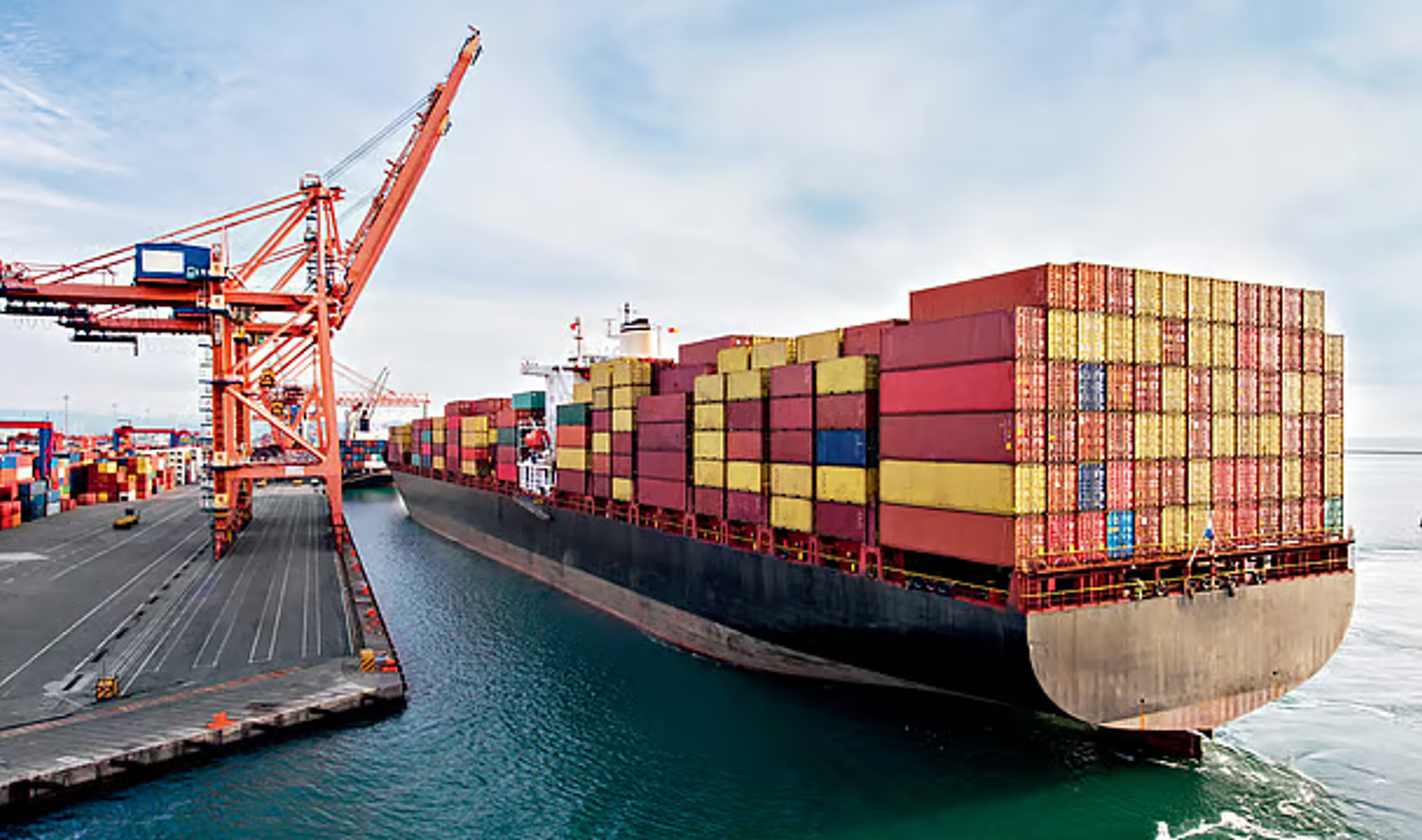
India’s goods exports have crossed the $200 billion mark for the current financial year, giving the country an unusually strong start to FY2026-27 despite a difficult global trade environment. Merchandise shipments between April and August 21 crossed $200 billion, while exports during August 1-21 alone were estimated at more than $25 billion, up about 15% from a year earlier, according to an official cited by PTI on August 26.
The milestone matters because India is trying to push annual merchandise exports beyond $500 billion while also targeting $1 trillion in combined goods and services exports. The latest numbers do not guarantee either target, but they show that export growth has remained resilient even as oil prices, shipping costs and geopolitical tensions complicate global trade.
For businesses and policymakers, the bigger question is not simply whether exports are rising. It is whether the growth is broad enough to continue through the rest of the financial year and whether India can turn stronger manufacturing output into a durable increase in its share of global trade.
India Exports Cross $200 Billion: What the Latest Data Shows
The newest estimate covers only the first 21 days of August, so it should be treated as preliminary rather than a complete monthly trade figure. The Economic Times reported on August 26 that merchandise exports for August 1-21 were estimated at more than $25 billion, around 15% higher year on year. That pushed cumulative exports from April through August 21 above $200 billion.
The formal July numbers already showed strong momentum. According to the Commerce Ministry data released through PIB on August 13, merchandise exports reached $44.24 billion in July, up 19.63% from $36.98 billion a year earlier. For April-July, goods exports totaled $173.78 billion, a 17.04% increase.
Put together, the official July data and the partial-August estimate suggest that India has maintained double-digit export growth for the first five months of the financial year. Full August trade data will be released in September and could revise the picture slightly.
What Is Driving India’s Export Growth?
The strongest recent growth has come from a mix of traditional industrial exports and newer manufacturing categories. In July, engineering goods exports rose 17.71% year on year to $12.24 billion, while organic and inorganic chemical exports increased 14.39%. Electronics and petroleum products were also among the categories Commerce Ministry officials identified as major contributors to the month’s strong performance.
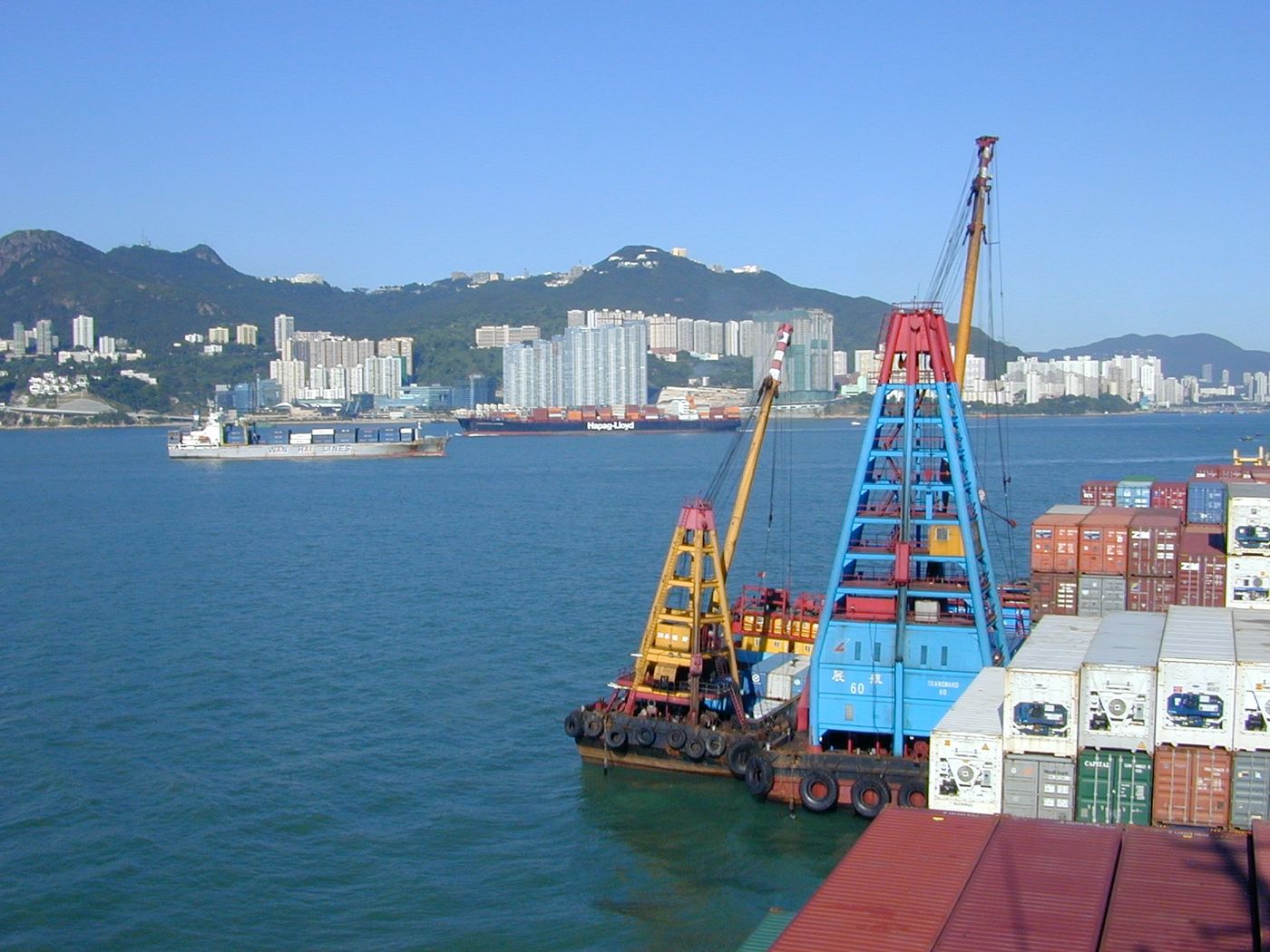
Electronics are particularly important because they show how industrial policy is beginning to affect the composition of Indian exports. Smartphones have already become one of India’s most visible manufactured export products, and the government is now trying to deepen domestic value addition through its new Mobile Phone Manufacturing Scheme. If more components, sub-assemblies and design work move into India, the export value generated locally can rise even when the number of devices shipped grows more slowly.
Engineering exports provide another important base. This category covers machinery, iron and steel products, auto components, electrical equipment and a wide range of industrial goods. Growth here matters because engineering products tend to have deeper domestic supply chains than many basic commodities and can support manufacturing employment across small suppliers as well as large exporters.
Can India Reach $500 Billion in Goods Exports This Year?
Crossing $200 billion by August 21 keeps the $500 billion merchandise-export milestone within reach, but the arithmetic becomes harder as the year progresses. India would need to sustain strong monthly shipments through the festival and year-end period while avoiding a major slowdown in key markets.
Commerce and Industry Minister Piyush Goyal has also said India is aiming for $1 trillion in combined goods and services exports in FY2026-27, compared with about $863 billion in the previous financial year. He said earlier in August that exports had been growing around 15% despite global uncertainty.
Services will be crucial to the broader $1 trillion goal because software, business services and other invisible exports generate a large surplus that helps offset India’s deficit in physical goods. The goods side, however, remains especially important for manufacturing investment and employment.
The Trade Deficit Is Still the Complication
Fast export growth does not mean India is running a trade surplus. Imports are also rising quickly. Merchandise imports reached $76.22 billion in July, up 17.52% year on year, producing a monthly goods trade deficit of $31.98 billion.
This is partly structural. India imports large quantities of crude oil, electronics, machinery, gold and industrial inputs. When global oil prices or freight costs rise, the import bill can increase even when domestic demand remains healthy. That means export growth needs to be judged alongside import growth rather than in isolation.
A wider goods deficit is not automatically a sign of weakness if imports are supporting productive investment, but sustained increases can put pressure on the rupee and the current account. Strong services exports and foreign capital inflows therefore remain important buffers.
Why Export Growth Matters for Manufacturing and Investment
Export performance influences investment decisions because manufacturers are more willing to build capacity when they can serve both the domestic market and overseas customers. That is one reason India has been combining production incentives with changes designed to make cross-border investment easier, including its recently revised FDI framework for investors linked to neighbouring countries.
A larger export base can also help suppliers justify investments that would be uneconomic if they depended only on Indian demand. This is particularly relevant for electronics, auto components, specialty chemicals, machinery and renewable-energy equipment, where scale can determine whether a factory is globally competitive.
For workers, the benefit is not limited to jobs at large export companies. Export manufacturing can create demand across logistics, packaging, testing, design, engineering, warehousing and supplier networks. The quality of those jobs depends on how much of the value chain remains in India rather than being imported.
What Could Slow India’s Exports?
The biggest near-term risks are external. Global demand could weaken if major economies slow, while geopolitical tensions can raise shipping and insurance costs. Exporters have already had to manage higher freight expenses and route disruptions linked to conflict in West Asia.
Trade policy is another uncertainty. The United States remains one of India’s most important export markets, and changes in tariffs or product rules can quickly affect sectors such as engineering goods, textiles, pharmaceuticals and gems and jewellery. Companies that rely heavily on one destination remain more exposed than exporters with a diversified customer base.
Currency movements cut both ways. A weaker rupee can make Indian products more competitive abroad, but it also raises the cost of imported fuel, components and machinery. Exporters with high imported-input content may therefore see less benefit from depreciation than headline exchange-rate moves suggest.
How Trade Agreements Fit Into the Growth Story
India has been using trade agreements to improve access to overseas markets while trying to protect sensitive domestic sectors. Recent data showed especially strong export growth to several free-trade-agreement partners, including Singapore and Sri Lanka, suggesting that tariff preferences can translate into meaningful shipment growth when Indian firms are competitive.
The harder task is increasing exports of higher-value products rather than relying primarily on commodities or low-margin manufacturing. Machinery, electronics, chemicals, pharmaceuticals and advanced industrial products can create more domestic value and make export growth less vulnerable to swings in commodity prices.
What Happens Next?
The next hard data point will be the Commerce Ministry’s full August trade release in September. That will show whether the 15% growth estimated for August 1-21 held through the end of the month and how imports moved over the same period.
Businesses will also watch the composition of exports. Continued growth in engineering goods, electronics, chemicals and other manufactured products would be more encouraging for India’s industrial ambitions than a temporary rise concentrated in a few volatile categories.
The $500 billion goods-export milestone is now plausible enough to matter, but the second half of the financial year will be decisive. Maintaining double-digit growth while controlling logistics costs and navigating trade-policy uncertainty will determine whether the early momentum becomes a record year.
The Bottom Line
India crossing $200 billion in merchandise exports by August 21 is a meaningful milestone because it reflects strong growth across the opening months of FY2026-27, not a single unusually good month. July exports were up nearly 20%, and the first three weeks of August were estimated to be running about 15% higher year on year.
The strongest signal is the continued contribution from manufactured goods such as engineering products and electronics. The main caution is that imports are rising quickly too, leaving India with a large merchandise trade deficit. Whether 2026-27 becomes a record export year will depend on how well that manufacturing momentum survives weaker global demand, higher freight costs and shifting trade rules.