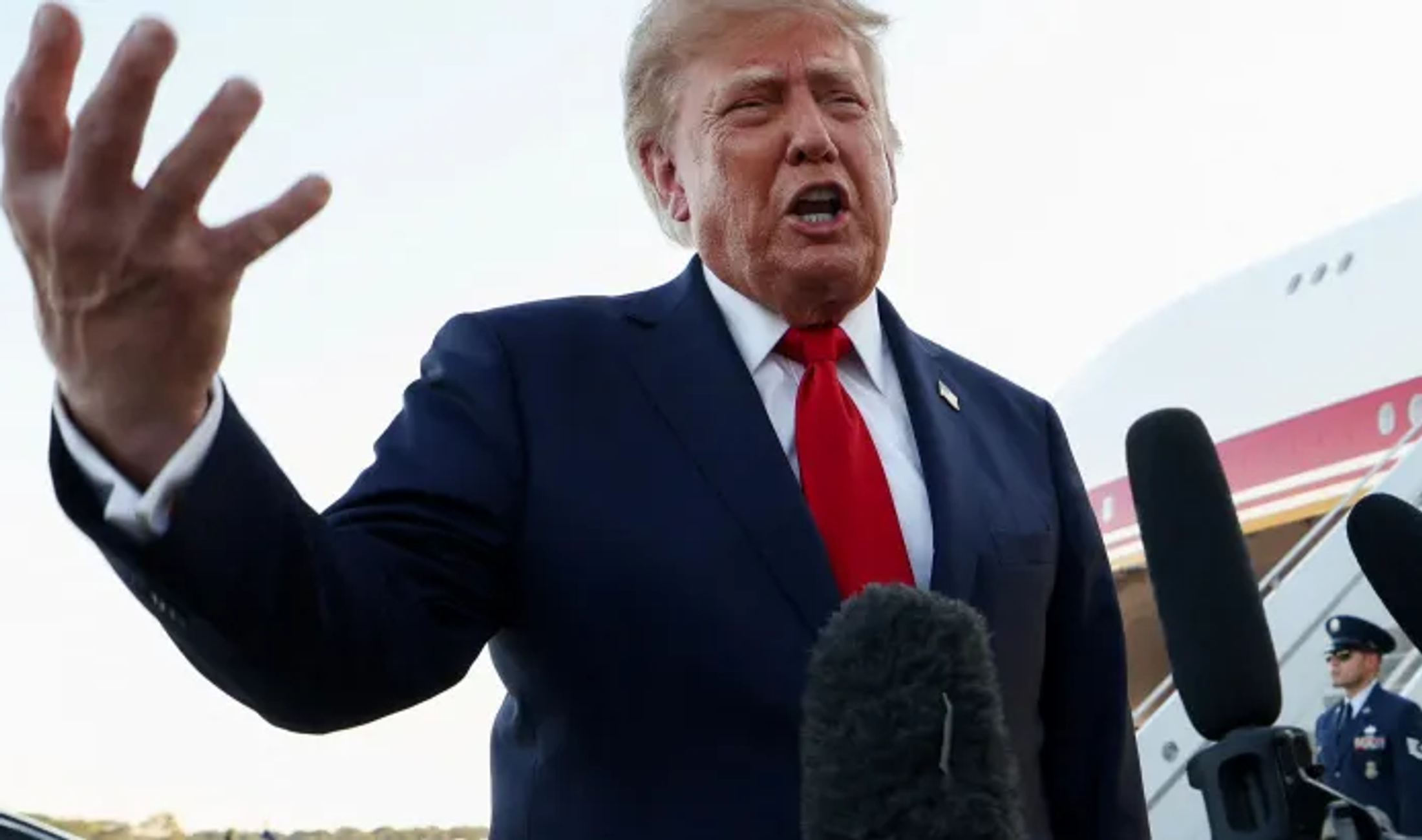
US President Donald Trump has signed the Lindsey O. Graham Sanctioning Russia and Iran Act of 2026 into law, turning what had been a congressional tariff threat into a new source of real policy risk for India. The law gives the US president authority to impose tariffs of up to 100% on major buyers of Russian oil and gas.
For Indian consumers and exporters, the most important distinction is this: the United States has not automatically imposed a new 100% tariff on Indian goods. Trump now has the legal authority to use tariffs against qualifying Russian-energy buyers, but the rate, timing, countries covered, exemptions and implementation would depend on subsequent presidential action.
What changed after Trump signed the Russia sanctions bill?
The legislation cleared the US House of Representatives this week by 262-159 after previously passing the Senate. Trump signed it on Friday, September 18, making the measure law. That is a major change from earlier in the week, when India was watching a bill that still had to complete the US legislative process.
The law expands sanctions targeting Russia's energy and defence sectors, political and military figures, and networks accused of helping Moscow evade existing restrictions. It also targets Russia's so-called shadow fleet of tankers used to move energy exports despite Western sanctions.
Its most consequential provision for India is secondary tariff authority. Reuters reports that the law allows tariffs of up to 100% on the largest buyers of Russian oil and gas and on major facilitators of sanctions evasion. The president has substantial discretion over how that authority is applied.
Is a 100% US tariff on India in force now?
No. The signing does not mean every Indian export to the US suddenly carries an additional 100% duty. It means the statutory power now exists for Trump to impose tariffs on countries that meet the law's criteria.
That distinction matters because a 100% tariff would be economically significant. Such a levy could sharply raise the landed cost of affected Indian goods in the US unless exporters absorbed part of it through lower margins. The practical impact would depend on the tariff rate actually chosen, product coverage, implementation date and any waivers or exemptions.
Why India is one of the countries most exposed
India is the world's third-largest oil importer and has become one of the biggest buyers of Russian crude since the war in Ukraine reshaped global energy flows. Reuters reported this week that Russian crude accounts for more than 40% of India's oil supplies, making a rapid shift away from those barrels commercially difficult.
New Delhi's position is that energy sourcing must be guided by national interest, affordability and security of supply. The Ministry of External Affairs said India remains firmly committed to energy security for its 1.4 billion people through diversified sourcing and changing market conditions.
India has also told Washington that punitive measures could affect not only bilateral ties but the international energy market. The government has said it will take necessary steps to protect India's trade and economic interests and work with domestic industry on the implications.
Why simply stopping Russian oil is difficult
India has two competing risks. Continuing large Russian oil purchases could expose trade with the US to new tariff pressure. Cutting those purchases quickly could force refiners to replace large volumes in an already tight global market, potentially increasing crude costs, fuel-price pressure and inflation.
That energy problem is more sensitive because oil prices have already been elevated. Headline Thread has been tracking how oil above $108 and a rupee near record lows are increasing India's import and inflation risks.
Recent disruption to Saudi oil infrastructure has also underlined how geopolitical shocks can reduce India's room to manoeuvre when sourcing crude.
What could a 100% tariff mean for Indian exporters?
The US is one of India's most important export markets. A very high secondary tariff, if actually imposed broadly, could make affected Indian products much less competitive against goods from countries outside the tariff regime. Exporters could face cancelled orders, renegotiated prices or pressure to shift production and routing.
Some Indian apparel exporters are already trying to close or accelerate Spring 2027 US orders because of uncertainty around the sanctions law. That does not mean disruption is inevitable, but it shows businesses are treating the new authority as more than a theoretical political threat.
The risk also arrives while India and the US are pursuing a broader trade relationship. A large Russia-linked tariff could complicate those negotiations by connecting energy policy to market access.
Could Trump impose less than 100%?
Yes. The phrase 'up to 100%' is important. The law gives tariff authority rather than mandating one universal 100% rate for every targeted country. Reuters says the legislation gives the president broad discretion, so future implementation could differ by country, transaction or policy objective.
That flexibility makes diplomacy crucial. India could seek exemptions, transition periods, quotas or another negotiated arrangement while refiners diversify supply. Until the White House announces an implementing action, claims that India is already paying a new 100% US tariff would be premature.
What happens next for India?
The next stage shifts from Congress to implementation and diplomacy. India will be watching whether the Trump administration formally identifies countries for secondary tariffs, what rate it selects, when measures would take effect and whether exemptions are offered.
Indian refiners will simultaneously have to evaluate how much Russian crude can be replaced without sharply increasing costs. Export industries need clarity on whether any US action would apply broadly to Indian imports or target narrower categories.
The development also adds to a wider set of pressures on India's economy. Food-price risks have been building after weak monsoon conditions raised concerns over rice production, making another inflationary energy shock particularly unwelcome.
The bottom line
Trump's signature is a meaningful escalation because the Russia sanctions measure is now US law. India is exposed due to its large Russian oil purchases, and Washington now has a statutory mechanism that could be used to impose tariffs of up to 100%.
But the accurate position on September 19 is equally important: a new 100% tariff has not automatically been imposed on India. The immediate questions are whether Trump uses the authority, at what rate, on which countries and products, and whether India can negotiate a workable path that protects both its energy security and access to the US market.