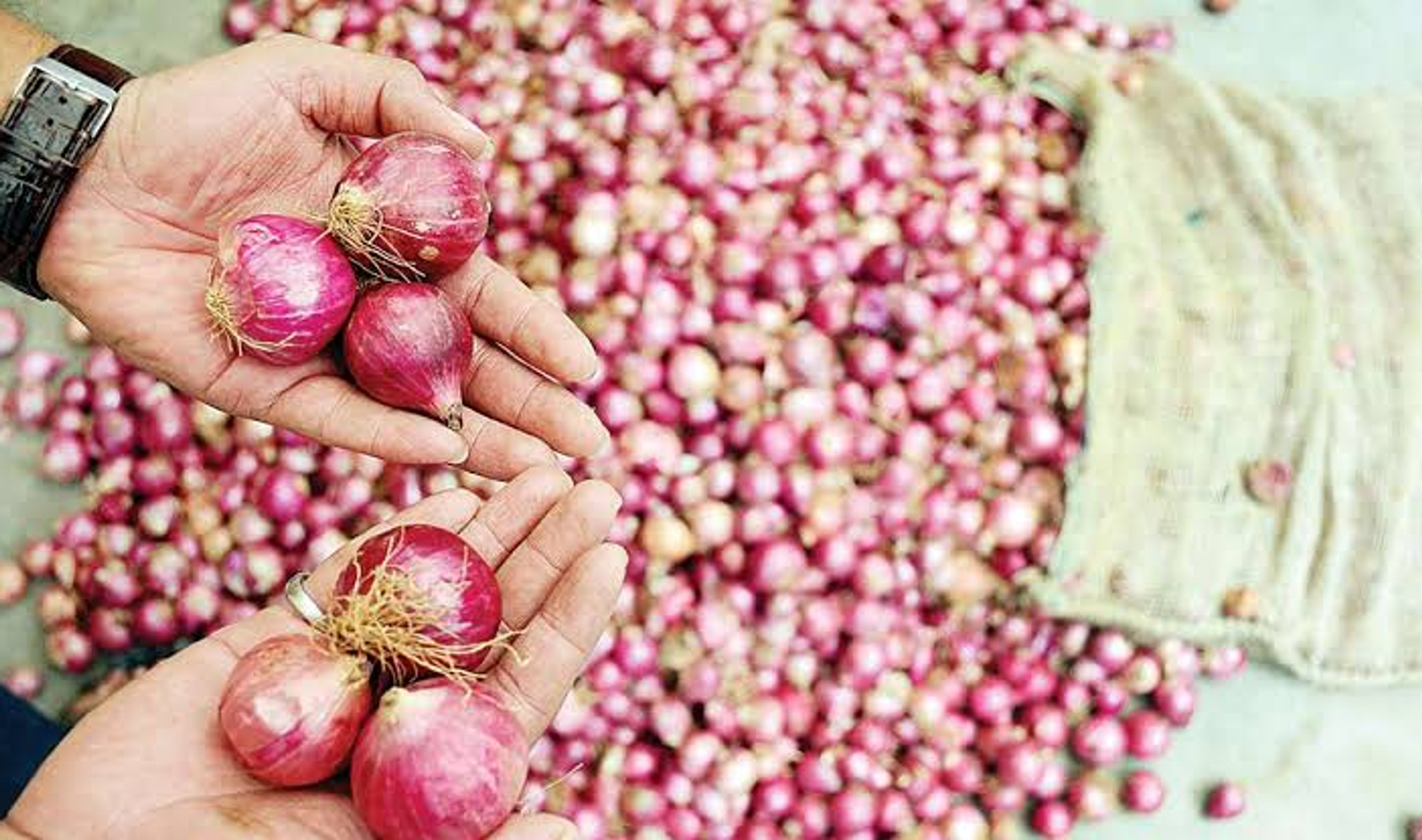
Onion prices remain painfully high for Indian households despite the Centre selling buffer stock at ₹35 per kg. The all-India average retail price stood at ₹53.84 per kg on September 16, 2026, nearly 94% above ₹27.71 a year earlier, according to Department of Consumer Affairs data cited by India Today. In several markets, consumers are still paying around ₹60-70 per kg.
Why are onion prices still near ₹70?
The biggest issue is timing. India is in the seasonal transition between stored rabi onions and fresh kharif arrivals. Rabi stocks are gradually being drawn down while the next crop has not yet reached markets in enough volume. That temporarily tightens supply even when the country does not face an overall production shortage.
This year's transition is more difficult because kharif sowing was delayed in some important producing regions. Government assessments earlier in the season indicated sowing around Nashik was roughly 15 days behind schedule, while sowing in Karnataka's Chitradurga-Challakere belt was well below normal. Erratic rainfall has also affected crop timing and market arrivals.
What is the government doing?
The Centre began releasing onions from its Price Stabilisation Fund buffer in late August. NCCF, NAFED and Kendriya Bhandar have been selling onions at ₹35 per kg in selected price-sensitive cities, supported by mobile vans, trucks and dedicated railway rakes commonly called the Kanda Express.
By September 6, about 4,000 tonnes had been sold across 17 cities during the first 10 days of the intervention. The Centre had about 1.21 lakh tonnes in its 2026 buffer at that point, according to Consumer Affairs Secretary Nidhi Khare.
Why doesn't the ₹35 government price pull down the whole market?
A subsidised sale works only where enough low-cost stock reaches consumers. Government onions are available through specific outlets and mobile distribution channels, while most households continue buying through regular retail markets. The open market therefore still reflects wholesale costs, transport, local supply and retailer margins.
That explains the striking gap: a consumer with access to a government outlet may pay ₹35 per kg, while another household in the same broad region can face ₹60-70 in the open market. The all-India average wholesale price was ₹45.65 per kg on September 16, already substantially above the government's subsidised retail price.
Is India actually running out of onions?
Not according to the government's production estimates. India's 2025-26 onion production was estimated at 307.37 lakh tonnes, broadly similar to 307.67 lakh tonnes in the previous year. The current problem is therefore better understood as a seasonal supply and distribution squeeze rather than evidence that India has no onions available.
When could onion prices come down?
Fresh kharif arrivals are the key variable. Larger market arrivals are expected from around mid-October. If the crop reaches mandis in healthy volumes and weather does not create another disruption, the additional supply should reduce pressure on wholesale and retail prices.
Until then, prices can remain uneven between cities and even between retail channels within the same city. Buffer releases may prevent an even sharper spike, but they cannot instantly replace the much larger commercial supply chain.
Why onion prices matter beyond the kitchen
The onion spike arrives while Indian households are already dealing with pressure in other food categories. Sugar prices have also remained elevated ahead of the festive period, making food inflation particularly important for household budgets.
The broader inflation picture also matters for monetary policy. A weak rupee and expensive crude oil can add imported inflation at the same time that food prices are rising domestically, increasing the difficulty of the Reserve Bank of India's policy choices.
What to watch next
The most useful indicators over the next few weeks will be kharif onion arrivals in major mandis, the pace and geographic reach of government buffer releases, and whether retail prices begin converging toward wholesale prices. If fresh arrivals remain delayed, ₹60-70 retail prices could persist in some markets longer than consumers expect.