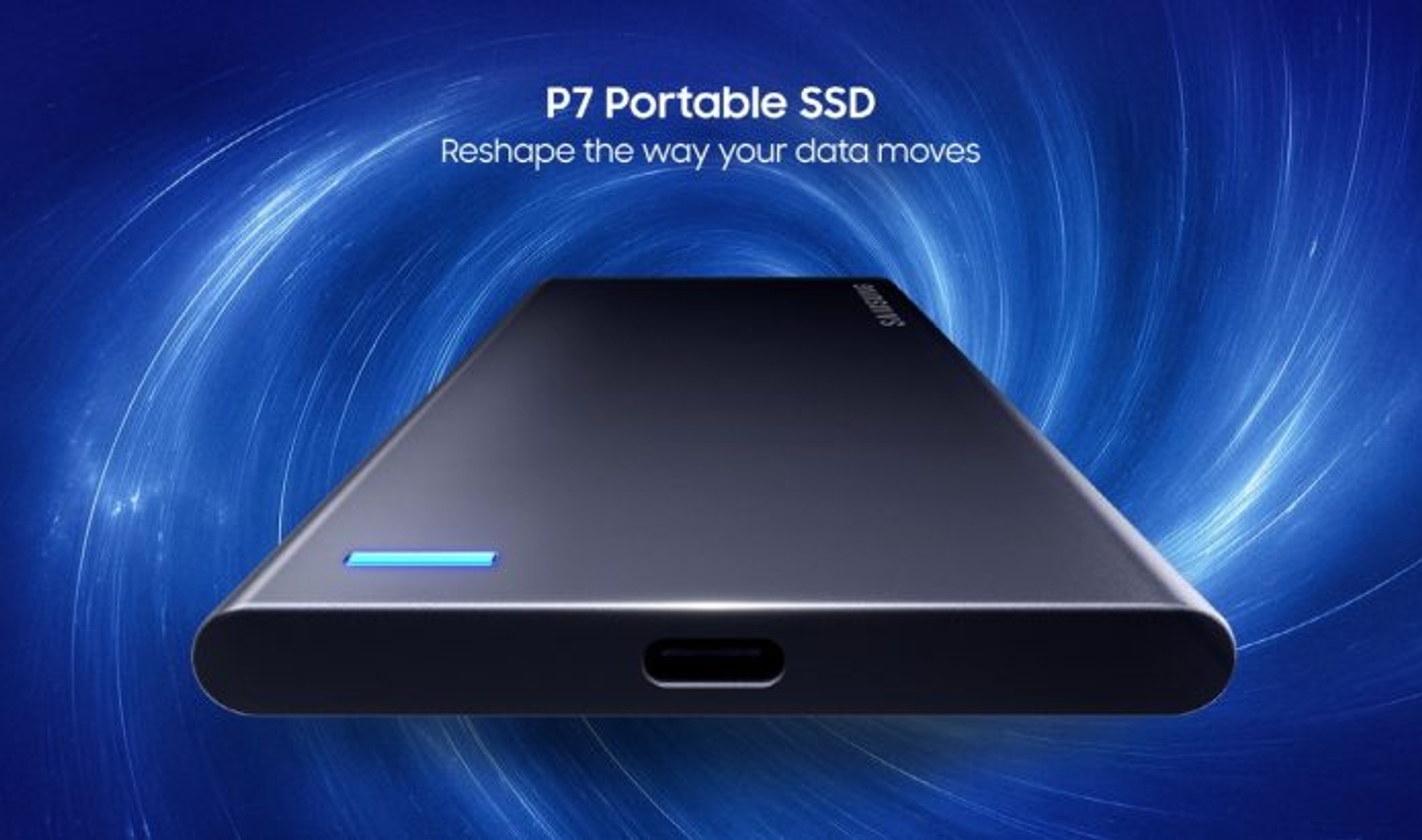
Samsung has introduced its next-generation P9 and P7 portable SSDs in India, moving its external storage lineup to USB4 and sharply increasing peak transfer speeds. The new drives were unveiled around Gamescom 2026 and are scheduled to reach India from the first week of September.
Samsung says the flagship P9 can reach sequential read speeds of up to 4,000MB/s and write speeds of up to 3,800MB/s, while capacities across the P Series run from 1TB to 8TB. The P7 targets more general-purpose portable storage, while the P9 is positioned toward creators and professional workloads.
For Indian buyers, the important question is not simply whether USB4 is faster. These are expensive portable drives, and getting the full benefit depends on the computer, phone or camera they are connected to. That makes the P9 a specialist product for many people, while the P7 is easier to understand as a premium everyday drive.
Samsung P9 and P7 price in India
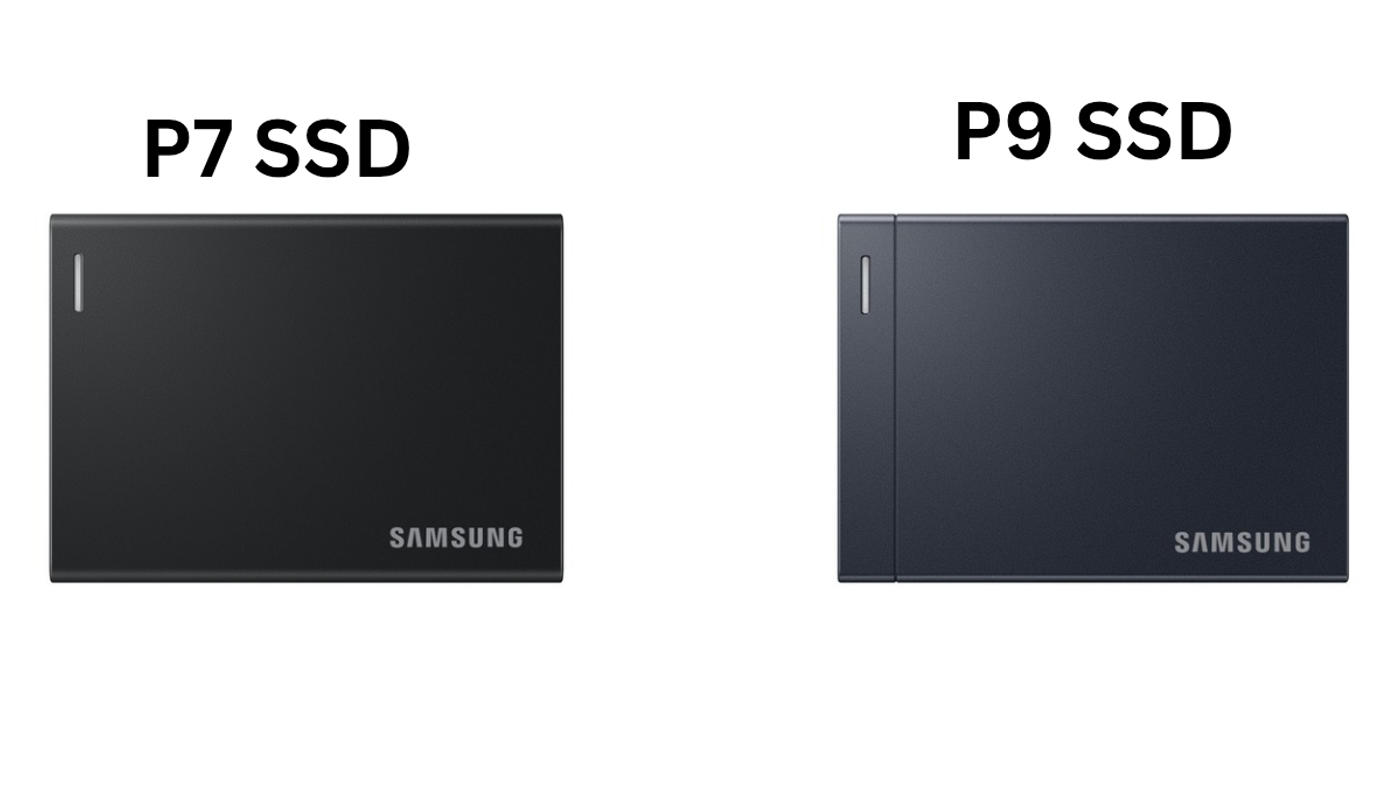
Samsung has announced Indian MSRPs for both drives. The P7 starts at ₹27,839 for 1TB, while the P9 starts at ₹32,649 for the same capacity. At the top end, Samsung lists the 8TB P7 at ₹2,19,839 and the 8TB P9 at ₹2,56,499.
The full P9 pricing is ₹32,649 for 1TB, ₹62,399 for 2TB, ₹1,29,599 for 4TB and ₹2,56,499 for 8TB. The P7 is priced at ₹27,839 for 1TB, ₹52,799 for 2TB, ₹1,10,399 for 4TB and ₹2,19,839 for 8TB.
Those are launch MSRPs rather than guaranteed long-term street prices. Samsung says the P Series will be available in India from the first week of September, and capacities may vary by market. Buyers should therefore verify the exact capacity and final retailer price once listings go live.
What makes the Samsung P9 different?
The P9 is the headline product because Samsung is pushing both speed and unusually high capacity in one portable drive. It is rated for up to 4,000MB/s sequential reads and 3,800MB/s sequential writes over USB4. Samsung says that is roughly twice the sequential performance of the previous T9, which uses USB 3.2 Gen 2x2 and tops out at up to 2,000MB/s.
Samsung also calls the 8TB P9 the world’s first 8TB USB4 portable SSD supporting speeds up to 4,000MB/s. That combination matters most for professionals working with very large video, RAW photo, game-development or AI project files, where both capacity and transfer time can become workflow bottlenecks.
The company specifically highlights support for 12K direct recording as a professional use case. That does not mean every camera or production setup will automatically work at 12K just because the drive is connected. The host device, recording format, cable, sustained write behaviour and software all matter, but the claim shows the type of workload Samsung is targeting.
Samsung P7 focuses on broader compatibility
The P7 also uses USB4, but Samsung is presenting it as the more versatile drive for normal work, entertainment and portable storage. The company lists compatibility with desktops, laptops, smartphones, gaming consoles and cameras, making it the more natural choice for people who move files between several device types.
Durability is another part of the pitch. Samsung says the P7 has completed 2-metre drop testing along with shock and vibration testing. That is useful for photographers, videographers, students and professionals who regularly carry an external drive in a backpack or camera bag, although it should not be treated as permission to handle important data carelessly.
USB4 is fast, but your device has to support it
The biggest buying trap is assuming that a 4,000MB/s-rated SSD will deliver that speed on every USB-C port. USB-C describes the connector shape, not the maximum data rate. A laptop can have a USB-C port while supporting a slower USB standard, and performance will fall back to what the host interface can handle.
That is particularly relevant for laptop shoppers. For example, the Acer Swift Neo recently launched in India with a broad port selection, but buyers still need to check the exact USB capabilities of their configuration before paying a premium for very high-speed external storage.
To get close to the P9’s rated performance, the host device, cable and workload all need to support the necessary bandwidth. Small file transfers, heavily fragmented workloads and thermal limits can also produce very different real-world results from headline sequential speed figures.
Who should buy the Samsung P9?
The P9 makes the strongest case for video professionals, photographers with very large libraries, developers handling huge local datasets, and creators who routinely move hundreds of gigabytes between systems. For those users, reducing transfer time can have a real productivity benefit.
The higher-capacity P9 models also make sense for people who need one portable working drive rather than a collection of smaller SSDs. However, the 4TB and 8TB prices are high enough that buyers should compare the cost with desktop NVMe storage, NAS systems and other professional backup options before deciding.
Who should buy the Samsung P7?
The P7 is better aligned with users who want fast external storage but do not necessarily need the P9’s peak professional positioning. A 1TB or 2TB model could appeal to photographers, gamers moving large installations, students with media-heavy projects and professionals who want a portable backup drive.
Even then, value matters. If your current laptop or console cannot take meaningful advantage of USB4 speeds, a cheaper USB 3.2 portable SSD may provide similar day-to-day experience for backups and ordinary file storage. The P7 becomes more attractive when you expect to keep the drive through multiple device upgrades.
Why portable storage is getting faster and larger
Storage demand is rising alongside larger games, higher-resolution cameras and local AI workloads. The trend also sits inside a broader semiconductor race. India’s growing semiconductor push is attracting more global supplier interest, reflecting how memory, processors and advanced electronics have become strategically important beyond individual consumer devices.
For consumers, the practical result is that external storage is no longer only about keeping backups. Fast portable SSDs increasingly act as working drives for video editing, game libraries, photography and development projects. USB4 gives manufacturers more headroom, but pricing will determine how quickly these products move beyond professionals and enthusiasts.
Samsung P9 vs P7: which one makes more sense?
Choose the P9 if transfer speed is part of your daily workflow and your hardware can exploit USB4 bandwidth. Its strongest advantages are the 4,000MB/s-class read speed, high sustained-performance positioning and availability up to 8TB.
Choose the P7 if you want a premium portable SSD for a wider mix of devices and value durability and flexibility more than the P9’s professional credentials. For most buyers, 1TB or 2TB will also be much easier to justify than the extremely expensive 4TB and 8TB variants.
If your computer does not support fast USB4 storage, consider waiting or buying a less expensive drive. Paying for interface performance that the host cannot use offers little practical benefit.
What Indian buyers should watch next
The first thing to watch is actual retail pricing once the drives arrive in India in the first week of September. MSRP establishes Samsung’s positioning, but launch offers and later street prices could materially change the value equation.
Independent testing will also matter. Sequential specifications are useful for understanding maximum throughput, but buyers should look for sustained transfer behaviour, thermals, performance with different host devices and practical large-file workloads before spending heavily on the P9.
On paper, Samsung has made a substantial generational jump by moving its portable SSD lineup to USB4. The P9 is the more technically ambitious product, while the P7 has the broader consumer appeal. Whether either is worth the premium in India will ultimately depend on the device you already own and how often storage speed actually limits your work.