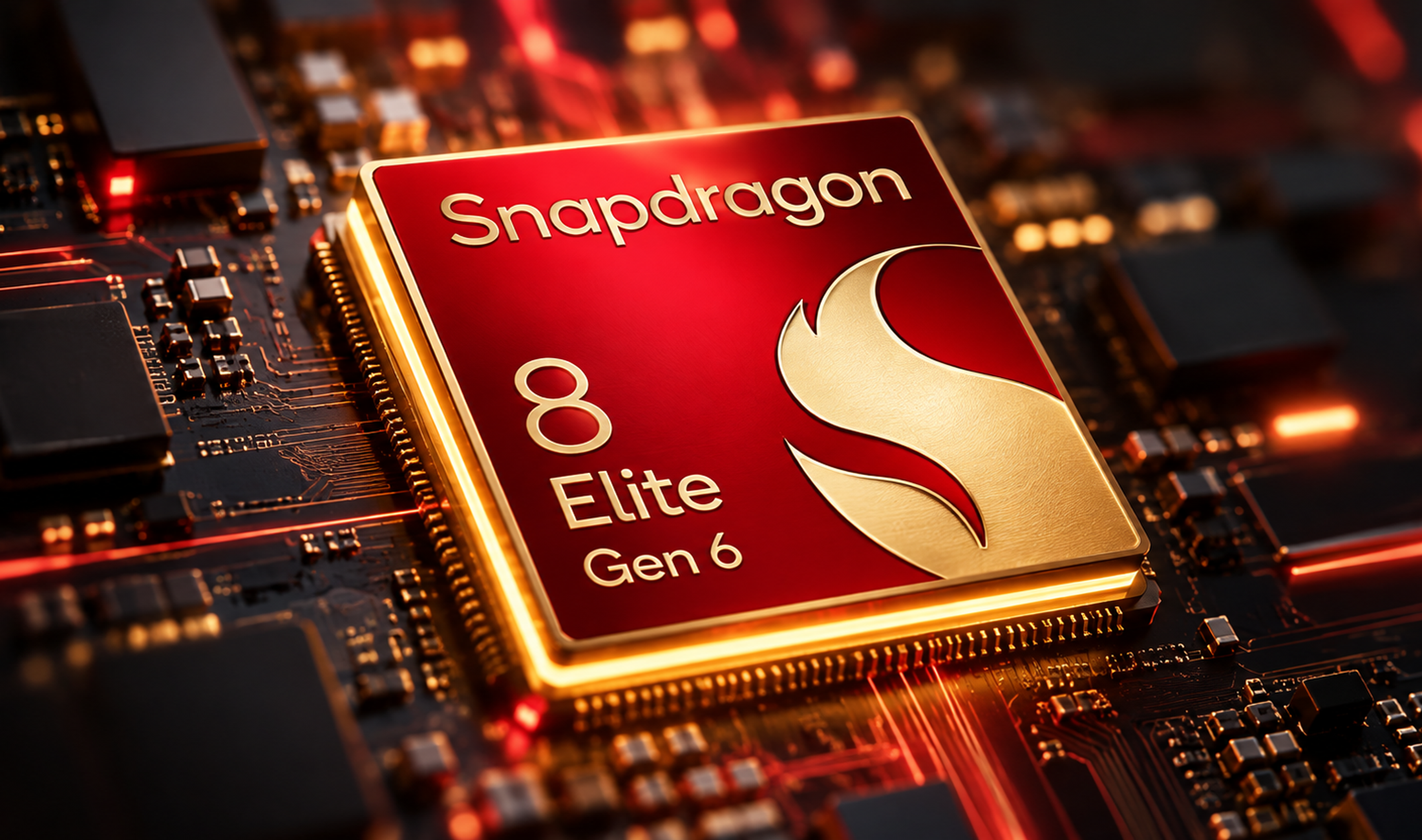
Qualcomm has changed the shape of the premium Android chip market for 2027. Instead of one top Snapdragon platform, it has introduced two: Snapdragon 8 Elite Gen 6 and the higher-end Snapdragon 8 Elite Extreme Gen 6. Both are built on an advanced 2nm process and share Qualcomm's latest Oryon CPU, rearchitected Adreno GPU and Hexagon NPU, but the split gives phone makers a new choice between a broadly premium platform and an even higher-performance tier.
That distinction matters in India because Qualcomm says devices using the new platforms will come from HONOR, iQOO, Motorola, OnePlus, OPPO, REDMI, RedMagic, vivo and Xiaomi. For buyers, the important question is no longer simply whether a phone has the newest Snapdragon chip. It is which Gen 6 tier it uses, how the manufacturer cools it, and whether the extra performance translates into features worth paying for.
The biggest change is Qualcomm's two-tier flagship strategy
Qualcomm describes the Extreme Gen 6 as its most powerful mobile platform, while the standard 8 Elite Gen 6 is intended to bring many of the same AI, gaming, imaging and connectivity capabilities to a broader range of top-tier smartphones. In practical terms, this gives manufacturers more room to separate ultra-premium devices from regular flagships without dropping to an older chip generation.
This could make spec-sheet shopping slightly more complicated. A phone carrying the Snapdragon 8 Elite name is no longer automatically using Qualcomm's absolute highest tier. Buyers comparing two expensive Android phones will need to check the full processor name rather than treating every Gen 6 device as equivalent.
What both Snapdragon 8 Elite Gen 6 chips share
The common foundation is substantial. Qualcomm says both platforms use a 2nm process, custom Oryon CPU technology, a redesigned Adreno graphics architecture and its latest Hexagon NPU. The company is emphasizing on-device agentic AI, where software can understand context and take actions for a user rather than simply return a generated answer.
The 2nm move is especially important because smartphone performance is constrained by power and heat. A smaller, newer manufacturing process can give chip designers more room to improve performance per watt, but it does not guarantee that every Gen 6 phone will have excellent battery life. Display choice, modem use, battery capacity, thermal design and each manufacturer's software tuning remain major variables.
Extreme Gen 6 is where Qualcomm is pushing its biggest features
Qualcomm is reserving its strongest positioning for the Extreme platform. It highlights faster and more personalized on-device agents, a new Adreno Neural Fusion system that uses AI in the graphics pipeline, and upgraded camera processing with Advanced Professional Video support and Intelligent Pixel Control. The goal is not merely a higher benchmark score but more AI processing happening directly on the phone.
For consumers, local AI can matter in three ways: response speed, privacy and offline capability. A task processed on the device does not always need to send the same amount of information to a remote server, and some functions can continue when connectivity is poor. The exact privacy benefit still depends on the app and implementation, so an 'on-device AI' label should not be treated as proof that no data ever leaves the phone.
The standard Gen 6 may be the more interesting chip for value
The standard Snapdragon 8 Elite Gen 6 could ultimately matter to more buyers. Qualcomm explicitly says it shares the advanced 2nm foundation and many of the same breakthrough capabilities as Extreme while targeting a broader range of premium phones. If manufacturers use that pricing flexibility to build less expensive flagships, the standard chip could become the practical sweet spot.
There is an important caveat: Qualcomm has not announced Indian retail prices for phones based on either platform, and a processor tier does not determine a handset's final price. Cameras, displays, storage, memory, materials, import costs, local manufacturing and brand positioning can move the price far more than the chip alone.
How Gen 6 compares with last year's flagship generation
The clearest generational shift is manufacturing. Snapdragon 8 Elite Gen 5 used a 3nm process, while the new Gen 6 family moves to 2nm. Gen 5 already brought Qualcomm's third-generation Oryon CPU, an Adreno 840 GPU and a Hexagon NPU with a major focus on agentic AI. Gen 6 therefore looks less like the beginning of Qualcomm's AI strategy and more like an attempt to make that strategy faster, more local and more deeply integrated into graphics, imaging and everyday phone behavior.
Independent specification analysis also points to a fourth-generation Oryon CPU and higher peak clocks on the standard Gen 6 than Gen 5, but buyers should wait for shipping phones and independent testing before treating synthetic benchmark gains as real-world improvements. Sustained performance can differ dramatically between phones using the same processor because of cooling and power limits.
MediaTek makes this a more interesting Android flagship race
Qualcomm is not moving to 2nm alone. MediaTek has already introduced the Dimensity 9600 Pro, another 2nm flagship platform with a strong emphasis on on-device AI. That means the 2027 Android market should not be judged by process node alone. Performance per watt, sustained gaming, modem behavior, camera pipelines and how phone makers actually deploy AI features will be more useful comparisons.
This competition is good for Indian buyers because brands including vivo, OPPO, Xiaomi and others can choose between multiple top-tier platforms. It also makes blanket claims such as '2nm means fastest' less useful. Two chips manufactured on advanced nodes can behave very differently once placed inside retail phones.
Which upcoming phones should Indian buyers watch?
Qualcomm has confirmed the manufacturer list, but not every individual handset or India launch date. That distinction is important because pre-launch phone lists circulating online often mix confirmed devices with leaks and expected models. HONOR, iQOO, Motorola, OnePlus, OPPO, REDMI, RedMagic, vivo and Xiaomi are confirmed partners for Gen 6-family devices; the exact chip tier and regional availability need to be verified model by model as brands announce them.
Vivo's current flagship cycle also shows why timing matters. Headline Thread recently covered the Vivo X500 series launch and its India outlook. A new Qualcomm platform does not automatically mean every premium Android family immediately switches chips, so buyers should avoid purchasing based on expected processor lists until a manufacturer confirms the Indian model.
Should you wait for a Snapdragon 8 Elite Gen 6 phone?
If you already own a recent flagship and are satisfied with it, the Gen 6 announcement alone is not a reason to upgrade. Qualcomm's most interesting claims depend on what phone makers build around the silicon, and those implementations need independent testing. Waiting is more sensible for buyers specifically planning a premium Android purchase in the next flagship cycle, especially if on-device AI, high-end gaming or video capture are priorities.
For value-conscious buyers, the standard Snapdragon 8 Elite Gen 6 may deserve more attention than Extreme. If it delivers most of the new platform's capabilities in phones priced below the ultra-premium tier, it could offer the better performance-to-price balance. Extreme makes more sense where a manufacturer can demonstrate a tangible benefit through sustained performance, advanced camera processing or genuinely useful local AI.
The buying rule for the Gen 6 era
The processor name is becoming less useful as a shortcut for deciding which flagship is best. With two Qualcomm flagship tiers, a competing 2nm MediaTek platform and increasingly manufacturer-specific AI features, the better approach is to compare complete phones. Look at sustained performance, battery life, camera results, software support, thermal behavior and the AI features that actually run on the device you are buying.
Snapdragon 8 Elite Gen 6 is important because it pushes 2nm silicon and more capable local AI into a wider premium tier. Extreme Gen 6 raises the ceiling. The real winner will only become clear when the first retail phones reach India and those advantages can be measured outside Qualcomm's launch presentation.