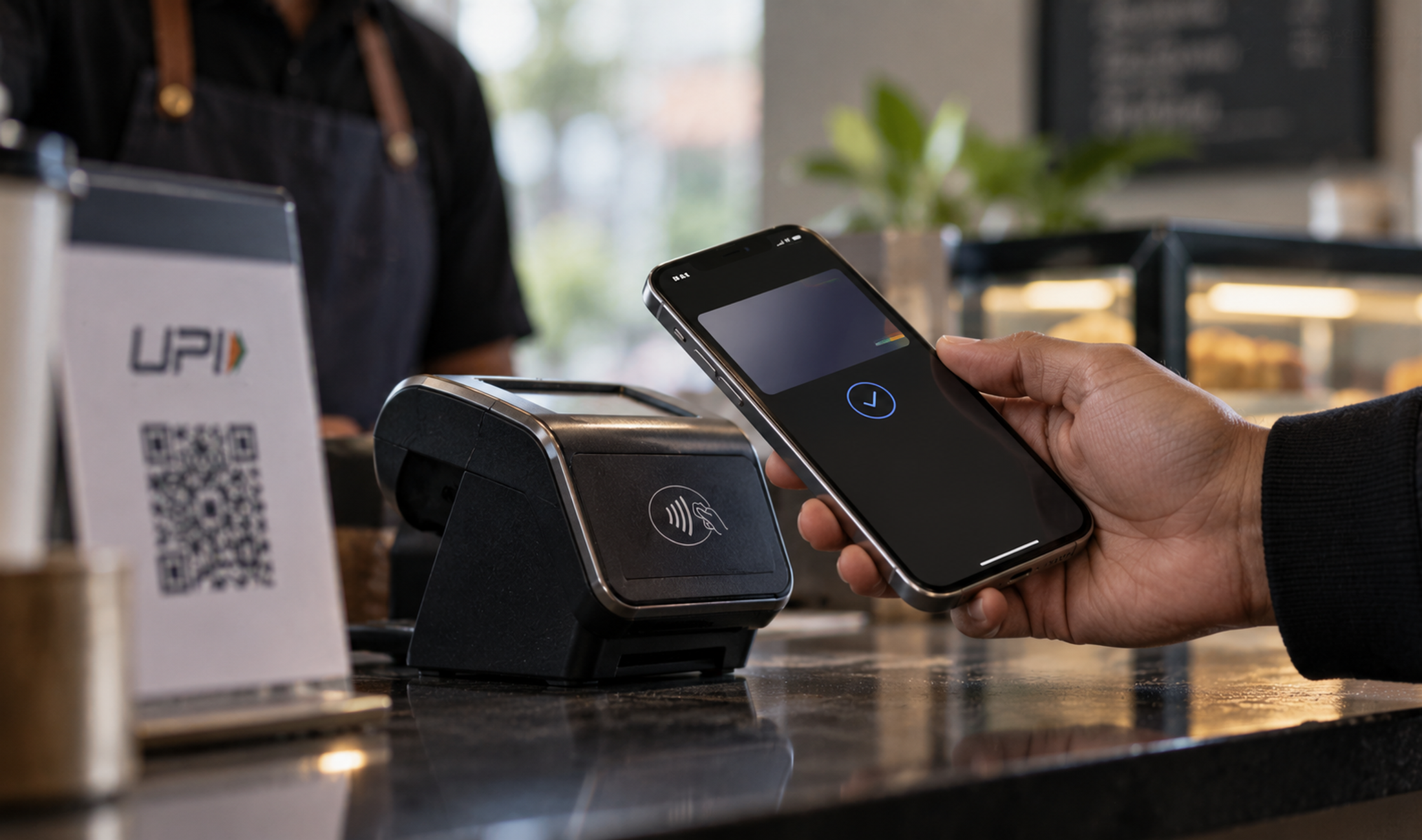
India's UPI is getting a more card-like way to pay at shops. NPCI has launched UPI Tap & Pay on point-of-sale terminals, allowing users with compatible NFC-enabled smartphones to initiate payments by tapping their phone on a supported terminal instead of scanning a QR code.
The feature was unveiled at the Global Fintech Fest in Mumbai on September 10, 2026. It matters because it brings contactless convenience to UPI while extending a payment system that already processed 24.51 billion transactions worth ₹29.82 trillion in August.
What is UPI Tap & Pay?
UPI Tap & Pay uses Near Field Communication, or NFC, to exchange payment information over a very short distance. On compatible implementations, a user unlocks an NFC-enabled smartphone and taps it on a supported NFC point-of-sale terminal. That removes the need to open a camera and line up a QR code for the payment.
NPCI's existing Tap & Pay documentation also supports NFC-based UPI Smart Tags and Smart QR acceptance. The new POS-terminal implementation broadens the idea to the type of contactless hardware shoppers already encounter at many checkout counters.
What you need to use UPI Tap & Pay
The key hardware requirement is NFC. Your phone must support NFC, and the merchant must have a compatible NFC-enabled acceptance device. App support is also required, so availability can differ depending on the UPI app, bank and rollout stage.
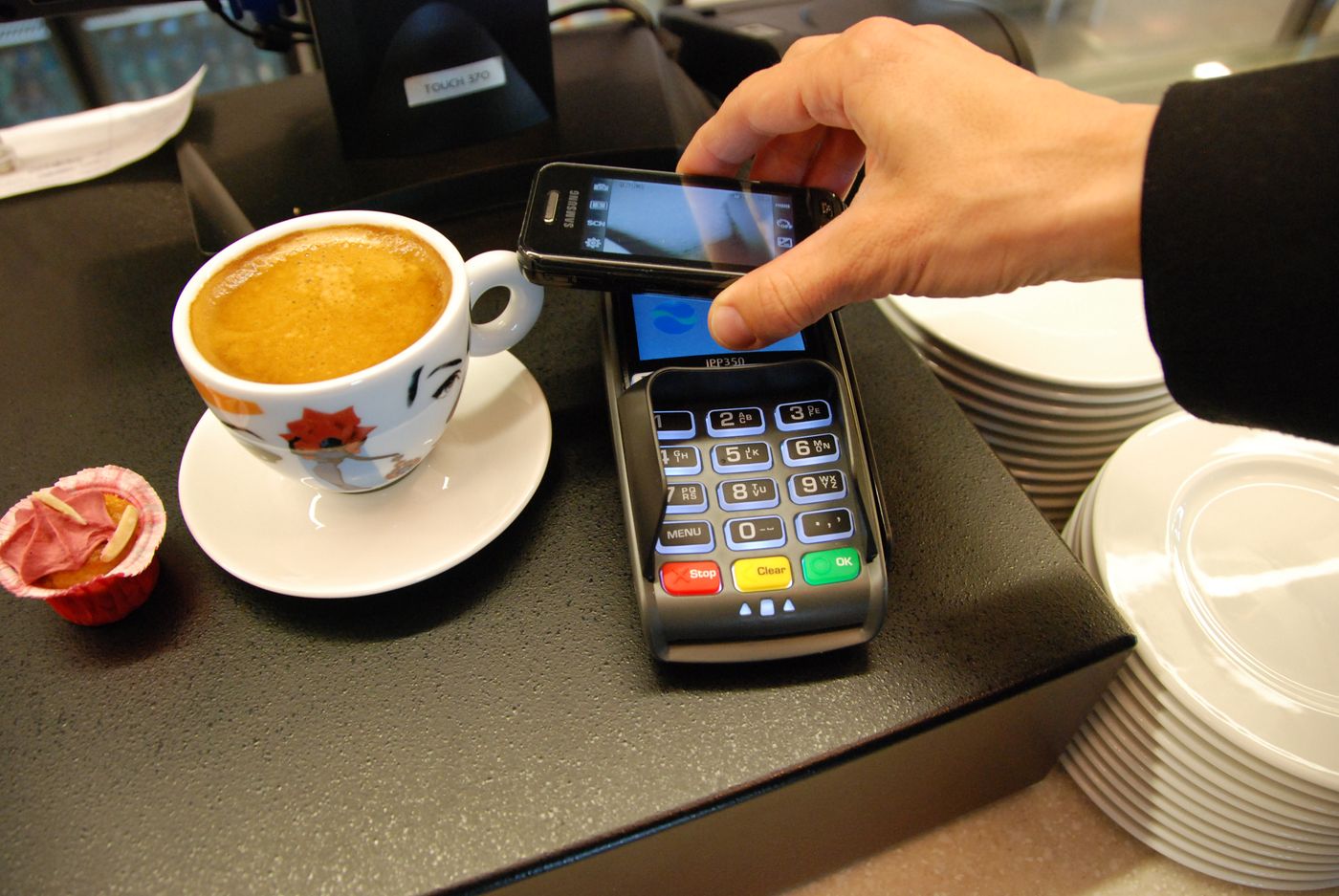
That means a phone without NFC cannot gain this capability through a software update alone. Regular QR-based UPI remains available on devices without NFC.
Can UPI Tap & Pay work without internet?
Offline capability is one of the most important parts of NPCI's broader NFC payment work. NPCI has previously documented offline Tap & Pay flows through UPI Lite, while the new POS-focused system is designed to improve payments in places where connectivity is weak or unavailable. The exact experience, limits and authentication method can depend on the supported UPI product and app implementation.
For users, this could be especially useful in locations such as underground transit systems or other areas where mobile data is unreliable. It also addresses a long-running challenge for UPI: keeping digital payments usable when connectivity is poor.
UPI Tap & Pay vs QR code payments
The biggest difference is how the merchant's payment details are captured. Standard UPI usually requires the user to open a payment app and scan a QR code. Tap & Pay uses NFC, so the phone can receive the payment information when it is brought close to the supported terminal or tag.
QR payments are unlikely to disappear. They are inexpensive for merchants, work on a much wider range of smartphones and are already deeply familiar to Indian consumers. Tap & Pay is better viewed as another UPI acceptance option, particularly where speed and contactless checkout matter.
Why the launch matters for India
UPI's scale makes even a modest change to checkout behaviour significant. In August 2026, the network handled 24.51 billion transactions worth ₹29.82 trillion. Adding a native tap experience gives banks and UPI apps another way to compete with contactless card payments at physical stores.
The launch also comes as UPI enters its second decade at enormous scale, with NPCI simultaneously exploring offline payments, AI-assisted support and agentic payment systems.
Headline Thread has also covered India's move toward agentic UPI payments and the expansion of UPI-powered bill payments inside WhatsApp, both of which show how the network is moving beyond its original scan-and-pay experience.
What happens next
The practical question is how quickly banks, UPI apps and merchants enable the new POS experience. Users should look for Tap & Pay support inside their UPI app and confirm that NFC is enabled on their phone. Until support becomes widespread, QR codes will remain the most universal way to make UPI payments.
For shoppers buying a new Android phone, NFC may now become a more relevant specification in India. A feature that was once mainly associated with contactless cards and premium phones is becoming increasingly useful inside the country's dominant digital-payment network.