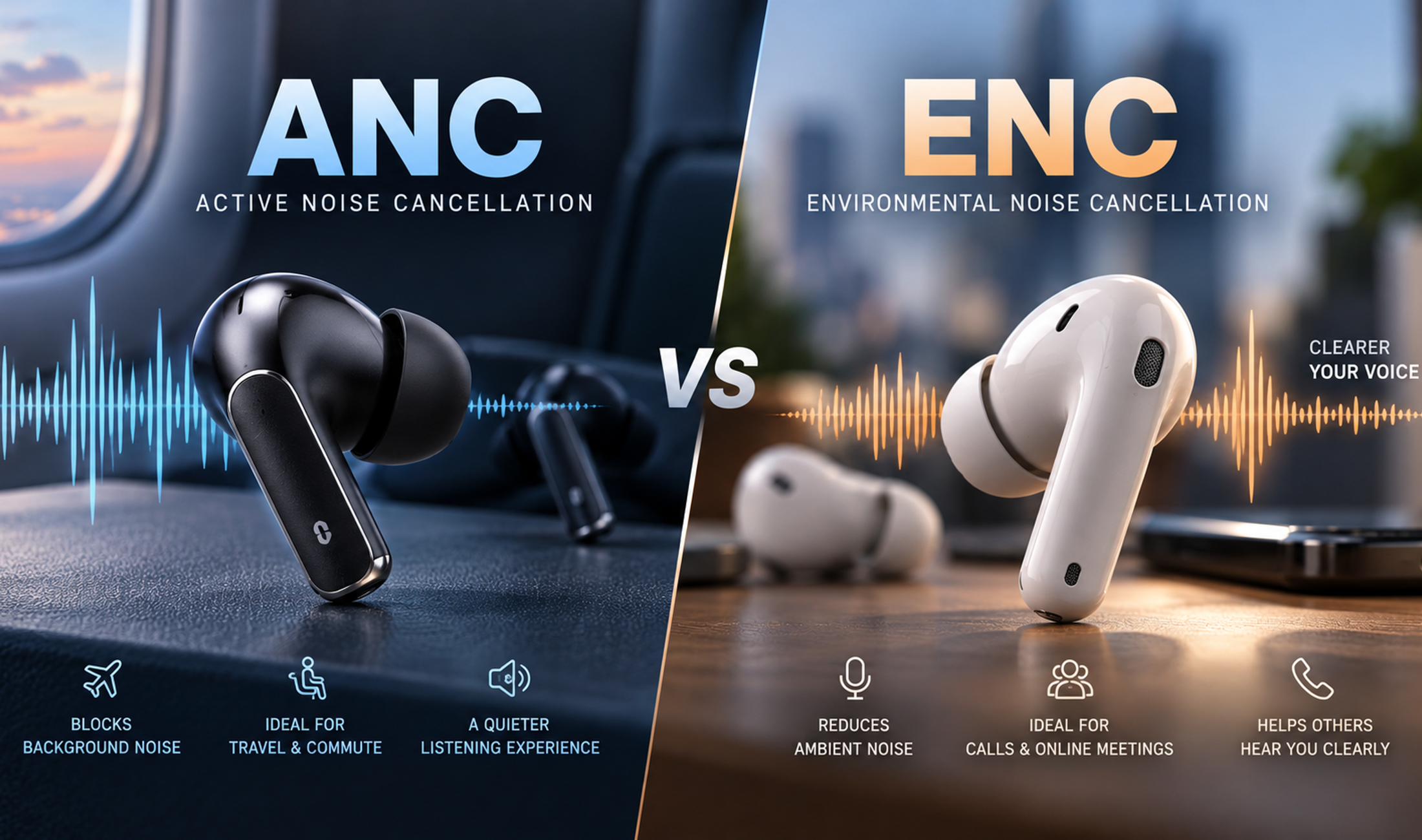
ANC and ENC are two of the most common acronyms on earbud product pages, and they are also easy to confuse. Both involve noise, both are marketed as ways to make audio clearer, and budget earbuds increasingly advertise one or both. But they solve different problems. ANC is mainly about reducing the unwanted sound you hear while listening. ENC is generally used to describe microphone-side noise reduction intended to make your voice clearer to the person on the other end of a call.
That distinction matters when buying earbuds in India. A commuter on a train may benefit much more from effective ANC, while someone who spends hours taking calls outdoors may care more about microphone noise suppression. Seeing a larger dB number or more microphones on a box does not automatically tell you which pair will perform better in real life.
ANC vs ENC: The Short Answer
Active Noise Cancellation, or ANC, uses microphones and signal processing to detect external sound and generate an opposing signal that reduces how much of that noise reaches your ears. It is especially useful against steady low-frequency sounds such as aircraft cabin noise, air conditioners, engines and the continuous rumble of public transport.
Environmental Noise Cancellation, or ENC, is a less standardized marketing term. In consumer earbuds it usually refers to algorithms that use the microphones to separate your speech from surrounding noise during calls. The processed microphone signal is then sent to the other person. ENC therefore does not necessarily make a noisy room sound quieter to you.
What ANC Actually Does
ANC earbuds listen to the acoustic environment using microphones positioned outside, inside or on both sides of the earbud. Their processor estimates the unwanted sound and creates an inverse waveform. When the unwanted sound and the generated signal combine at the ear, part of the noise is cancelled. Modern products may combine feedforward and feedback microphones and continuously adjust the cancellation.
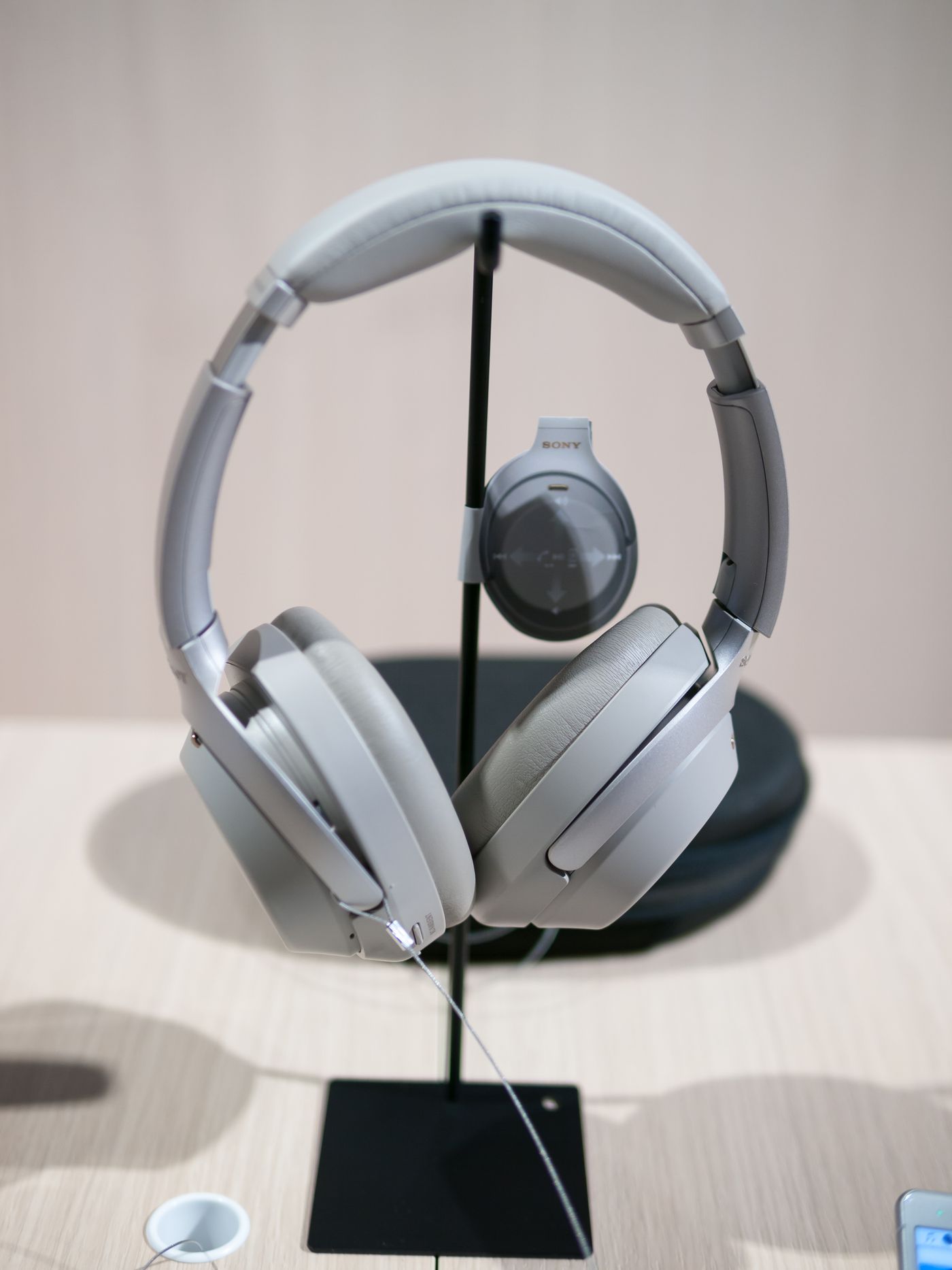
The technology is strongest when the noise is predictable. A train's drone or an air-conditioner hum gives the system time to model and counter the sound. Sudden voices, clattering utensils, horns and other rapidly changing sounds are harder to cancel completely. Good passive isolation from properly fitting ear tips remains important, particularly for higher-frequency noise.
What ENC Actually Does
ENC is aimed at the outgoing side of a conversation. Earbuds can use multiple microphones and digital processing to identify the wearer's voice and suppress competing sounds such as traffic, wind, office chatter or a fan before transmitting the call audio. The goal is not silence. It is intelligibility: the listener should hear your words more clearly and be less distracted by your surroundings.
Unlike ANC, ENC is not a tightly standardized consumer specification. Brands may use terms such as AI ENC, call noise cancellation, beamforming, microphone noise reduction or AI call noise reduction for overlapping techniques. That makes direct comparisons from product-page claims difficult. A four-microphone system is not automatically superior to a well-tuned two-microphone system, because microphone placement, algorithms and wind handling matter.
ANC and ENC Can Work at the Same Time
They are not competing technologies. A good pair of true wireless earbuds can use ANC to make a commute quieter for you while using separate microphone processing to make your voice clearer on a phone or video call. This is why premium earbuds often advertise both listening-side noise cancellation and sophisticated call processing.
The reverse is also possible. Cheap earbuds may advertise ENC for calls without offering ANC at all. In that case, the earbuds can potentially improve what the caller hears while doing nothing electronically to reduce the bus, fan or crowd noise reaching your own ears.
Which Is Better for Commuting and Travel?
Prioritize ANC. On trains, metros, buses and flights, reducing continuous background noise can make podcasts and music easier to hear without simply turning the volume higher. Strong passive sealing matters too, so do not judge travel earbuds from the ANC specification alone. Fit, comfort and the quality of the transparency or ambient mode can be just as important during long journeys.
Which Is Better for Calls and Work?
Prioritize microphone quality and effective call-noise reduction, whether the manufacturer calls it ENC or something else. This is especially important if you take calls while walking outdoors, work from cafés, join meetings from shared offices or frequently speak near fans and traffic. ANC may make the environment more comfortable for you, but it cannot compensate for a poor microphone signal being sent to colleagues.
Do ANC dB Ratings Tell You Which Earbuds Are Better?
Not reliably. Manufacturers often advertise figures such as a maximum number of decibels of noise reduction, but the measurement method, frequency range and test conditions can differ. Noise cancellation is frequency-dependent, so a single headline number cannot describe how well earbuds handle an engine rumble, speech and high-frequency clatter. Treat the claimed figure as one specification, not a ranking system.
The same caution applies to claims such as six-mic ENC or AI-powered calls. More hardware can give an algorithm more information, but implementation determines the result. For a call-focused purchase, independent microphone recordings from reputable reviewers are more informative than counting microphone icons on the retail box.
ANC, Passive Isolation and Transparency Mode Are Different
Passive isolation is the physical reduction of outside sound created by the earbud shape and ear-tip seal. It works without electronics and can be very effective at blocking some higher-frequency sounds. ANC adds electronic cancellation, particularly useful at lower frequencies. Transparency or ambient mode does the opposite: it deliberately uses microphones to feed selected outside sound into your ears so you can hear announcements, traffic or conversations without removing the earbuds.
Does ANC Affect Battery Life or Sound?
ANC requires microphones and processing to remain active, so manufacturers commonly quote different battery figures with ANC on and off. The exact penalty varies by product and listening conditions. ANC can also change perceived sound because the processing interacts with the acoustic response. Well-tuned earbuds account for this, but sound quality should still be evaluated with the modes you expect to use most often.
What Should Budget Earbud Buyers Prioritize?
At lower prices, prioritize the feature that matches your routine rather than buying the longest feature list. If most listening happens on a metro or bus, a secure seal and credible ANC are valuable. If earbuds are mainly a hands-free headset, microphone performance should move to the top of the list. If you mostly listen at home, comfort, tuning, codec support, controls and battery life may matter more than either acronym.
For current affordable options, see Headline Thread's best earbuds under ₹2,000 in India. Buyers interested in newer audio formats can also read our coverage of the Noise Master Buds Open and boAt Crest AI. Open-ear designs are a useful reminder that isolation itself is a design choice, not an automatic requirement for every listener.
ANC vs ENC: Who Should Choose What?
Choose earbuds with strong ANC if your priority is making trains, flights, office HVAC systems and other continuous background sounds less intrusive. Choose earbuds with proven microphone noise suppression if clear calls in noisy places are more important. If you need both, look for a model that performs well in independent ANC measurements and real microphone recordings rather than assuming a product with both acronyms will excel at both.
Frequently Asked Questions
Does ENC cancel noise for the person wearing the earbuds?
Usually no. In earbud marketing, ENC normally refers to reducing environmental noise in the microphone signal during calls. ANC is the feature intended to reduce external noise heard by the wearer.
Can earbuds have ENC without ANC?
Yes. Many affordable earbuds use microphone noise-reduction processing for calls but do not include active noise cancellation for listening.
Is ANC useful in India?
It can be particularly useful for frequent metro, train, bus and air travel, as well as in offices with steady background hum. Effectiveness varies significantly by earbud model and fit.
Final Recommendation
ANC and ENC should not be treated as two versions of the same feature. ANC primarily improves your listening environment; ENC primarily tries to improve the voice signal heard by someone else. For most commuters and frequent travellers, ANC is the more noticeable everyday upgrade. For heavy callers, delivery riders, field workers and people who join meetings from noisy places, strong microphone noise suppression can matter more.
The best all-round earbuds do both well, but product-page acronyms alone cannot prove that. Check fit, independent ANC performance, microphone samples, battery life with ANC enabled and comfort before buying. That approach is more useful than choosing whichever box advertises the largest cancellation number.