
India is moving from simply observing Indian Standard Time to requiring it as the common time reference for a wide range of official and critical systems. The Department of Consumer Affairs has notified the Legal Metrology (Indian Standard Time) Rules, 2026, creating a 180-day transition period for government departments, businesses and institutions to align systems that depend on accurate timestamps.
The change matters far beyond what appears on a wall clock. Modern banking, digital payments, telecom networks, power grids, railways, airports, computer systems and government databases depend on machines agreeing on the exact time. Even tiny differences can complicate transaction ordering, network coordination, audit trails, dispute resolution and the reconstruction of cybersecurity incidents.
Under the new framework, IST will become the common reference for legal, administrative, commercial and other official purposes after the transition period. The government is also developing domestic infrastructure to distribute precise time through Indian institutions, including systems that can use NavIC, India’s satellite navigation network, rather than relying only on external satellite-based timing sources.
What exactly has the government changed?
The Legal Metrology (Indian Standard Time) Rules, 2026 were notified on August 27 and are scheduled to come into force 180 days after publication in the Official Gazette. The core requirement is straightforward: Indian Standard Time becomes the common reference used across the country for official time-dependent activities.
This does not mean India is changing its UTC+5:30 time zone or that consumers will suddenly need to adjust their clocks. India already uses IST nationally. The important change is about standardisation underneath digital and institutional systems, especially where multiple organisations currently obtain precise time from different sources.
The Department of Consumer Affairs says a common reference is intended to improve consistency in time-stamping and coordination. It is particularly relevant to sectors where the sequence and precise timing of events can have legal, financial, operational or safety consequences.
Why precise time matters to digital payments and banks
A digital payment is not just a transfer of money. It produces a chain of records across a user’s device, the payment app, banks, payment switches and settlement systems. Accurate timestamps help establish which event happened first, when a transaction entered a system and how different records should be reconciled. India’s UPI network already processes enormous transaction volumes, making reliable machine-level timing increasingly important as the payments ecosystem grows.
For consumers, the new rules should not change how a UPI payment is made. The impact is mainly behind the scenes. Banks, payment operators and other regulated entities may need to review where their systems obtain time, how servers are synchronised and whether logs across different parts of their infrastructure can be reliably compared.
That becomes especially useful when investigating failed transactions, fraud, duplicate debits, outages or cyberattacks. A consistent time source can make it easier to reconstruct an incident across systems operated by different organisations.
Telecom networks are another major target
Telecommunications networks rely on precise synchronisation for far more than displaying the correct time on a phone. Network equipment needs timing to coordinate data transmission, handovers, radio resources and other functions. The requirement becomes more demanding as networks grow denser and services become more latency-sensitive.
India is simultaneously tightening several parts of its telecom framework, including new SIM-related compliance rules. The IST rules address a different layer: establishing a nationally consistent time reference for the systems that operate and record activity across the network.
Railways, airports and power grids also depend on synchronisation
Transport networks generate large numbers of time-sensitive records. Train operations, airport systems, signalling, scheduling, passenger information and incident logs all benefit from a consistent reference. The same principle applies to emergency services, where the order and timing of calls, dispatches and responses may later need to be verified.
Power systems are even more sensitive to timing because operators need to monitor events across a geographically distributed grid. Precise timestamps help compare measurements, diagnose faults and coordinate protection and control systems. A nationally managed timing backbone can therefore become part of the resilience infrastructure for electricity networks as well as digital networks.
What is NavIC’s role in the new IST system?
A strategically important part of the policy is the effort to reduce dependence on foreign satellite-based sources for precise timing. Many systems worldwide obtain highly accurate time from Global Navigation Satellite Systems. GPS is the best-known example, but satellite navigation signals are also used as timing sources in telecom, financial and power infrastructure.
The Indian framework allows NavIC and other approved Indian timing sources to be used for dissemination. That gives India a domestic option for critical systems and fits a broader policy goal of reducing dependence on infrastructure controlled outside the country.
The significance is resilience rather than consumer convenience. If a bank, telecom operator or power network depends on external satellite signals for synchronisation, disruption, interference or manipulation of those signals can become an operational risk. A domestic reference architecture creates another layer of control and redundancy.
India is testing a high-precision network using White Rabbit technology
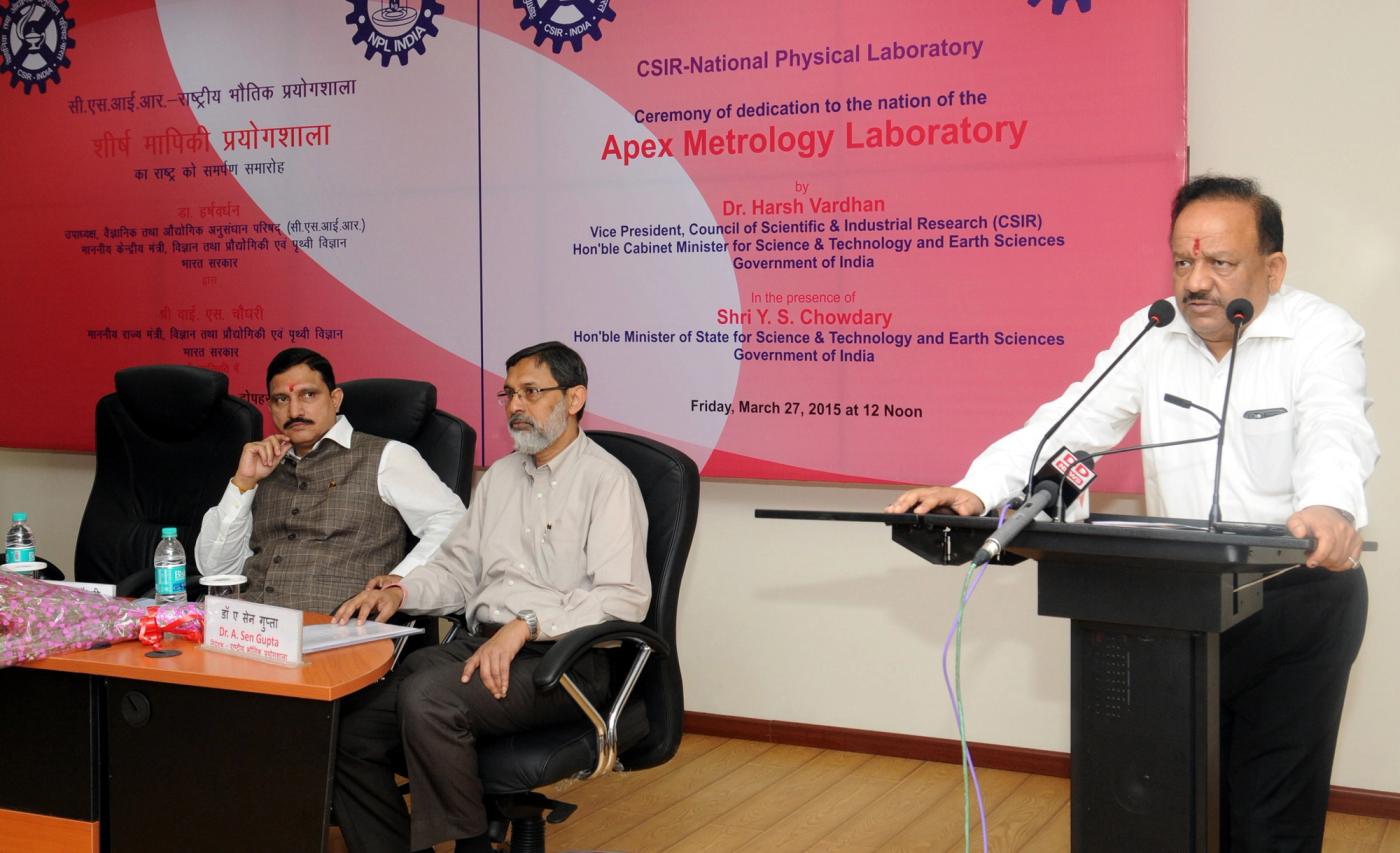
The rules are being backed by physical infrastructure rather than relying only on a legal requirement. In July 2026, the government commissioned an Indian Standard Time dissemination demonstration network at the Regional Reference Standard Laboratory in Bengaluru using White Rabbit technology.
White Rabbit is a precision timing technology designed to synchronise devices across Ethernet networks with extremely high accuracy. In practical terms, it allows a trusted reference clock to be distributed through network infrastructure while keeping connected systems tightly aligned.
The government says the Bengaluru demonstration has covered use cases in banking, telecommunications, power, transportation and digital governance. A separate demonstration securely distributed IST between the Bengaluru laboratory and the National Stock Exchange in Chennai, involving CSIR-NPL, ISRO, SEBI, NSE and BSNL among other stakeholders.
Will ordinary Indians notice anything different?
Probably not in day-to-day life. Phones, laptops and smart devices already display IST automatically when configured for India. The new rules are not a new time zone and do not change India’s 5 hour 30 minute offset from UTC.
The effects should be more visible to IT teams, network operators, regulated financial institutions, public-sector organisations and companies running time-sensitive infrastructure. These organisations may need to audit network time protocols, server configuration, hardware clocks, data centres, third-party services and logging systems before the transition expires.
Businesses that only use ordinary internet time services for routine office computers may face far less work than operators of critical infrastructure. The precise technical obligations will depend on implementation guidance and how regulators apply the rules to individual sectors.
What companies should check during the 180-day transition
The transition window gives organisations time to map their timing dependencies before the rules take effect. A sensible first step is identifying which systems generate legally or operationally significant timestamps and where those systems currently obtain time.
That review can include production servers, transaction systems, telecom equipment, security appliances, industrial control systems, databases and disaster-recovery environments. Organisations may also need to examine outsourced cloud or network services where the underlying time source is controlled by a vendor.
The key question is not whether a computer shows the right minute. It is whether the organisation can demonstrate that important systems are synchronised to an approved reference accurately, consistently and in a way that can be audited.
Why the rules matter for cybersecurity and disputes
Accurate timestamps are a basic building block of digital forensics. During a cyber incident, investigators may compare firewall logs, authentication records, payment events, application logs and network traffic captured on different machines. If the clocks disagree, building a trustworthy timeline becomes harder.
The same issue can appear in commercial disputes. Financial transactions, digital contracts, bids, trades and regulatory submissions may all depend on proving when an event happened. A common national reference does not eliminate disputes, but it can reduce ambiguity over the clock used to timestamp a record.
What happens next
The immediate phase is implementation. Government bodies, financial institutions, telecom operators, transport networks, utilities and other affected organisations have the transition period to assess existing systems and make technical changes. Sector regulators may also provide more specific instructions as implementation gets closer.
At the same time, India is building out the domestic infrastructure required to distribute precise IST reliably. The Bengaluru pilot and the secure timing demonstration involving NSE show that the policy is already moving from rulemaking into live technical testing.
For most people, the visible clock will stay exactly the same. The bigger change is underneath it: India wants the timestamps that run payments, telecom networks, power systems, transport and government records to point back to a consistent national reference that the country can operate and secure itself.