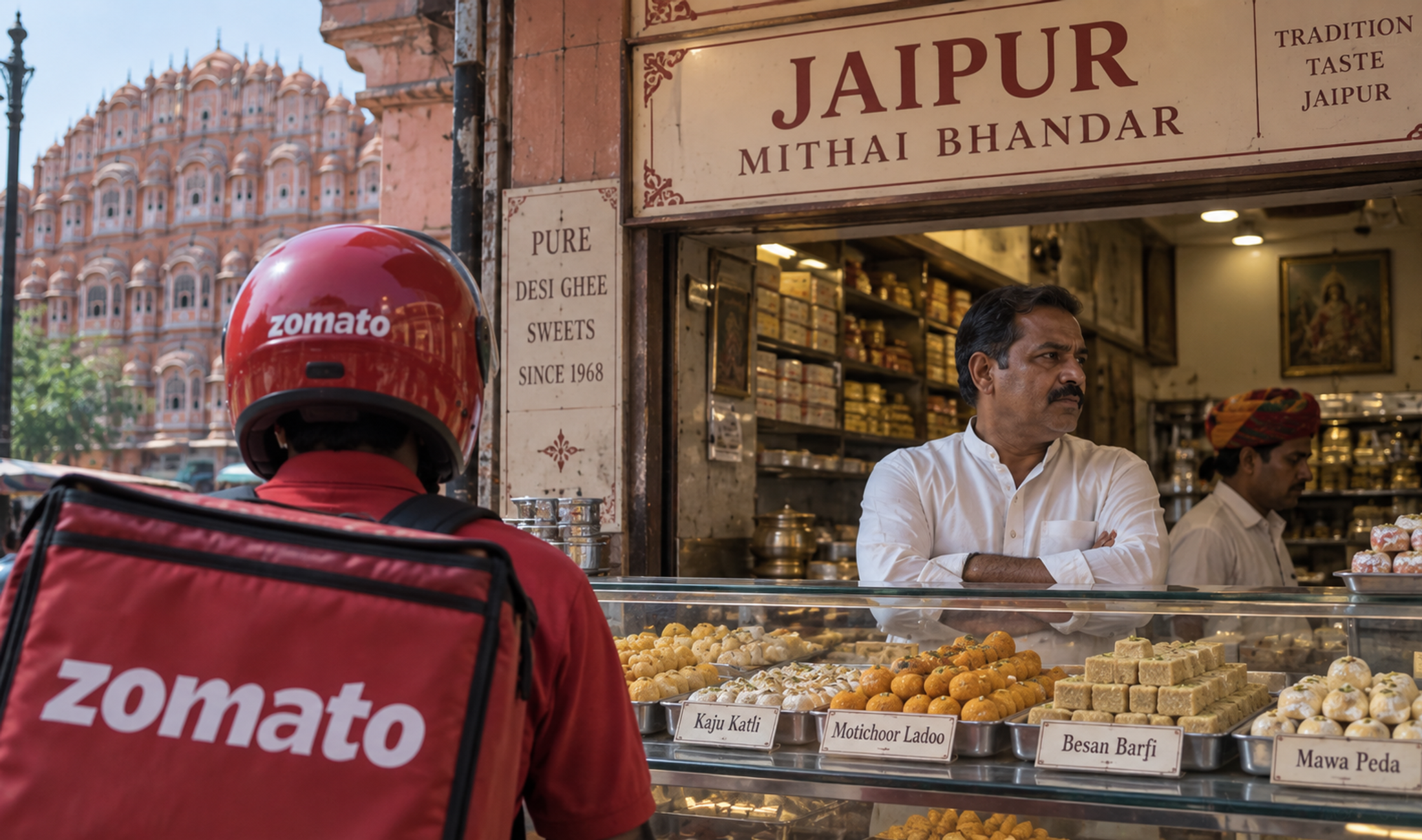
Some of Jaipur’s best-known sweet shops and restaurants have stopped taking orders through Zomato in an indefinite boycott, escalating a dispute over commissions, discounts, advertising pressure and deductions from restaurant payouts.
The action has been announced by Shri Halwai Samiti, a Jaipur trade body that represents around 60 prominent establishments, according to The Indian Express. Members named in the group include Laxmi Misthan Bhandar (LMB), Rawat Misthan Bhandar, Bombay Misthan Bhandar, Doodh Misthan Bhandar, Kanha, Sodhani Sweets and Bhagat Mishthan Bhandar.
Why Jaipur sweet shops are boycotting Zomato
The central complaint is the cost of selling through the food-delivery platform. LMB proprietor Ajay Agarwal told The Indian Express that Zomato initially operated as a logistics partner with zero commission when it entered the market around 2015-16, while commissions now range from roughly 10% to 25% depending on the arrangement.
The shop owners also allege pressure to participate in discounts and advertising, along with deductions they consider unjustified. They say some promotional schemes can leave restaurants bearing costs they did not expect. These are allegations from the trade body and participating businesses; Zomato had not publicly provided a detailed response to the claims in the reporting available at the time of publication.
How large is the Jaipur Zomato boycott?
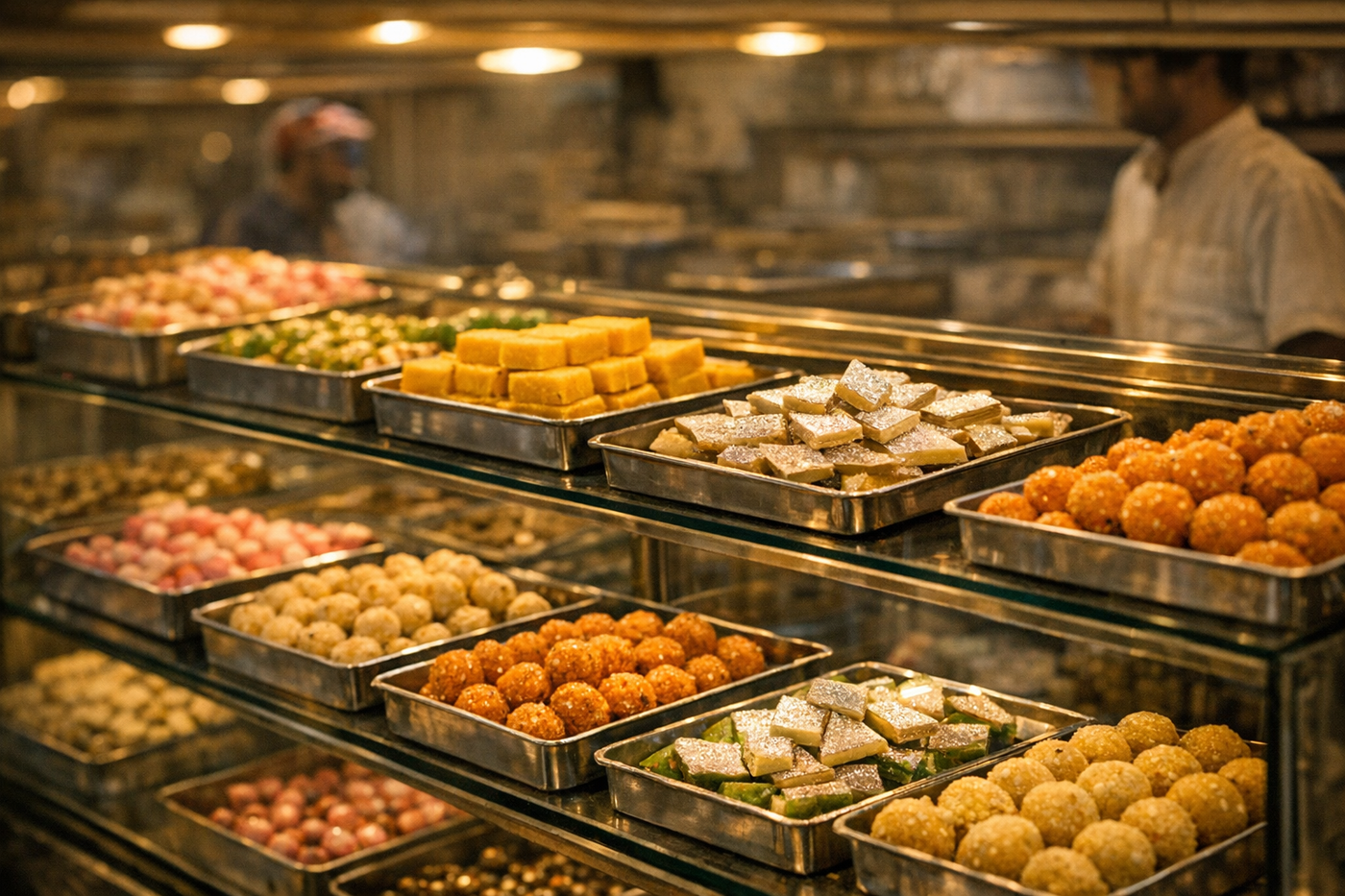
This is not a protest by one restaurant. Shri Halwai Samiti says the boycott covers about 60 prominent sweet shops and restaurants in Jaipur. That gives the action more weight because several participating businesses are established local brands with strong direct customer demand.
The group says the boycott will continue until its concerns are addressed. According to the Samiti, Zomato held a meeting with members last month and indicated that problems would be resolved. The group later sent a formal representation seeking lower commissions and another meeting, but says it did not receive an acknowledgement.
Why commissions matter so much to restaurants
Food-delivery apps can give restaurants reach, discovery and logistics without requiring them to build their own delivery network. But the economics become harder when platform commissions, discounts, advertising and other charges absorb a meaningful share of each order.
The Jaipur dispute therefore goes beyond the headline commission percentage. The participating businesses are questioning how much control restaurants retain over promotions and how clearly the total cost of selling through the platform is communicated.
Can customers still order from these shops?
The boycott concerns Zomato orders, not the operation of the participating stores themselves. Customers can still buy directly from the establishments, subject to each shop’s normal ordering and delivery options. Availability on other delivery services can vary by business.
What happens next
The immediate question is whether Zomato and Shri Halwai Samiti return to negotiations. A revised commercial arrangement, clearer rules around discounts or a compromise on commissions could end the boycott. If the standoff continues, it will also show how much ordering behaviour in a major Indian city depends on aggregator convenience versus the pull of established local brands.
For Zomato, the dispute is worth watching because restaurant participation is central to the depth of its marketplace. For Jaipur’s sweet shops, the test is whether customers who usually order through an app are willing to switch to direct purchases while the boycott continues.
Why this dispute matters beyond Jaipur
The larger issue is whether established local restaurants can reduce their dependence on delivery marketplaces without losing meaningful order volume. Jaipur's boycott creates a useful real-world test: if customers move to direct ordering, restaurants gain leverage; if customers stay with the convenience of aggregator apps, platforms retain more bargaining power. That is why the outcome matters beyond the individual commission dispute.