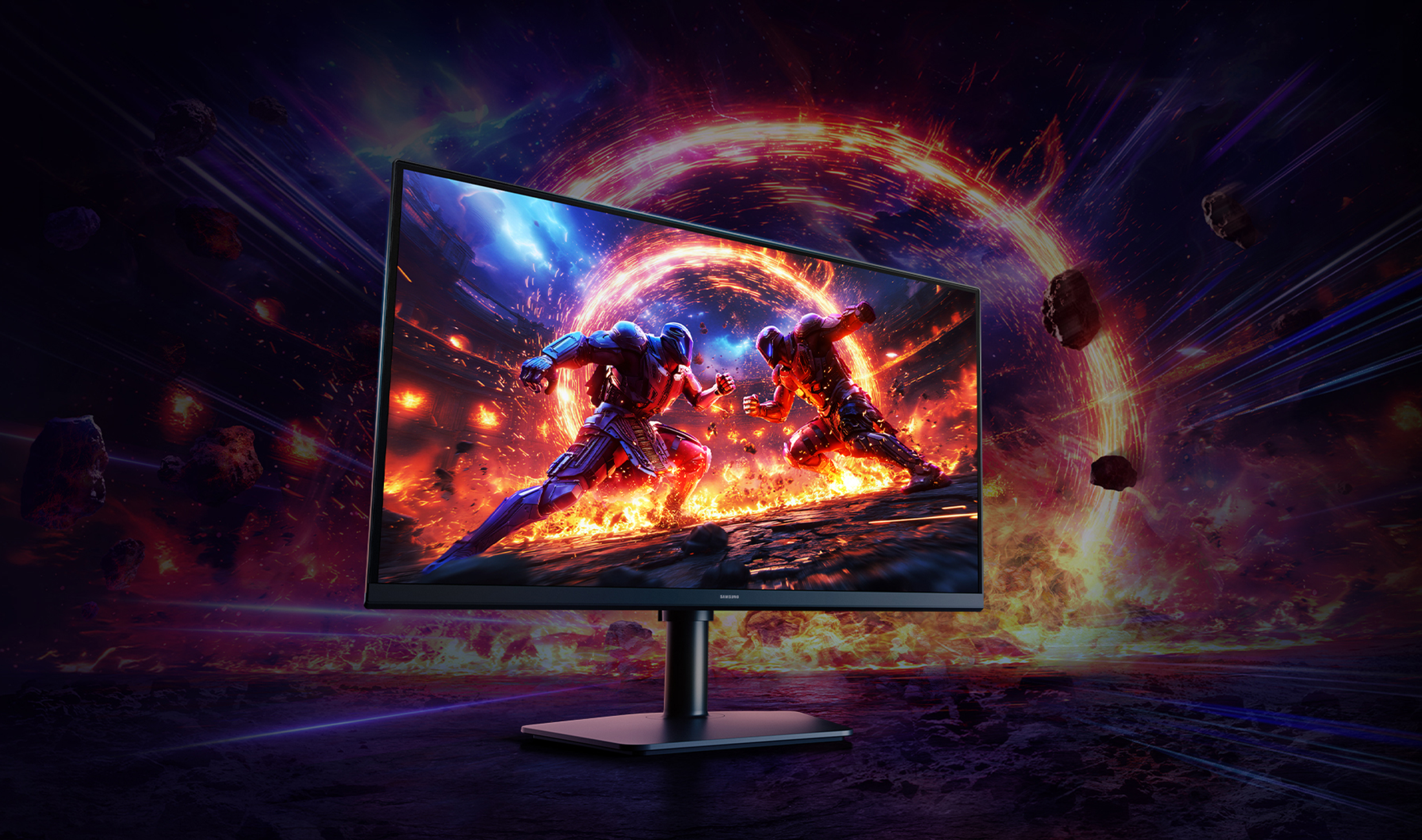
Samsung has unveiled its 2027 Odyssey gaming monitor lineup at Gamescom 2026, and the headline number is hard to ignore: the new 27-inch Odyssey G6 can reach up to 1,100Hz in its fastest display mode. It sits alongside a 49-inch Odyssey OLED G9, a 32-inch OLED G8 and a new 42-inch curved OLED G7, giving Samsung a broader spread of gaming displays aimed at competitive players, ultrawide fans and buyers who want one premium screen for gaming and everyday use.
For buyers in India, the important detail is that Samsung has not yet announced India pricing or a market-specific launch date for the full lineup. The company says availability will vary by market and that pricing and timing will be announced later. The Odyssey G6 is expected to be available globally in the second half of 2026, but that does not automatically confirm an Indian sale date.
Samsung 2027 Odyssey lineup at a glance
Samsung's new lineup covers four very different use cases. The Odyssey G6 is focused on extreme refresh rates for esports and first-person shooters. The OLED G8 targets high-end 4K gaming while also offering lower-resolution high-refresh modes. The OLED G9 is an ultrawide flagship with Dual QHD resolution, and the OLED G7 introduces a much larger 42-inch curved 16:9 OLED format.
The Odyssey G6 uses a 27-inch Fast IPS panel and can run at up to 600Hz in QHD or up to 1,100Hz in HD through Samsung's Dual Mode. Samsung lists a 1ms response time. The company is positioning it primarily for competitive players who are willing to trade resolution for motion clarity when a game can run at extremely high frame rates.
The OLED G8 is a 32-inch 4K QD-OLED monitor with up to 360Hz at UHD resolution. Its Triple Mode can switch to QHD at up to 520Hz or Full HD at up to 680Hz. Samsung also lists DisplayPort 2.1 UHBR20, two HDMI ports, USB-C with up to 98W power delivery, a USB hub and KVM support, which makes it more practical for buyers sharing a monitor between a gaming PC and work laptop.
The 49-inch OLED G9 has a 5120 x 1440 Dual QHD resolution, up to 360Hz refresh rate, 0.03ms grey-to-grey response time and a faster Dual HD mode that can reach up to 720Hz. Samsung says it uses a fifth-generation QD-OLED panel with its Penta Tandem structure.
The OLED G7 takes a different approach. It is a 42-inch 4K OLED gaming monitor with a 1000R curve, 165Hz refresh rate and 0.03ms response time. That makes it less about esports numbers and more about large-screen immersion for RPGs, racing games, simulators and console gaming.
What does 1,100Hz actually mean?
A 1,100Hz refresh rate means the display can theoretically refresh the image 1,100 times every second in its highest-speed mode. On paper, that reduces the time between screen refreshes to under one millisecond and can improve motion clarity and input responsiveness compared with slower displays.
That does not mean every game will suddenly run at 1,100 frames per second. The PC must still produce enough frames to take advantage of a high refresh rate, and the G6 reaches its headline 1,100Hz figure only in its lower-resolution HD mode. At QHD, the maximum refresh rate is still an unusually high 600Hz.
For competitive titles such as Counter-Strike, Valorant or Overwatch-style shooters, very high frame rates are more realistic on powerful hardware and tuned settings than they are in graphically demanding AAA games. In cinematic titles, resolution, HDR quality, contrast and panel response can matter more than chasing the highest possible refresh number.
Odyssey OLED G8 may be the most versatile model
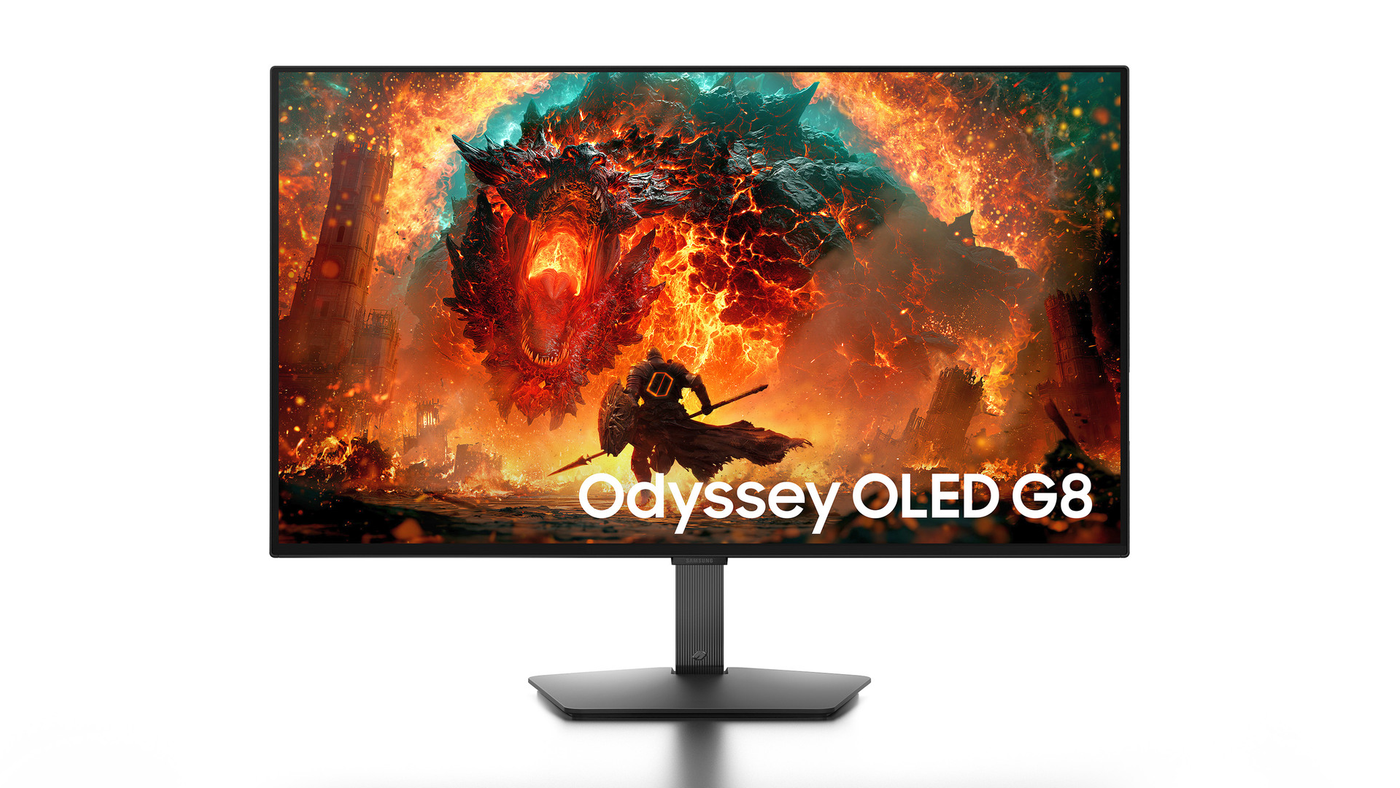
Although the 1,100Hz G6 is the attention-grabber, the OLED G8 may make more sense for a broader group of high-end PC buyers. It combines a 32-inch 4K QD-OLED panel with a 360Hz maximum refresh rate at native resolution, while still allowing users to drop to QHD or Full HD for substantially higher refresh rates.
That flexibility matters because a buyer may want 4K for single-player games, editing and general desktop use, then switch to a lower resolution for competitive multiplayer. USB-C power delivery and KVM support also give the G8 a stronger productivity case than a monitor built solely around esports specifications.
If you are building a mixed work-and-gaming setup, it is worth thinking about the computer feeding the display too. Headline Thread's Acer Swift Neo AI laptop coverage explains why processor class, ports and GPU capability matter just as much as a display's headline specifications for real workloads.
OLED G9 targets ultrawide enthusiasts
The OLED G9 is aimed at buyers who want an ultrawide display that can handle both immersive games and fast competitive play. Its 5120 x 1440 resolution gives users the horizontal workspace of two QHD-class screens without a bezel in the middle, while 360Hz at that resolution is far beyond what conventional ultrawide monitors offered only a few years ago.
The trade-off is hardware demand. Driving a 5120 x 1440 display at very high frame rates requires a powerful GPU, and buyers should not assume they will approach the monitor's maximum refresh rate in every game. The ability to switch to 2560 x 720 at up to 720Hz gives competitive players another option, but that mode sacrifices a large amount of resolution.
The 42-inch OLED G7 is closer to a gaming TV experience
At 42 inches, the OLED G7 sits between a conventional desktop monitor and a premium gaming TV. Its 16:9 aspect ratio avoids the compatibility compromises that can appear with ultrawide screens, while 4K resolution and 165Hz refresh rate are better matched to visually rich games and current high-end consoles than the extreme numbers of the G6.
The 1000R curve is aggressive for a 16:9 display, so desk depth and viewing distance will matter. Buyers considering the G7 should also think about whether they want a monitor-like desktop experience or a TV-like screen viewed from farther away.
HDR10+ Gaming support is expanding
Samsung also used Gamescom to highlight HDR10+ Gaming. The company says it is working with Activision Blizzard to bring the technology into Call of Duty: Modern Warfare 4 and plans to expand HDR10+ Gaming support to more than 20 AAA titles by the first half of 2027.
That is potentially important because monitor quality is not only about refresh rate. HDR tone mapping, panel brightness, black levels, colour handling and game-level support all contribute to how a premium display looks in practice. OLED models in particular compete on image quality as much as speed.
What Indian buyers should know about price and availability
Samsung has not announced India prices for the 2027 Odyssey OLED G9, OLED G8, OLED G7 or Odyssey G6. It has also not confirmed a specific India release date for the complete range. Samsung's global announcement says availability will vary by market and that pricing and launch timing will be shared later.
That means Indian buyers should treat imported listings, converted overseas prices and unofficial retailer claims cautiously until Samsung India confirms local models and pricing. Monitor specifications can also vary by region, and warranty coverage becomes especially important with expensive OLED displays.
Samsung has already been active in gaming-adjacent hardware this week. Its new P9 and P7 portable SSDs launched in India with USB4 support and capacities aimed at users moving large game libraries and creative files. The Odyssey announcement broadens that hardware push from storage into displays.
Who should consider each Odyssey model?
The Odyssey G6 is the specialist choice for competitive players who prioritise motion clarity and response over resolution. It makes the most sense for esports-focused systems capable of producing extremely high frame rates.
The OLED G8 is likely the best fit for enthusiasts who want one monitor for 4K gaming, fast multiplayer, work and content creation. The ability to switch refresh-rate modes gives it more flexibility, while USB-C and KVM support are useful outside gaming.
The OLED G9 is for ultrawide enthusiasts with powerful PCs and enough desk space for a 49-inch panel. It should appeal to simulation, racing and productivity users as well as gamers who want a panoramic field of view.
The OLED G7 is the large-screen option for buyers who prefer a 16:9 format and want something closer to a gaming TV experience without giving up monitor-focused performance. Its 165Hz refresh rate is modest next to the other new Odyssey models, but still well above standard 60Hz or 120Hz displays.
Who should skip the new Odyssey lineup?
Most mainstream gamers do not need a 600Hz or 1,100Hz monitor. A good 144Hz, 165Hz or 240Hz display can still provide an excellent experience, especially when paired with a mid-range GPU that cannot consistently produce hundreds of frames per second at modern resolutions.
Buyers who mainly play story-driven AAA games may get more value from spending on a better GPU, a larger SSD, higher HDR quality or a more affordable OLED monitor. The new Odyssey models are showcase hardware, and final India pricing will determine whether any of them make practical sense outside enthusiast setups.
What happens next
Samsung has confirmed the specifications of the new Odyssey lineup, but pricing and market-by-market launch details are still the major missing pieces. For Indian buyers, the next important announcement will be Samsung India's confirmation of which models are coming here, their local prices, warranty terms and exact sale dates.
The bigger trend is clear even before those details arrive: gaming monitor makers are no longer treating refresh rate, resolution and screen format as fixed choices. Dual Mode and Triple Mode displays increasingly let buyers switch between sharper images and extreme speed depending on the game. Samsung's 2027 Odyssey range is one of the clearest examples yet of that shift.
Sources
Samsung Global Newsroom, 2027 Odyssey gaming monitor lineup announcement, August 27, 2026.
FoneArena, Samsung 2027 Odyssey OLED G9, G8, G7 and G6 gaming monitors announced, August 28, 2026.