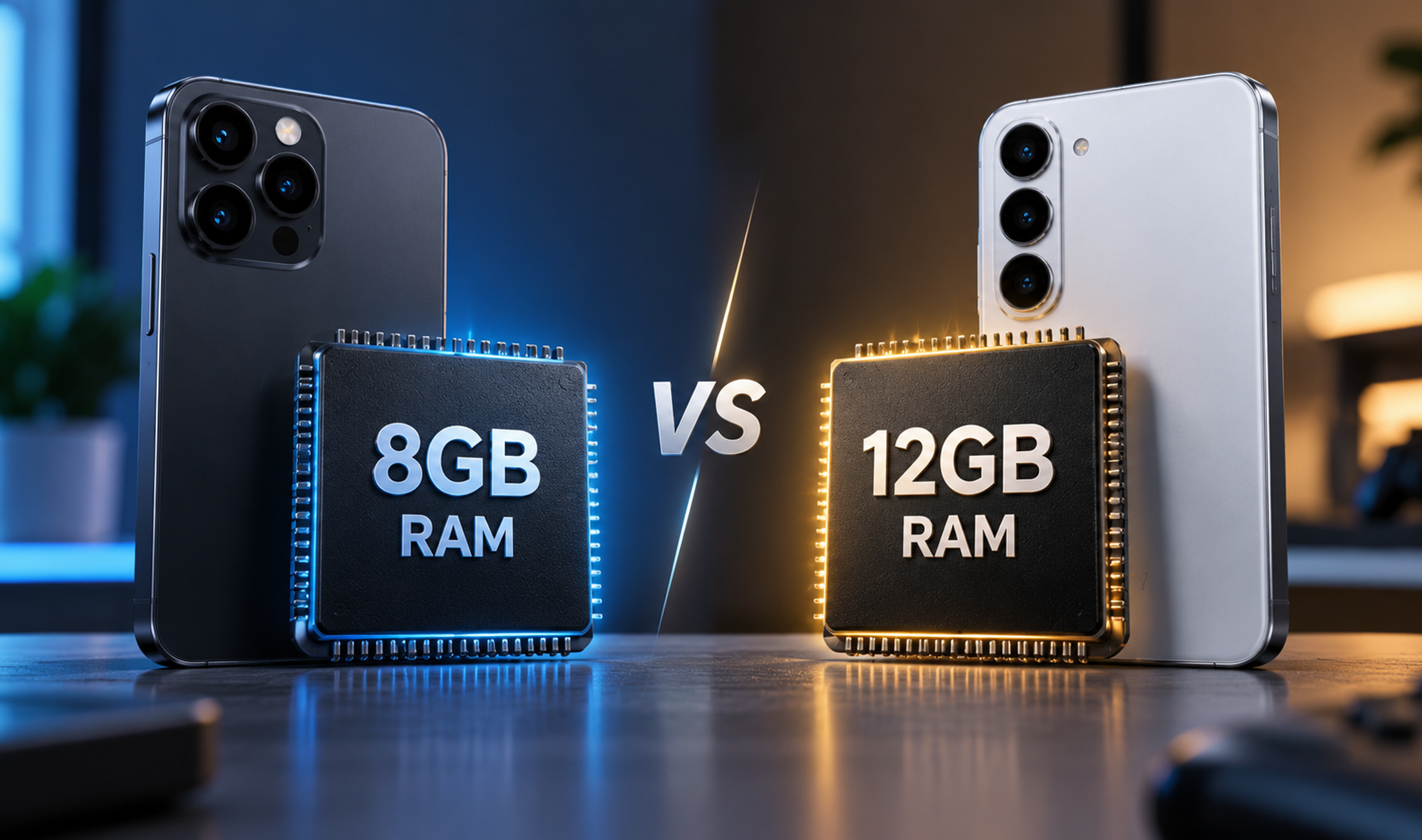
Buying an Android phone in 2026 often means choosing between 8GB and 12GB of RAM, sometimes with a surprisingly large price difference between otherwise similar variants. More RAM sounds automatically better, but paying for 12GB does not make every phone faster, and 8GB has not suddenly become unusable.
The useful question is whether your apps, games and expected ownership period can actually use the extra memory. For many buyers, 8GB remains enough for messaging, social media, navigation, streaming, photography and ordinary multitasking. The case for 12GB becomes stronger for heavy multitasking, demanding games, on-device AI and buyers planning to keep a phone for several years.
8GB vs 12GB RAM: The Short Answer
Choose 8GB if you are buying a budget or mid-range phone, mostly use mainstream apps, play games casually and would rather spend the difference on a better processor, display, camera or more storage. Choose 12GB if you frequently switch between heavy apps, play demanding games while keeping other apps open, edit media, use advanced on-device AI features or want more memory headroom for a long ownership cycle.
A well-optimised 8GB phone with a faster chipset and storage can be a better purchase than a weak phone advertised with 12GB. RAM capacity is only one part of performance.
What RAM Actually Does in a Smartphone
RAM is the fast working memory used by Android, running apps, games and background processes. When enough RAM is available, the system can keep more apps ready in memory instead of closing them and loading them again when you return.
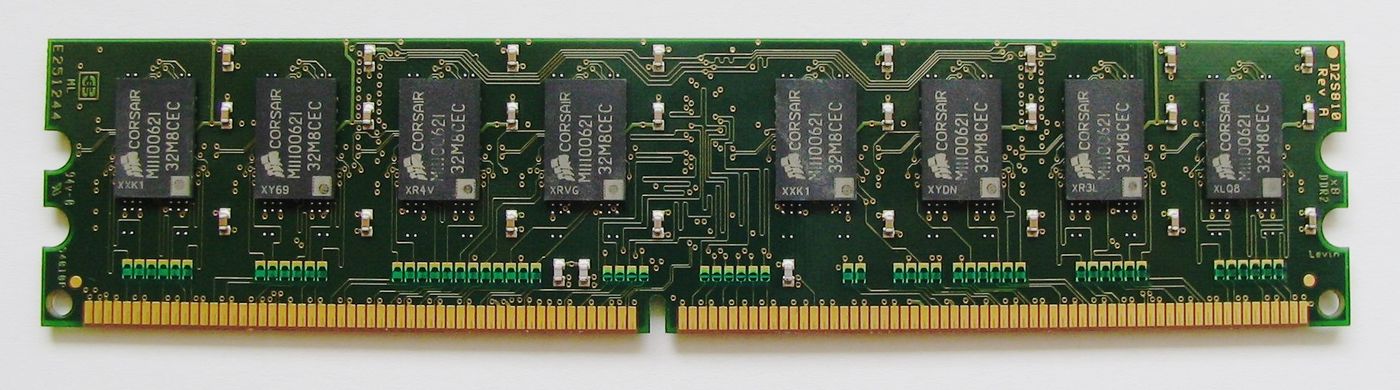
That is why extra RAM is most noticeable when jumping repeatedly between a game, camera, browser tabs, maps, messaging and editing apps. It does not directly increase CPU or GPU performance. A 12GB phone does not automatically render a game faster than an 8GB version of the same phone, although additional memory can reduce app reloads and help memory-heavy workloads.
Is 8GB RAM Enough for Android in 2026?
For ordinary Android use, yes. Eight gigabytes provides enough working memory for the operating system and a sensible collection of mainstream apps on a properly optimised device. Google’s Android developer guidance itself treats 8GB, 12GB and 16GB devices as distinct memory tiers, with larger memory budgets available to foreground and background apps as physical RAM increases.
What matters is the workload. Someone moving between WhatsApp, Instagram, YouTube, Chrome, Spotify and Maps will generally gain less from 12GB than a user juggling a large game, dozens of browser tabs, a video editor and other heavy apps.
Where 12GB RAM Makes a Real Difference
The clearest benefit is multitasking headroom. More physical RAM gives Android greater room to retain applications and their state. Google’s current memory-vitals guidance allows higher memory thresholds for apps and games on 12GB devices than on 8GB devices, reflecting the extra usable memory available on higher-capacity hardware.
This can matter to people who treat a phone as a work device, frequently edit photos or video, use emulators, run demanding games or repeatedly switch between resource-heavy apps. It can also reduce the chance of returning to a browser, social app or document and finding that Android has had to reload it.
8GB vs 12GB RAM for Gaming
Do not choose a gaming phone by RAM capacity alone. The processor, GPU, cooling system, display, touch behaviour, storage speed and game optimisation usually matter more to frame rate than moving from 8GB to 12GB.
Twelve gigabytes becomes useful when a game itself is memory-heavy or when you want other apps to remain available while gaming. Google’s Android game memory guidance assigns a larger foreground memory threshold to the 12GB tier than the 8GB tier. That does not promise higher FPS, but it shows why memory-intensive games have more breathing room on devices with additional RAM.
AI Is Making the 12GB Question More Important
On-device AI is the strongest reason to think beyond today's app requirements. Generative models, image tools, transcription and other local AI features can reserve substantial memory while they are active. As phone makers move more processing from cloud servers onto the device, memory requirements can rise even when conventional apps still run comfortably with 8GB.
That does not mean every 12GB phone will receive every AI feature. Chipset capabilities, dedicated AI hardware, software support and the manufacturer’s feature policy still matter. Buying more RAM is useful headroom, not a guarantee of future features.
This is particularly relevant as Android itself becomes more AI-centric. See Headline Thread’s September Android feature update and our look at the Google Assistant to Gemini transition for examples of how quickly the software side of the phone is changing.
Physical RAM vs Virtual RAM: Do Not Treat Them as Equal
Many Android brands advertise memory expansion, extended RAM or virtual RAM. This uses a portion of internal storage to supplement physical memory. It can help the system manage background tasks, but storage is not a substitute for genuine LPDDR memory.
An 8GB phone offering another 8GB of virtual RAM should therefore not be treated as equivalent to a phone with 16GB of physical RAM. When comparing variants, check the actual installed RAM first and treat memory expansion as a secondary software feature.
8GB RAM With 256GB Storage or 12GB RAM With 128GB?
This is one of the most practical buying decisions in India. For a mainstream user who stores many photos, videos, offline downloads and large apps, 8GB RAM with 256GB storage can be the smarter configuration. Storage fills permanently; unused RAM does not provide extra space for your files.
Power users who rely on heavy multitasking and can comfortably manage 128GB may prefer the 12GB variant. But if the phone has no microSD slot and you expect to keep it for years, do not underestimate the value of 256GB storage.
Should You Pay Extra for 12GB RAM?
If 12GB is a small upgrade cost on the same phone and it does not force you to sacrifice storage, it is sensible for a device you plan to keep for three to five years. The extra headroom is especially useful for premium phones, gaming-oriented models and devices whose software strategy increasingly depends on AI.
If upgrading RAM pushes you into a much more expensive variant, compare what else that money could buy. A stronger chipset, better cameras, longer software support, faster storage or a higher-quality display can have a bigger everyday impact.
For examples of how these trade-offs appear in current phones, Headline Thread has covered the Infinix Hot 70 Pro 5G and Vivo T5 5G launches in India.
Who Should Buy 8GB RAM?
Eight gigabytes remains the sensible target for most budget and mainstream Android buyers. It suits everyday apps, streaming, photography, navigation, normal multitasking and casual to moderately demanding gaming, provided the rest of the phone is well specified.
Who Should Buy 12GB RAM?
Choose 12GB if you are a heavy multitasker, serious mobile gamer, creator, emulator user, advanced AI user or someone buying a premium phone for a long ownership period. It is also the safer choice when the price difference is modest and the higher-RAM configuration does not compromise storage.
Frequently Asked Questions
Does 12GB RAM make a phone faster than 8GB?
Not automatically. More RAM mainly provides additional room for apps and workloads. CPU, GPU, storage speed, cooling and software optimisation have a major effect on perceived speed.
Is 8GB RAM enough for gaming?
It is enough for many Android games, but 12GB offers more headroom for memory-heavy titles and multitasking. For gaming, prioritise the chipset and cooling before paying purely for extra RAM.
Is virtual RAM the same as physical RAM?
No. Virtual RAM uses internal storage and should not be counted as equivalent to physical RAM when comparing phones.
Final Recommendation
For most Indian smartphone buyers in 2026, 8GB of physical RAM remains a good baseline. Do not reject an otherwise excellent phone simply because it has 8GB. Twelve gigabytes is the better long-term choice for power users, demanding multitasking and increasingly memory-hungry on-device AI, especially when the upgrade is reasonably priced.
The best buying rule is simple: first choose the phone with the right processor, software support, cameras, battery, display and storage for your needs. Then use RAM capacity as the tie-breaker. More RAM is useful, but it cannot compensate for a weaker phone everywhere else.