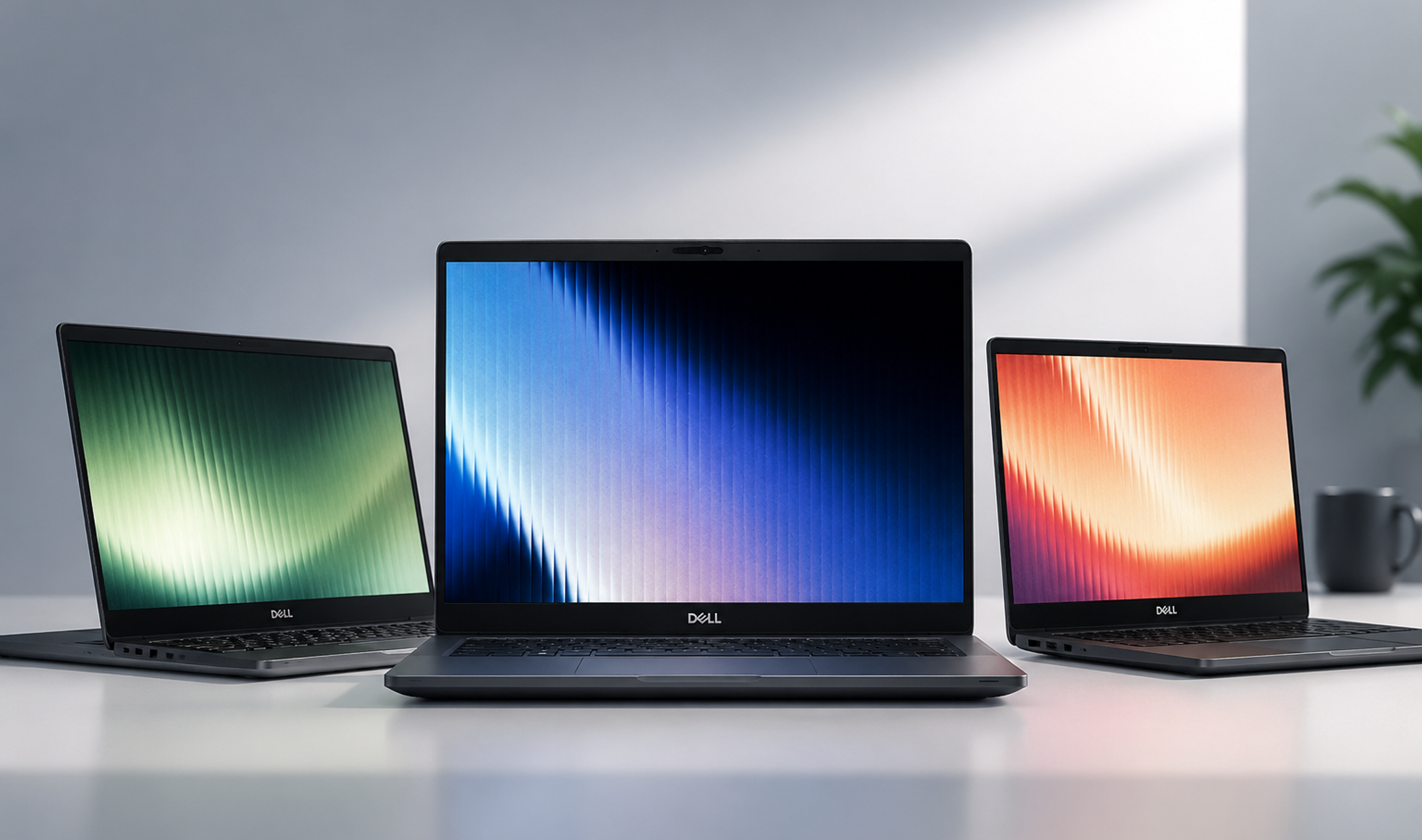
Dell has expanded its commercial PC portfolio in India with the Dell Pro 3, Pro 5 and Pro 7 families, giving businesses a new set of laptops built around current Intel and AMD platforms, on-device AI options and, on selected configurations, mobile broadband and Wi-Fi 7. The range was introduced in India at Dell Technologies Forum 2026 in Mumbai on September 2.
The pricing immediately tells you who these machines are aimed at. The Dell Pro 3 14 starts at ₹1,27,429, the Pro 5 14 at ₹1,30,969 and the Pro 7 13 at ₹1,43,370. These are commercial PCs rather than mass-market value laptops, so their case rests on manageability, connectivity, security, serviceability and fleet deployment as much as raw specifications.
Dell Pro 3, Pro 5 and Pro 7 prices in India
Dell's new Indian commercial lineup spans several screen sizes and form factors. Reported starting prices are ₹1,27,429 for the Pro 3 14, ₹1,28,609 for the Pro 3 16, ₹1,30,969 for the Pro 5 14 and ₹1,33,329 for the Pro 5 16. The higher-end Pro 7 starts at ₹1,43,370 for the 13-inch laptop and ₹1,43,949 for the 14-inch model.
For buyers who want a convertible, the Pro 7 13 2-in-1 starts at ₹1,62,722 and the Pro 7 14 2-in-1 at ₹1,65,082. Exact prices vary with processor, memory, storage, display, connectivity and enterprise configuration, so these figures should be treated as starting points rather than a quote for every specification.
Dell Pro 7 is the premium option
The Pro 7 sits at the top of the three families. It comes in 13-inch and 14-inch laptop and 2-in-1 designs, with an aluminium chassis and OLED display options on selected configurations. Dell also offers camera configurations up to 8MP and its battery-saving mini-LED backlit keyboard on selected models.
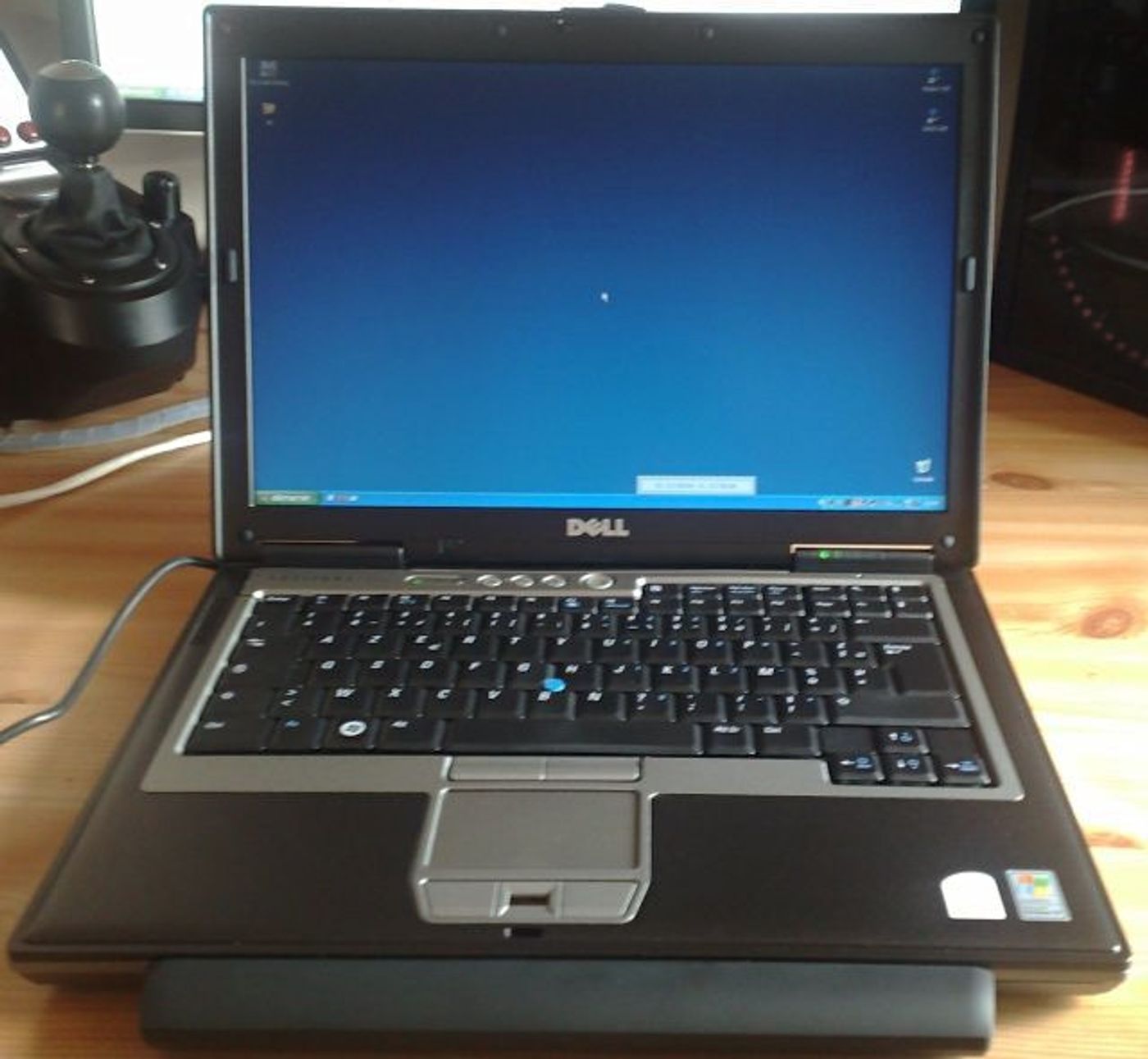
Processor choices vary by configuration and include Intel Core Ultra Series 3 and AMD Ryzen AI 400 options. Compatible configurations can qualify for Copilot+ PC experiences and other on-device AI workloads. Dell advertises up to 23 hours of battery life on selected Pro 7 14 configurations, but real-world endurance will depend on the chosen hardware, workload, display and network use.
The Pro 7 makes the most sense for executives, frequent travellers and organisations willing to pay more for a thinner premium chassis, higher-end display choices and richer conferencing hardware. The Pro 7 13 starts around 1.19kg, making portability one of its clearer advantages over larger business systems.
Dell Pro 5 is the middle ground for larger deployments
The Pro 5 is available in 14-inch and 16-inch sizes and is likely to be the most interesting tier for companies balancing capability against fleet cost. Processor options include Intel Core Ultra Series 3, other Intel Core configurations and AMD Ryzen AI processors, depending on the model.
Selected Pro 5 configurations support up to 64GB of memory and 2TB of SSD storage. Display choices include WUXGA and WQXGA panels, brightness options up to 500 nits and OLED on selected versions. Camera options extend to an 8MP HDR and infrared setup, while battery configurations go up to 70Wh.
For IT teams, the Pro 5's appeal is flexibility. A company can configure ordinary office systems without paying for every premium feature, while still choosing higher-end screens, cameras, memory or mobile connectivity for employees who need them.
Dell Pro 3 targets everyday business work
The Pro 3 is the entry point in this new commercial range, but 'entry' is relative: the 14-inch model still starts above ₹1.27 lakh. Dell positions it for mainstream administrative work, productivity and broad business deployments rather than premium executive use.
It is offered in 14-inch and 16-inch sizes with Intel and AMD processor choices. The Pro 3 14 starts at roughly 1.31kg with an Intel configuration, while display options reach up to 500 nits. The larger Pro 3 16 starts around 1.91kg and has display options up to 400 nits.
For a company buying dozens or hundreds of machines, the Pro 3's lower starting price can matter more than features such as OLED. Individual consumers, however, should compare it carefully with premium consumer laptops because the value of enterprise management and security features depends heavily on how the PC will be used.
5G, eSIM and Wi-Fi 7 could be the practical differentiators
One of the more useful aspects of Dell's new range is optional mobile connectivity. Selected Pro 3, Pro 5 and Pro 7 configurations can be equipped with 5G or 4G LTE, with eSIM support on compatible hardware. Wi-Fi 7 is also available on selected configurations.
This matters for Indian businesses with travelling sales teams, field staff and hybrid workers. A laptop with managed cellular connectivity can reduce dependence on public Wi-Fi or phone tethering. It is important, however, not to assume every Pro 3, Pro 5 or Pro 7 includes 5G: Dell's connectivity options depend on the exact configuration.
How the AI features fit into the buying decision
Dell is positioning the portfolio around the broader move toward AI PCs. Compatible configurations use processors with neural processing units that can accelerate supported AI workloads locally. That can be useful for Copilot+ PC features and applications designed to use an NPU, while also reducing the need to send every supported workload to a cloud service.
Businesses should still buy for the applications they actually deploy. An 'AI PC' label by itself is not a reason to replace a recent laptop. The stronger upgrade case is when an organisation also needs better battery life, newer connectivity, stronger conferencing hardware, a new Windows deployment or applications that benefit from the newer NPU-equipped platforms.
This also connects with Microsoft's evolving Windows roadmap. Headline Thread recently covered Windows 11 26H2 moving to Release Preview, which is relevant for IT teams planning hardware and operating-system refresh cycles together.
Dell is also bringing much more powerful Precision workstations
The India launch extends beyond laptops. Dell has introduced Pro Precision 9 T2, T4 and T6 tower workstations and the Pro Precision 7 R1 rack workstation for heavier AI, engineering, simulation, rendering and data workloads.
Starting prices are ₹3,48,000 for the Precision 9 T2, ₹5,08,000 for the T4 and ₹6,23,000 for the T6. The rack-mounted Precision 7 R1 starts at ₹2,50,000. Depending on configuration, the tower systems can use Intel Xeon 600 Series processors and NVIDIA RTX PRO Blackwell graphics. Dell says the T6 can be configured with up to five 300W GPUs, showing that these systems are aimed at specialist professional workloads rather than ordinary office productivity.
For a different view of high-performance desktop hardware, Headline Thread's Mac Studio M5 Max vs M5 Ultra comparison looks at Apple's approach to workstation-class computing for buyers who do not need Dell's Windows enterprise stack.
New Dell monitors and 4K webcam arrive too
Dell's workplace launch also includes the Pro 43 Plus 4K Huddle Conferencing Monitor at ₹1,27,199, the UltraSharp 32 4K QD-OLED Monitor at ₹2,37,899 and the Pro 7 Webcam 4K at ₹29,340.
The 31.5-inch UltraSharp U3226Q combines a 4K QD-OLED panel with refresh rates up to 120Hz, professional colour features, Thunderbolt 4 and up to 140W power delivery. The WB726 webcam supports 4K video and features such as AI auto-framing and face tracking. These are premium workplace accessories, so they make the most sense in environments where conferencing, colour work or single-cable desk setups justify the price.
Which Dell Pro laptop should an Indian business buy?
Choose the Dell Pro 3 when the priority is deploying mainstream business laptops at the lowest entry price in this specific commercial family. It is the logical tier for administrative users and employees whose workloads are mainly browser, office, communications and line-of-business applications.
Choose the Dell Pro 5 when you need more configuration headroom, particularly higher memory, larger storage, stronger display choices, better camera options or mobile broadband for selected staff. For many medium and large deployments, this is likely to be the most balanced tier.
Choose the Dell Pro 7 when portability, premium construction, OLED options, higher-end conferencing hardware and 2-in-1 choices justify the additional spend. It is better suited to executives and highly mobile professionals than to cost-sensitive bulk deployments.
Who should skip these laptops?
Home users, students and buyers primarily chasing maximum CPU or GPU performance per rupee should not assume a Dell Pro model is automatically the best fit. Commercial laptops charge for qualities such as manageability, enterprise support, security and deployment consistency that an individual buyer may never use.
If your requirement is a personal AI laptop rather than a managed corporate fleet, it is worth comparing consumer and prosumer alternatives too. Headline Thread's Acer Swift Neo AI laptop coverage shows how differently priced AI-capable laptops can target individual buyers rather than enterprise procurement.
The bottom line
Dell's 2026 commercial refresh gives Indian organisations a clearer three-tier choice. Pro 3 is the mainstream fleet option, Pro 5 adds useful configuration flexibility and Pro 7 focuses on premium mobility. Optional 5G, eSIM and Wi-Fi 7 are particularly relevant for hybrid and field work, while newer Intel Core Ultra and AMD Ryzen AI platforms give businesses a path to on-device AI where their software can use it.
The biggest caveat is price. With the Pro 3 starting above ₹1.27 lakh, buyers should evaluate these machines as enterprise tools rather than compare them only on a consumer-style specifications sheet. For organisations that value security, manageability, connectivity and consistent deployment, that distinction is exactly the point.