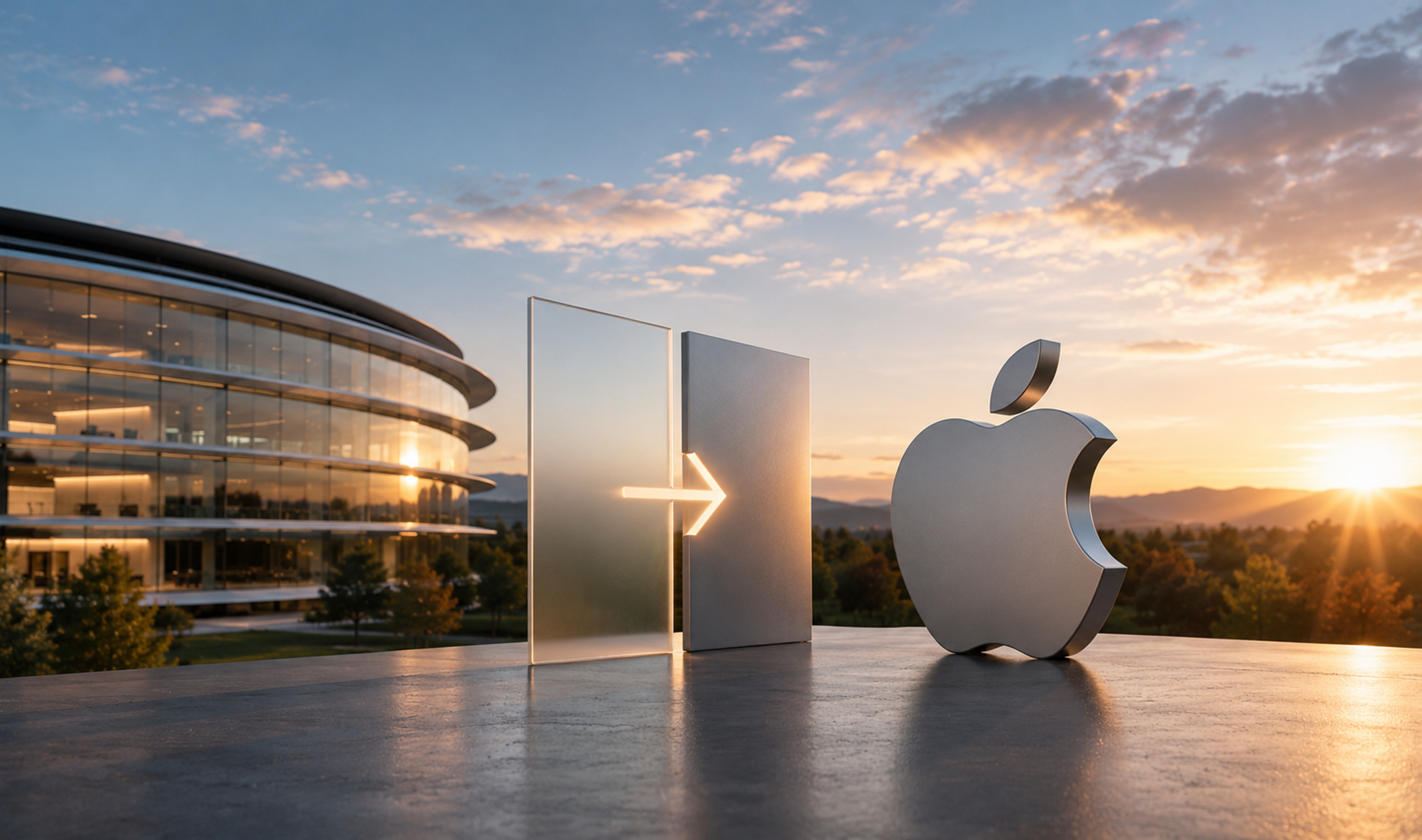
Apple begins a new leadership era today. John Ternus officially takes over as chief executive officer on September 1, 2026, succeeding Tim Cook after 15 years at the top of the company. Cook is not leaving Apple. He becomes executive chairman, while Arthur Levinson moves into the role of lead independent director.
The timing makes this more than a ceremonial handover. Ternus takes charge just eight days before Apple’s September 9 product event, the first major launch event under his leadership. He also inherits a company facing important decisions around artificial intelligence, iPhone growth, new device categories, supply-chain diversification and its expanding role in India.
For Indian users, the immediate experience of owning an iPhone, Mac, iPad or Apple Watch will not suddenly change because the CEO has changed. The bigger question is what Ternus prioritises over the next several product cycles, and whether his background as Apple’s hardware chief pushes the company toward faster product experimentation while preserving the operational discipline built under Cook.
John Ternus officially becomes Apple CEO on September 1
Apple announced the succession plan in April and said its board approved the transition unanimously. Ternus had been Apple’s senior vice president of Hardware Engineering, responsible for engineering work across the company’s major product categories. Cook remains connected to Apple as executive chairman and is expected to continue helping with areas that include engagement with policymakers.
That structure suggests continuity rather than an abrupt break. Apple is not replacing its strategy overnight, and Cook is not disappearing from the company. But the CEO role now moves to an executive whose career has been built much more directly around product engineering.
Who is John Ternus?
Ternus joined Apple’s product design organisation in 2001 and became a vice president of Hardware Engineering in 2013. He joined Apple’s executive team in 2021. According to Apple, his teams have worked across iPhone, iPad, Mac, Apple Watch and AirPods, and he played an important role in multiple new product lines and hardware transitions.
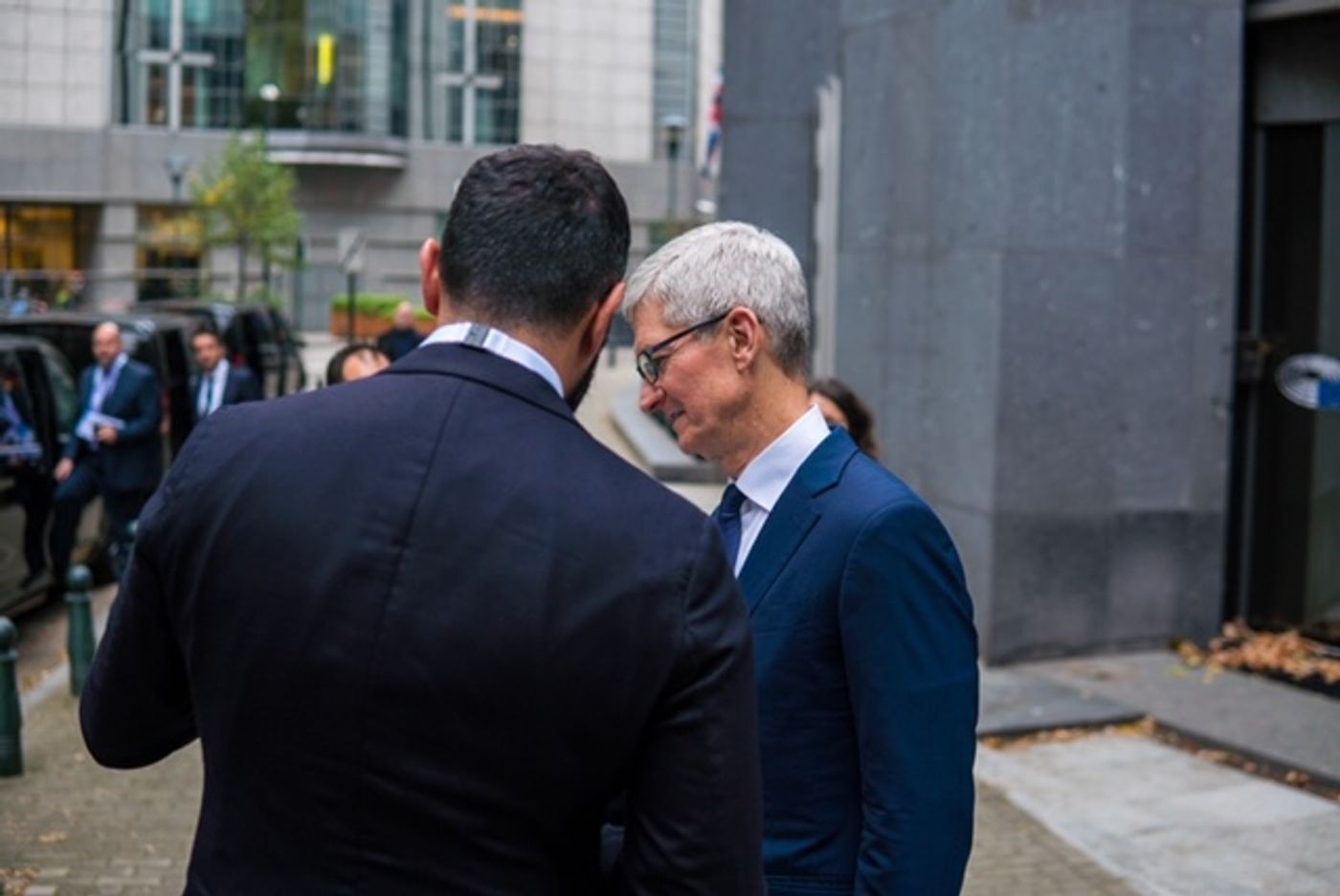
His engineering background matters because Apple’s biggest strengths remain tightly linked to hardware and the integration between its chips, devices and operating systems. Reuters reported when the succession was announced that analysts saw the appointment as a signal Apple could lean further into its device expertise while embedding more AI into existing products rather than relying on a separate AI-first device.
That does not mean Apple will suddenly become a company run only by hardware priorities. Services, software, subscriptions and regulatory issues are too important to Apple’s business for that. Ternus will have to manage all of them while proving that his product background can translate into company-wide leadership.
His first major test arrives almost immediately
Apple’s September 9 event will be the first major product event of the Ternus era. Headline Thread has already covered Apple’s confirmed September 9 event, where new iPhones are expected to be the main attraction. Apple has confirmed the event itself, while product details not formally announced should still be treated as expectations or reports.
The devices shown in September have been in development for years, so they cannot be treated as products created under a CEO who has been in the role for only days. Still, the event will establish the public tone of Ternus’s leadership and give customers their first look at how Apple presents itself after Cook’s handover.
The biggest challenge is turning Apple’s AI strategy into product value
Artificial intelligence is likely to be one of Ternus’s hardest strategic problems. Apple has enormous advantages in installed devices, custom silicon and ecosystem integration, but the AI race has moved quickly and changed what users expect from phones, computers and digital assistants.
The key question is not simply whether Apple can add more AI features. It is whether those features become useful enough to influence buying decisions. On-device processing, privacy, battery efficiency and tight hardware-software integration are areas where Apple can differentiate, especially if more AI workloads move from cloud-only services onto phones and computers.
That hardware-led approach is visible in Apple’s higher-end Macs. Headline Thread’s Mac Studio M5 Max vs M5 Ultra comparison looks at how Apple is positioning desktop hardware for demanding AI and professional workloads. Under Ternus, the strategic question is whether similar hardware advantages can become more obvious to mainstream iPhone, iPad and Mac buyers.
Why the CEO change matters for India
India is far more important to Apple than it was when Cook became CEO in 2011. The country is simultaneously a manufacturing base, a fast-growing consumer market, a retail expansion opportunity and a strategic alternative to concentrating too much production in China.
Bloomberg reported earlier in 2026 that Apple assembled about 55 million iPhones in India during 2025, roughly a quarter of its global iPhone production. That figure is not an official Apple production disclosure, but it illustrates the scale India has reached in Apple’s supply chain.
India’s broader policy push also matters. Headline Thread previously explained India’s ₹62,500 crore mobile manufacturing scheme, part of the wider effort to attract electronics production and component investment. Apple’s suppliers and contract manufacturers are among the companies affected by the direction of India’s electronics policy.
Reuters reported in August that India proposed extending tax breaks for contract manufacturing and component supply arrangements, a move that could benefit companies including Apple. For Ternus, India therefore becomes more than a sales market. Decisions about production, suppliers, local engineering, retail and product availability will increasingly shape how Apple competes globally.
What changes for iPhone and Mac buyers right now?
Very little changes immediately for customers. Apple’s warranty policies, software support, current product line-up and existing services do not reset because a new CEO takes office. Products launching this month were planned long before September 1.
The meaningful effects will appear over a longer period. Buyers should watch whether Apple changes the pace of hardware redesigns, takes more risks with new form factors, expands repairability, increases base specifications, pushes more AI processing on-device or changes how quickly new technologies reach lower-priced products.
For India specifically, pricing will remain crucial. Local manufacturing can reduce some logistical and import-related pressures, but it does not automatically guarantee lower retail prices. Currency movements, component costs, product positioning, taxes and Apple’s global pricing strategy still influence what Indian customers ultimately pay.
What Tim Cook leaves behind
Cook’s tenure reshaped Apple into a much broader ecosystem spanning wearables, services, custom silicon, payments and subscriptions. Apple says annual revenue grew from $108 billion in fiscal 2011 to more than $416 billion in fiscal 2025, while its market capitalisation rose from roughly $350 billion to around $4 trillion during his leadership.
He also oversaw Apple Watch, AirPods and Vision Pro, the shift from Intel processors to Apple-designed Mac chips, and a large expansion of Apple’s services business. In India, his tenure coincided with the country becoming a major manufacturing hub and a much more important retail market.
Ternus inherits those strengths and the expectations that come with them. Apple now has to find major new reasons for customers to upgrade while defending margins, handling regulation and proving that its AI strategy can compete with companies moving faster in generative AI.
What to watch under John Ternus
The first signals will come quickly. The September 9 event will show how Apple presents its next hardware cycle. After that, the bigger indicators will be the pace of AI integration, the company’s willingness to enter or reshape device categories, and whether Apple continues expanding manufacturing and retail investment in India.
It will also be worth watching how responsibilities are divided between Ternus and Cook. Cook’s move to executive chairman gives Apple continuity at the board and policy level, while Ternus runs the company. That could make the transition smoother than a clean break, but observers should avoid attributing every near-term decision to the new CEO alone.
The bottom line
John Ternus becoming Apple CEO is a major leadership change, but not an overnight strategy reset. Apple has deliberately chosen an internal hardware veteran, kept Tim Cook involved as executive chairman and timed the handover immediately before one of its most important annual product events.
For Indian consumers, the most important effects will emerge over the next few years rather than the next few days. If Ternus can turn Apple’s hardware expertise into stronger AI products, accelerate meaningful device innovation and deepen India’s place in Apple’s manufacturing and retail strategy, his tenure could reshape what the company sells and where it builds it. September 1 is only the starting point.