Mivi, an Indian consumer electronics brand best known for earbuds, speakers and audio accessories, is preparing to enter one of the country’s most competitive technology markets: smartphones. The company has confirmed that its first 5G phone will launch in India in September 2026, putting Mivi up against established budget and mid-range brands that already fight aggressively on price, specifications and online sales.
The announcement is notable because Mivi is not simply adding another accessory to an existing ecosystem. A smartphone requires a much broader operation covering software support, network certification, cameras, after-sales service, retail, supply chains and long-term update management. For a company built around audio hardware, moving into phones is a major expansion.
Mivi has so far kept several important details under wraps. The exact model name, final price, display specifications, camera hardware, battery capacity, storage options and sale date have not all been officially disclosed. That means any detailed specification sheet circulating before the formal launch should still be treated carefully unless Mivi confirms it.
What Mivi has actually confirmed
The confirmed picture is still relatively simple. Mivi says its first smartphone will be a 5G device launching in India in September. The company has also confirmed the use of a Qualcomm Snapdragon platform, although the initial teaser did not identify the exact chip.
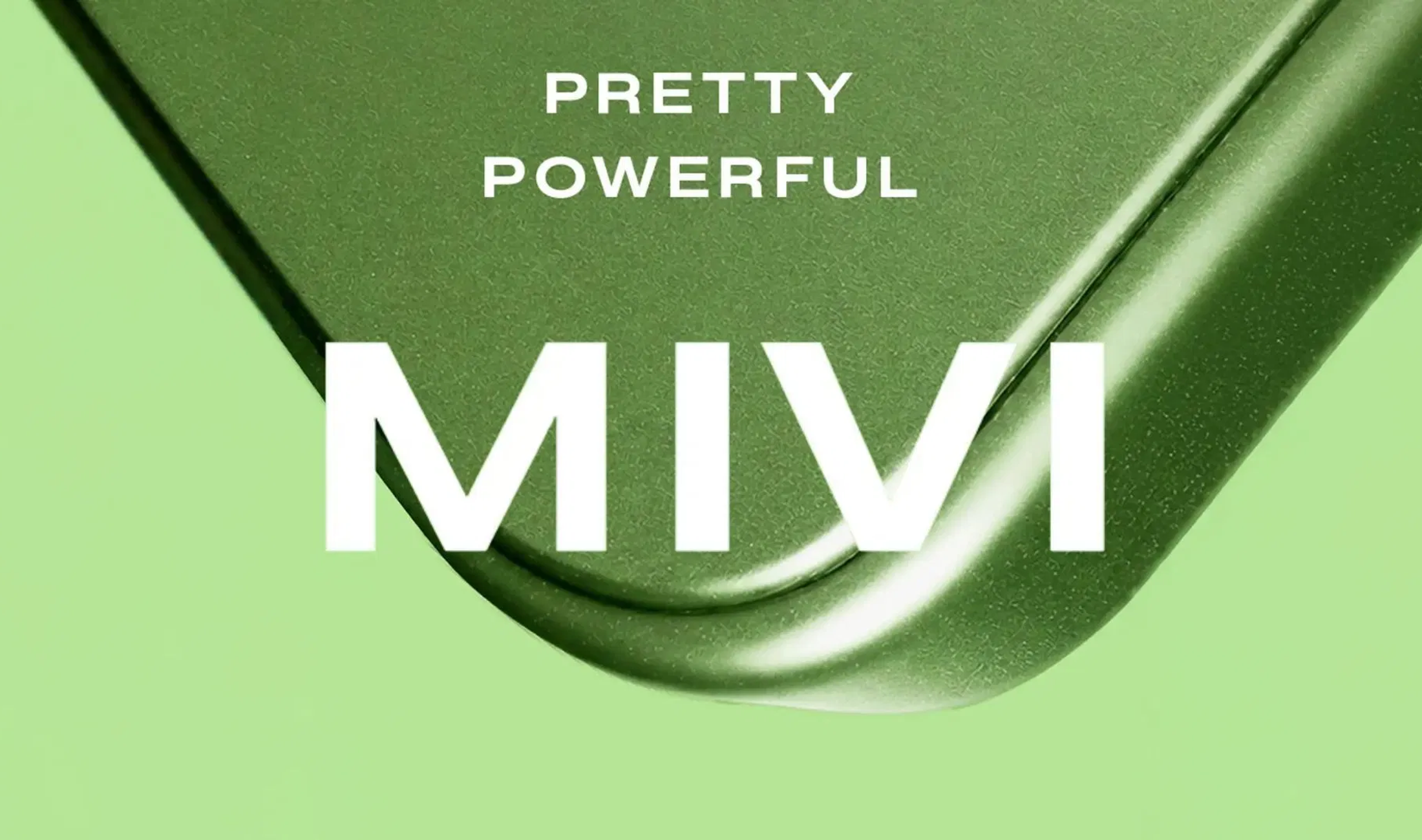
The teaser shows a green handset with a flat rear panel, straight-looking frame and rounded corners. Mivi is promoting the product with the phrase “Pretty Powerful,” which suggests that design and performance will both be part of its positioning rather than the phone being marketed only on price.
A Geekbench listing reported by Smartprix points to a device identified as Mivi MVNOE using Qualcomm’s SM4450 platform, commonly associated with the Snapdragon 4 Gen 2, alongside 6GB of RAM and Android 16. Benchmark database appearances can be useful clues, but they are not a substitute for a final retail specification sheet, so those details should remain separate from Mivi’s official confirmations until launch.
Reports also indicate that Mivi is targeting the affordable 5G segment and may sell the phone through Flipkart. The company has not yet published a complete official price and configuration table, so buyers should avoid treating speculative sub-₹15,000 pricing as final until the launch announcement.
Why Mivi is entering a difficult market
India’s smartphone market is crowded enough that entering it is less about launching a single attractive device and more about building a sustainable product operation. Xiaomi, Redmi, Poco, Samsung, Realme, Vivo, Oppo, Motorola, iQOO, Lava and newer entrants all compete across overlapping price bands.
Mivi’s timing is also interesting because India is pushing harder to deepen domestic electronics production through initiatives such as the new mobile phone manufacturing scheme. A local consumer brand that already understands Indian retail, online channels and electronics manufacturing may see an opportunity to extend that base into smartphones.
But manufacturing is only one part of the challenge. Consumers increasingly expect clean software, security updates, reliable cameras, strong batteries, usable displays, service centres and competitive exchange offers. A low introductory price can attract attention, but weak software support or poor after-sales service can quickly erase that advantage.
Himanshu Tandon gives Mivi valuable smartphone experience
Mivi’s expansion is happening alongside a significant leadership move. Himanshu Tandon, who previously led Poco India and later served as Vice President of Business at CMF by Nothing, is joining Mivi as chief business officer, according to reporting from Gadgets Now.
That experience is directly relevant. Poco built its Indian identity around aggressive online pricing and performance-focused phones, while CMF targeted younger buyers with design-led products at accessible prices. Those are exactly the kinds of consumers Mivi is likely to target with its first phone.
A capable go-to-market strategy could matter as much as the hardware. Budget phone launches depend heavily on Flipkart and Amazon visibility, bank offers, limited-time pricing, creator reviews, retail availability and fast responses to software issues. Mivi will need to prove it can operate at that pace rather than relying only on its existing audio brand recognition.
Mivi already has a consumer electronics audience
Unlike a completely unknown smartphone startup, Mivi already sells in categories where Indian buyers frequently compare brands on price. The company competes in TWS earbuds, speakers and related accessories, a market that overlaps with the same value-conscious users looking at affordable earbuds and other low-cost consumer electronics.
That gives Mivi an existing customer base and brand recall, but smartphones are a much higher-consideration purchase. Someone willing to try ₹1,500 earbuds from a newer brand may still hesitate before spending ₹12,000 to ₹20,000 on a phone that stores personal data and is expected to last several years.
The move also comes as Indian audio brands are trying to expand beyond basic accessories. boAt’s Crest AI push with Google Gemini shows one route, making audio devices more intelligent. Mivi is choosing a more ambitious route by moving directly into the smartphone category.
What could make the first Mivi phone competitive
If Mivi wants to compete below ₹15,000, the basics will matter more than novelty. A dependable 5G chipset, at least 6GB of physical RAM, adequate storage, a bright high-refresh-rate display and a large battery are now common expectations in the segment.
Software could be an equally important differentiator. Reports around the phone point to a relatively clean Android experience, and that would be useful if Mivi can pair it with a clear update policy. Many affordable phones look strong on hardware but lose appeal when they ship with excessive pre-installed apps, intrusive notifications or vague software support.
Mivi also needs credible after-sales support. Buyers should watch for warranty terms, service-centre coverage, spare-part availability and the process for handling screen or battery repairs. These details are less exciting than processor names, but they are critical for a first-generation product from a brand entering smartphones for the first time.
Who should consider the Mivi smartphone
The phone could be worth considering for buyers who want an affordable 5G device and are open to trying an Indian challenger brand, especially if Mivi delivers strong launch pricing, clean software and dependable battery life.
However, buyers who prioritise long software support, proven cameras or a wide service network may be better served by waiting for independent reviews and Mivi’s full support policy before ordering. First-generation smartphones often reveal their strengths and weaknesses only after real-world testing.
What remains unknown before launch
Several purchasing decisions still depend on information Mivi has not fully confirmed. The final processor, display panel and resolution, battery and charging speed, camera sensors, storage configurations, software update commitment, warranty details and official price all need to be established before the phone can be judged against rivals.
The exact launch and sale schedule will matter too. September is already a busy month for Indian smartphone launches, with several established brands planning new devices. Mivi will need to give buyers a clear reason to choose a first-generation handset instead of a discounted phone from a more familiar manufacturer.
The bigger significance for India’s smartphone market
Even if Mivi’s first phone remains a relatively small launch, the move is strategically important. It shows that Indian consumer electronics companies increasingly see smartphones as an adjacent category they can attempt rather than a market reserved only for global manufacturers.
That does not guarantee success. India has seen many phone brands enter, grow quickly and then disappear when margins tightened or support costs increased. The companies that last tend to combine competitive hardware with distribution, service, software and supply-chain execution.
For now, Mivi has achieved the first objective: getting attention before the phone is even fully revealed. The real test begins when the company publishes the final price and specifications. If it can translate its audio-brand familiarity into trust around a smartphone, Mivi could become another meaningful challenger in India’s value 5G market. If not, strong incumbent competition will make the category unforgiving.