
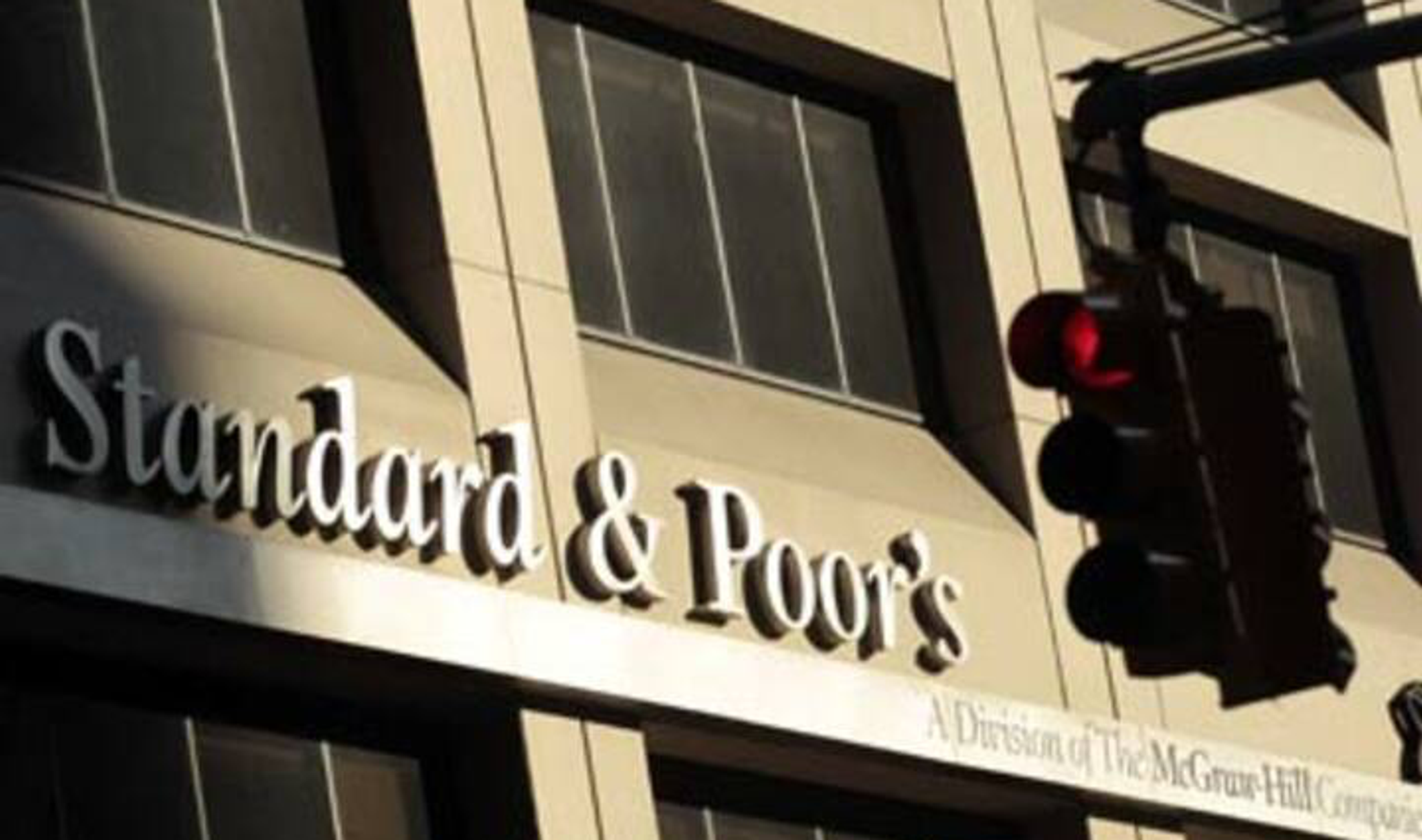
S&P Global Ratings has reaffirmed India’s sovereign credit rating at BBB/A-2 with a stable outlook, a decision that keeps the country firmly inside investment-grade territory while underlining both the strength and the limits of India’s current economic story. The rating agency’s August 27 decision points to policy continuity, infrastructure investment and comparatively strong growth as major supports, but it also highlights high government debt, fiscal pressures and low per-capita income as constraints that prevent a higher rating for now.
The official S&P rating action said high energy prices and challenging agricultural conditions are likely to slow growth marginally this year, but the agency still expects India to expand faster than many comparable economies. S&P projects real GDP growth of about 6.6% in the current year, even as the global environment remains uncertain.
What India’s BBB Rating Actually Means
A sovereign credit rating is an assessment of a government’s ability and willingness to meet its debt obligations. For investors, it is one of the signals used to judge the risk of lending to a country. India’s BBB long-term rating is investment grade, which matters because many global funds are restricted from buying debt rated below investment grade. The A-2 component refers to short-term creditworthiness, while the stable outlook indicates that S&P does not currently expect the rating to change in the near term unless economic or fiscal conditions shift materially.
The decision is therefore not an upgrade, but it is still significant. A stable investment-grade rating helps preserve confidence in Indian government debt and can support broader foreign investor sentiment toward Indian assets. It also signals that S&P sees the country’s medium-term growth and policy framework as strong enough to offset several structural weaknesses.
Why S&P Remains Positive on India’s Growth Story
Infrastructure spending is one of the clearest positives in the rating assessment. India has spent heavily on roads, railways, logistics, power and digital infrastructure over recent years, and S&P expects these investments to support productivity and long-term economic expansion. Policy stability also matters because rating agencies generally value predictable fiscal, monetary and regulatory frameworks when assessing sovereign risk.

Recent indicators also show that India is trying to broaden the sources of growth. Goods exports have crossed $200 billion in FY27 so far, while changes to foreign-investment rules for neighbouring countries are aimed at attracting capital without removing strategic safeguards. These developments do not determine the rating on their own, but they contribute to the broader picture of an economy seeking to expand manufacturing, trade and investment capacity.
The Biggest Constraint Is Still Government Debt
The strongest argument against a higher rating remains India’s fiscal position. Public debt is high relative to many similarly rated economies, and the government has limited room to absorb large shocks without increasing borrowing. The 2026-27 Union Budget targets a fiscal deficit of 4.3% of GDP and a debt-to-GDP ratio of 55.6% for the central government, but rating agencies have warned that further consolidation may become harder if policymakers also want to maintain strong capital spending and social expenditure.
This creates a balancing act. Cutting the deficit too quickly could weaken growth if it reduces productive public investment, while allowing debt and deficits to remain elevated for too long would make an upgrade more difficult. A durable improvement in government finances is therefore likely to be one of the most important conditions for India to move higher within the investment-grade range.
Oil Prices and Agriculture Add Near-Term Risk
India’s dependence on imported crude oil makes high global energy prices a recurring vulnerability. More expensive oil can widen the import bill, pressure the rupee, raise inflation and increase costs across transport and manufacturing. S&P specifically cited higher energy prices as one reason growth could moderate this year. Agricultural conditions are another risk because weak harvests can raise food inflation and reduce rural purchasing power, which in turn affects consumption.
These risks matter because India’s growth model remains closely tied to domestic demand. Strong household consumption can cushion weakness in exports or private investment, but persistent inflation can weaken that buffer by reducing real disposable income. The stable outlook suggests S&P believes these pressures are manageable, not that they have disappeared.
What the Rating Means for Indian Bonds and Investors
For bond investors, the reaffirmation reduces the risk of an immediate negative rating shock. India has been working to deepen its debt markets, including through experiments such as the REC tokenised corporate bond pilot. A stable sovereign rating provides a supportive backdrop for those efforts because government creditworthiness acts as an important benchmark for domestic borrowing costs and financial-market confidence.
Foreign investors will also watch whether India can keep attracting capital into government bonds while maintaining currency stability. A sovereign rating does not directly set bond yields, and day-to-day yields are driven by inflation, Reserve Bank of India policy, liquidity, global interest rates and supply-demand conditions. But ratings influence the pool of global investors that can hold a country’s debt and can affect risk premiums over time.
What Would It Take for India to Get Another Upgrade?
A stronger rating would likely require progress on several fronts at once: sustained high economic growth, a credible decline in government debt and deficits, stronger public finances, resilient external balances and continued institutional stability. Faster improvements in per-capita income would also help because India remains considerably poorer on that measure than many countries with higher sovereign ratings.
The key point is that growth alone may not be enough. India can remain one of the fastest-growing major economies and still face rating constraints if fiscal deficits and public debt do not improve. Conversely, aggressive fiscal tightening that significantly damages growth could also be counterproductive. The path to a higher rating is therefore likely to depend on whether India can preserve investment-led growth while gradually strengthening the government balance sheet.
What Happens Next
Investors will now focus on the next set of growth, inflation and fiscal data. The April-June GDP reading will be important for judging the strength of domestic demand and private investment, while oil prices will remain a major external variable. The government’s progress toward its deficit and debt targets will also be closely watched as the financial year advances.
For now, S&P’s message is relatively clear: India’s growth and infrastructure push remain strong enough to support its investment-grade standing, but the country has not yet solved the fiscal weaknesses that limit its rating. That makes the stable BBB assessment both a vote of confidence in India’s economic trajectory and a reminder that the next upgrade will require more than fast headline GDP growth.