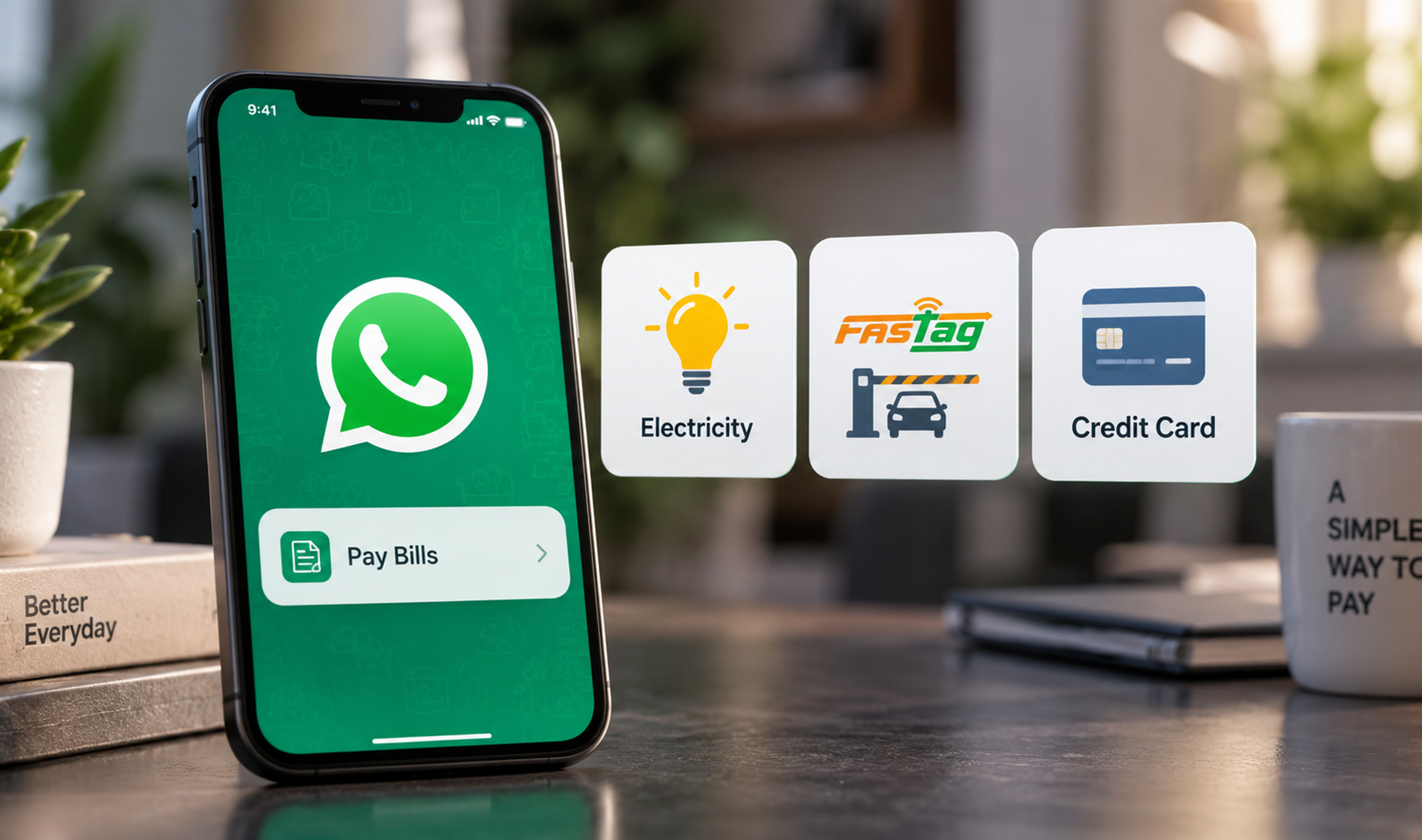
WhatsApp has launched Bill Payments in India, turning the messaging app into a place where users can find, manage and pay everyday bills without switching to a separate payments app. The feature, announced on September 3, is powered by the Bharat Connect network, also known as the Bharat Bill Payment System or BBPS.
The scale is significant: WhatsApp says users will have access to 22,722 billers across 30 categories. That includes electricity, gas, water, FASTag, insurance, credit card bills and loan repayments. Payments can be completed using UPI, debit cards or credit cards.
What WhatsApp Bill Payments offers in India
This is more than a simple payment button inside a chat. WhatsApp has built a dedicated bill-management experience into Payments Home. Bills can be fetched before payment, and billers previously paid through the feature can appear on the Payments Home screen for faster repeat access.
Users can also save multiple accounts under the same biller. That matters for people who manage electricity, water or other services for more than one home, an office or family members. Frequently used categories are surfaced on Payments Home, while a See All option opens the wider list.
How to pay a bill on WhatsApp
WhatsApp's official process starts from the ₹ icon at the top of the home screen. Tap it, choose the relevant bill category and biller, then enter and confirm the account details requested by that provider. WhatsApp fetches the bill amount and associated details for review before payment.
After checking the bill, select a payment method. WhatsApp lists UPI, debit card and credit card as supported modes. Confirm the payment only after verifying the biller name, account information and amount. The completed payment can then be tracked from the payments area.
Which bills can you pay?
The launch covers common household utilities such as electricity, piped gas and water, but it extends beyond utilities. FASTag, insurance premiums, credit card dues and loan repayments are among the categories specifically confirmed by WhatsApp. Because Bharat Connect links thousands of billers, the exact providers visible to a user will depend on the supported biller list and rollout.
The launch arrives as digital payments are already deeply embedded in India. Headline Thread recently looked at how UPI grew to tens of billions of monthly transactions, creating the infrastructure and user habits that make an in-app bill-payment feature much more practical than it would have been a few years ago.
Do you need WhatsApp Pay or UPI to use it?
UPI is one payment option, but WhatsApp's announcement also lists debit and credit cards. That means the bill-payment feature is broader than a UPI-only flow. Users should still expect payment-method availability to depend on the biller, their account setup and the version of the feature available to them.
WhatsApp Pay itself is no longer subject to the old UPI user-onboarding cap. NPCI removed that restriction in December 2024, allowing WhatsApp Pay to extend UPI services to its full Indian user base while remaining subject to the same applicable UPI rules and guidelines.
Why the feature may not appear on your phone yet
The launch is a gradual rollout, not an instant switch for every account. WhatsApp says Bill Payments will become available to Android and iOS users across India over the coming weeks. If the option is missing, updating WhatsApp is sensible, but an updated app does not guarantee that the server-side rollout has reached your account.
Users should avoid downloading unofficial APKs or following messages that promise to unlock the feature early. A payments feature is exactly the kind of launch scammers can imitate with fake links, login pages or malicious apps. Wait for the ₹ icon and Bill Payments interface to appear inside the official WhatsApp app.
How WhatsApp is becoming a broader utility app
Bill Payments follows other India-specific utility additions. WhatsApp already supports prepaid mobile recharges for Jio, Airtel and Vi, while metro ticketing is available through WhatsApp-based services in multiple cities. Government and business chatbots have also made the app a front end for tasks that previously required separate websites or apps.
India's payments layer is also moving toward more automated experiences. Headline Thread's explainer on agentic UPI payments examines a more ambitious direction in which software agents could eventually initiate approved purchases on a user's behalf. WhatsApp's new feature is much simpler, but it shows the same broader trend: payment infrastructure is increasingly being embedded where users already spend their time.
WhatsApp vs Google Pay and PhonePe for bill payments
The immediate advantage for WhatsApp is convenience. Many users already open it dozens of times a day, so paying a bill without opening another app can reduce friction. The ability to manage several accounts under one biller and surface previously used billers also makes repeat payments easier.
That does not automatically make WhatsApp the better payments app. Google Pay, PhonePe and other established services have mature payment histories, rewards or offers, merchant discovery and other features that may matter more to some users. The underlying bill network is also not unique to WhatsApp. Bharat Connect is shared infrastructure, so the real competition is likely to be around interface, reliability, support and how often users choose each app.
What users should check before paying
For any bill payment, verify the provider, consumer or account number, fetched amount and due date before authorising the transaction. Never share a UPI PIN, card OTP or screen-sharing access with someone claiming to help with a WhatsApp payment. A legitimate UPI PIN is entered to authorise a transaction, not given to another person to receive money.
This is particularly relevant given recent warnings about malicious APK scams targeting Android users. Payments should be initiated from the official app rather than from APK files, unknown links or messages asking users to install an update manually.
Is WhatsApp Bill Payments worth using?
For people who already use WhatsApp Pay or simply want fewer apps involved in routine payments, Bill Payments is a useful addition. The strongest use case is recurring household management: electricity, water, gas, FASTag and other bills can sit closer to the messaging app people already use for family and work coordination.
There is no need to switch immediately if an existing payments app already works well for you. The practical test will be whether WhatsApp's rollout is reliable across billers and whether users find its payment history, dispute support and account management as convenient as established alternatives. For now, the confirmed change is straightforward: bill payments are officially arriving inside WhatsApp in India, across Android and iOS, with nationwide availability planned over the coming weeks.